
Smart Packing for First-Time Budget Flyers
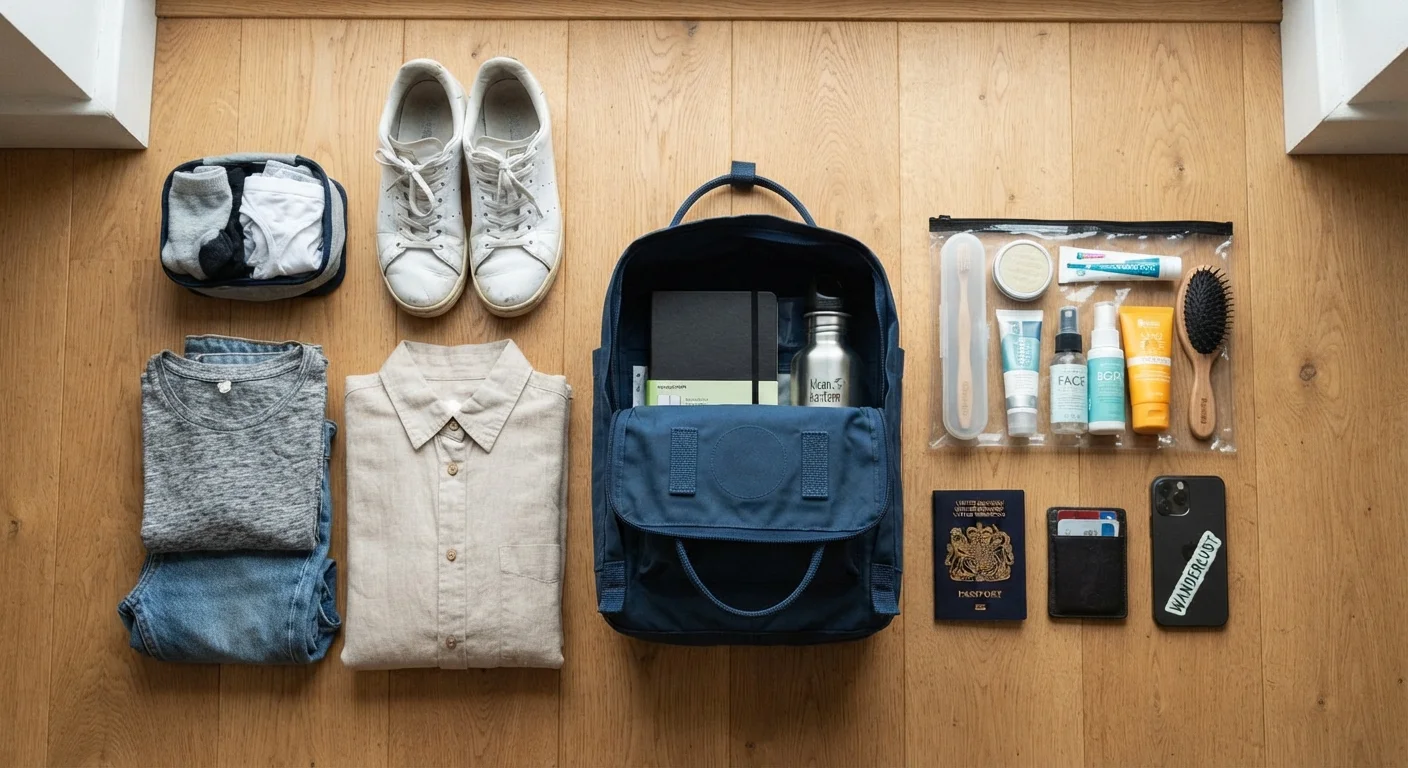
Photo credit: InsightsGrove.com | Discover Joy In Reading
In this article
Everything a first-time budget traveller needs to know about packing efficiently — from bag selection to what to leave at home.
Key Takeaways
- Choosing a bag that fits airline size limits is the single highest-leverage packing decision you can make.
- Checked bag fees on budget carriers can add $35–$80 or more each way — carry-on only avoids this entirely.
- Seven days of clothes can realistically fit in a 20–30 litre bag when you choose versatile, quick-dry fabrics.
- Solid toiletry alternatives (shampoo bars, solid soap) bypass liquid restrictions and save space.
- Running a pre-trip audit — removing anything with no confirmed use — typically cuts bag weight by 20–30%.
Why Bag Choice Determines Everything
Before you decide what to pack, decide what you're packing into. The bag you choose sets a hard constraint on everything else — and for budget flyers, that constraint is directly tied to cost. A bag that exceeds an airline's personal item dimensions could cost you a surprise fee at the gate that rivals a meal budget for the day.
For most budget trips under two weeks, a 20–30 litre backpack is the practical ceiling. It fits under most airline seats (eliminating overhead bin fees on stricter carriers), forces you to edit ruthlessly, and moves faster through airports than wheeled luggage. If you're new to carry-on-only travel, our complete guide to travelling light covers the full bag-selection framework in detail.
Personal item
A small bag that fits under the seat in front of you on a plane — typically the free bag allowance on budget airlines. Size limits vary by carrier.
Carry-on
A larger bag stored in the overhead bin. Budget airlines often charge a fee for this; size limits are strictly enforced at the gate.
Gate fee
An extra charge applied at the boarding gate when your bag exceeds the allowed size or you haven't pre-paid for baggage — often the highest fee tier.
Quick-dry fabric
Synthetic or merino wool material that dries within hours of being hand-washed, making it possible to rewear items without carrying extra sets.
Quart-sized bag (TSA)
A clear, resealable plastic bag roughly one quart (about one litre) in volume, required to hold all carry-on liquids under US TSA airport security rules.
Solid toiletry
A toiletry product — such as a shampoo bar or toothpaste tablet — in solid form, which is not subject to the TSA liquid restriction.
The Carry-On Rule and Airline Bag Fees
Budget carriers in the US — and many international equivalents — have restructured their fee models so that bag costs are not included in the base fare. A checked bag booked at the time of purchase typically costs less than one added at check-in or at the gate, where fees can spike substantially. For round trips, those fees add up fast.
The most cost-effective position is to fly with a personal item only. This requires keeping your bag within the under-seat dimensions specified by your airline — which vary, so always verify before booking. Our article on checked bag vs. carry-on trade-offs breaks down the real numbers across common scenarios.
Always Check Your Airline's Specific Limits
Bag size and fee policies differ significantly between airlines — and even between fare classes on the same airline. A bag that qualifies as a free personal item on one carrier may trigger a fee on another. Check the baggage policy page of your specific airline every time you book, not just once.
What to Pack — and What to Cut
The most reliable packing method for beginners is to lay everything out, then remove one-third of it. Most first-time travellers significantly overestimate what they'll need and underestimate how much they'll want to move freely.
- Clothing: Aim for 4–5 tops, 2 bottoms, and one layer. Prioritize items that mix-and-match and dry quickly if hand-washed. Dark neutrals hide wear; merino wool and synthetic blends dry overnight.
- Shoes: Limit to two pairs maximum — one for walking, one for evenings if genuinely needed. Shoes are the heaviest single category most people overpack.
- Electronics: Bring what you'll use daily. A universal adapter, a compact power bank, and a single set of earphones cover most needs.
- Documents: Passport, printed confirmation copies (or offline digital), travel insurance details. Verify entry requirements via official government sources — don't rely on third-party travel sites for visa rules.
For guidance on handling variable weather without adding bag bulk, see our piece on packing for mixed climates.
Test Your Bag Before the Airport
Pack your bag completely, then carry it for 20 minutes — up stairs, through a crowded space. If it's uncomfortable or awkward, it will be worse after hours of travel. This trial run also reveals whether you've actually left enough room to close the bag without forcing it.
Toiletries, Liquids, and the 100ml Rule
TSA rules in the US limit carry-on liquids to containers of 3.4 oz (100ml) or less, all fitting inside a single quart-sized clear bag. Trying to bring a full-size shampoo bottle will get it confiscated — and buying replacements at the airport is expensive.
Practical alternatives that sidestep the liquid limit entirely: shampoo bars, conditioner bars, solid soap, and toothpaste tablets. These take up minimal space, are not subject to the liquid rule, and are now widely available. For a full breakdown of what qualifies as a liquid and what doesn't — including exceptions for medications — see our practical reference on the 100ml rule.
One often-overlooked move: buy deodorant, sunscreen, or any destination-specific items after you arrive. Local pharmacies and grocery stores typically stock these at normal prices, sparing you from the TSA juggle or checked-bag weight.
Packing Methods That Actually Save Space
How you put things into a bag matters — though not as much as how much you put in. Rolling clothing compresses soft items and reduces wrinkles compared to flat folding; bundle wrapping can work well for wrinkle-prone dress clothes. For an honest comparison of each technique's real-world trade-offs, see our breakdown of rolling vs. folding vs. bundle wrapping.
Packing cubes are widely marketed as space-savers — they're actually organisation tools. They make it easier to find items mid-trip and repack quickly, but they don't meaningfully compress clothing volume. Use them if they suit your style, but don't expect them to let you pack more. Our honest look at packing cubes covers what they're genuinely useful for.
Before You Zip: A Final Check
The last step before any trip is an audit — picking up each item and asking whether you'll use it on a specific, confirmed day. "Just in case" items are the primary driver of overpacked bags. If the honest answer is "probably not," it stays home.
A structured pre-departure checklist takes about 15 minutes and consistently catches both forgotten essentials and unnecessary items. Our pre-trip packing audit gives you a ready-to-use version. If this is your first trip abroad, first-timer international travel basics covers the non-packing essentials — currency, transport, and entry requirements — that belong on your radar before departure.
Frequently Asked Questions

Author
Travel Smarter Editorial Team
Travel Smarter Editorial Team is the collective byline for our editorial team and contributor network. Articles published under this byline or an editorial pen name are researched, written, and reviewed according to our editorial standards for clarity, consistency, and independence before publication.
View all articles →