
Car Maintenance From the First MOT to a High-Mileage Vehicle
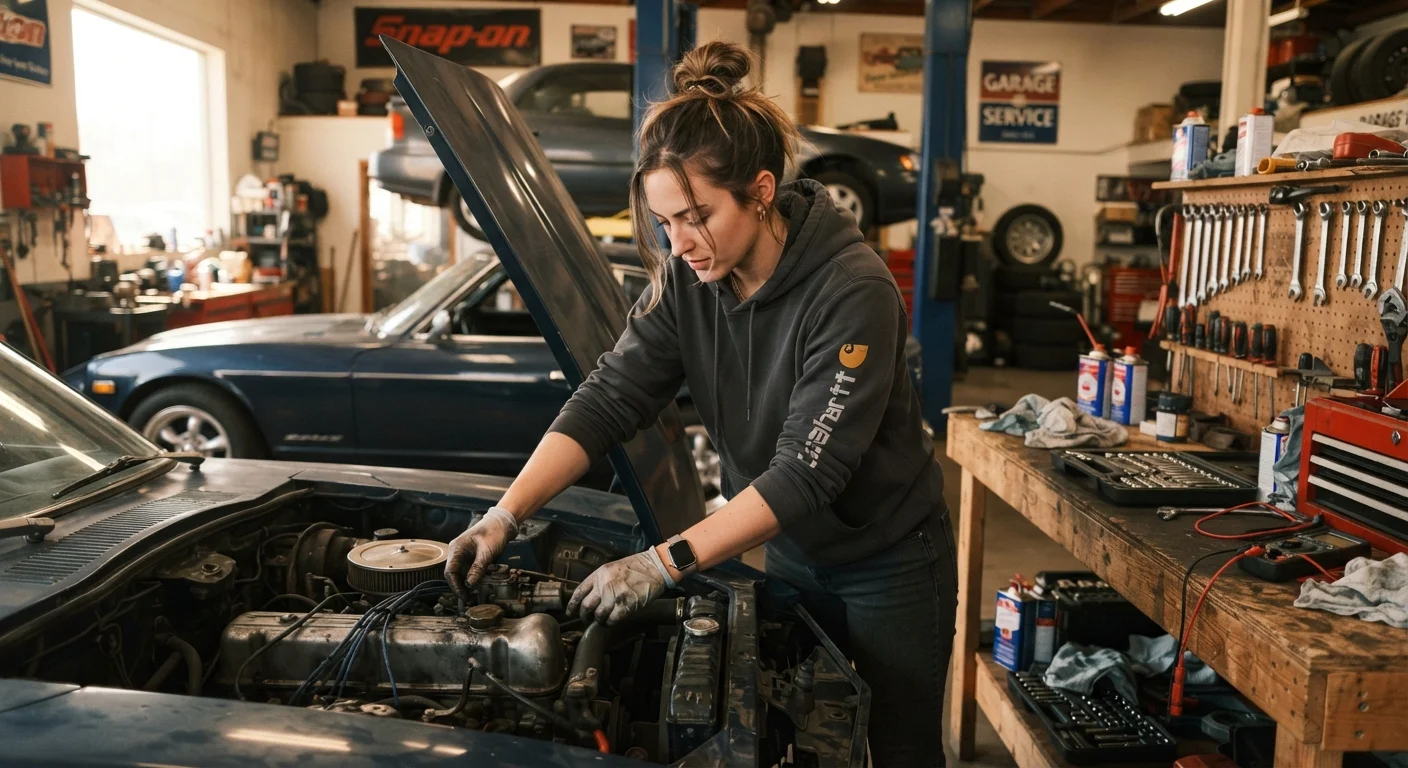
Photo credit: InsightsGrove.com | Discover Joy In Reading
In this article
A comprehensive starting point for new car owners—covering routine checks, service schedules, warning signs, and how maintenance needs evolve as mileage climbs.
Key Takeaways
- A car's first MOT is an independent health check that reveals issues a seller or previous owner may not have disclosed.
- Simple self-checks - oil level, tyre pressure, coolant - take under ten minutes and prevent the majority of roadside breakdowns.
- Following the manufacturer's service schedule protects your engine warranty and resale value simultaneously.
- Dashboard warning lights have defined meanings; acting on them promptly is nearly always cheaper than waiting.
- High-mileage vehicles need more frequent fluid changes and attention to wear items like belts and suspension components.
What the First MOT Actually Tells You
In the UK, every car must pass its first MOT - the Ministry of Transport roadworthiness test - once it turns three years old. In the US, the equivalent is a state vehicle safety or emissions inspection, with timing and requirements varying by state. Either way, that first official inspection is one of the most useful documents a new owner can hold.
The inspection covers brakes, lights, steering, tyres, emissions, and structural integrity. Crucially, it is carried out by an independent tester rather than the seller, which means any advisory notices or failures represent an unbiased view of the car's current condition. Advisories - items flagged as approaching failure but not yet critical - are worth printing and keeping. They give you a prioritised maintenance list and a negotiating point if you're buying a used vehicle.
If you're buying used, evaluating a used vehicle's history includes checking that past inspections were passed cleanly and reviewing whether advisories were addressed.
MOT / Safety Inspection
A mandatory government-required test that checks a vehicle meets minimum roadworthiness and emissions standards. In the UK this is called the MOT; in the US it varies by state.
Advisory Notice
A note on an inspection report flagging a component that is not yet failing but is showing wear and will likely need attention at the next inspection.
Service Interval
The mileage or time limit set by the manufacturer indicating when specific maintenance tasks - like an oil change or filter replacement - are due.
Timing Belt
A rubber belt inside the engine that synchronises the movement of engine components. If it breaks, it can cause severe internal engine damage that is usually not repairable cheaply.
Wear Items
Parts designed to be replaced periodically as part of normal use - such as brake pads, tyres, filters, and belts - rather than lasting the lifetime of the vehicle.
Building a Routine: Checks Every Owner Should Know
Most breakdown services report that the majority of call-outs involve issues - flat tyres, dead batteries, overheating - that a basic monthly check would catch early. These checks require no tools and take less than ten minutes.
- Engine oil: Pull the dipstick when the engine is cold, wipe it clean, reinsert, and read the level. Low or very dark oil needs attention.
- Coolant: Check the translucent reservoir bottle - never open the radiator cap on a warm engine. The level should sit between the MIN and MAX lines.
- Tyre pressure: Use a gauge against the figure in your door jamb or owner's manual, not the figure moulded into the tyre sidewall (that's the maximum, not the recommended).
- Brake fluid: Inspect the reservoir under the hood - fluid darkens and absorbs moisture over time, reducing effectiveness.
- Lights: Walk around the car once a month and have someone press the brake pedal while you confirm the brake lights work.
For a detailed breakdown of which of these habits deliver the strongest financial return, see routine maintenance tasks that pay for themselves.
Keep a Simple Maintenance Log
A basic spreadsheet or even a paper notebook recording each check, oil change, and service visit pays dividends when you sell the car or need to diagnose a recurring issue. Buyers and mechanics both respond well to documented care history. Note the date, mileage, and what was done or topped up.
Understanding Your Service Schedule
Every car comes with a manufacturer-specified service schedule, usually found in the owner's manual or a separate service booklet. These intervals are expressed in miles, kilometers, or time - whichever comes first. Skipping them doesn't just risk a breakdown; it can void warranty coverage and reduce resale value.
A standard service schedule typically involves two levels:
- Minor (or interim) service: Oil and filter change, fluid top-ups, visual inspection of belts and hoses. Often due every 6 months or 6,000-7,500 miles.
- Major (or full) service: Everything in a minor service plus spark plugs, air filter, fuel filter, brake inspection, and sometimes coolant or transmission fluid. Typically every 12 months or 12,000-15,000 miles.
Independent garages can carry out manufacturer-scheduled services without voiding your warranty, as long as they use parts that meet the manufacturer's specification - a rule known in many markets as the right to repair. This can result in meaningful cost savings compared with main dealership pricing.
Understanding each line of your service schedule helps you ask the right questions and avoid being upsold on services you don't yet need.
Warning Signs You Should Never Ignore
Modern cars surface problems through warning lights, sounds, and physical sensations. Learning to read these signals early is one of the most cost-effective skills you can develop.
Never Ignore a Red Warning Light
A red oil pressure or engine temperature light indicates a condition that can destroy an engine within minutes if you keep driving. Pull over safely as soon as traffic conditions allow, turn the engine off, and investigate before continuing. The cost of a tow is far less than a replacement engine.
Dashboard Lights
Red lights (oil pressure, engine temperature, battery) signal immediate risk. Pull over safely and investigate before continuing to drive. Amber or yellow lights (check engine, traction control, tyre pressure) are less urgent but should be diagnosed within a few days - not weeks.
Sounds and Sensations
- Squealing when braking: Brake pad wear indicators are doing their job. Get the pads inspected soon.
- Grinding when braking: The pad material has worn through to metal. This needs immediate attention.
- Vibration through the steering wheel: Could indicate tyre imbalance, alignment issues, or worn suspension components.
- Pulling to one side: Often a sign of uneven tyre pressure, poor alignment, or a brake caliper that isn't releasing properly.
Understanding the full spectrum of running costs puts these repairs in financial context, helping you budget rather than be blindsided.
How Maintenance Needs Change at High Mileage
A car crossing 75,000 or 100,000 miles isn't automatically unreliable - but the maintenance calculus does shift. Wear items that were optional replacements at lower mileage often become critical, and fluid degradation accelerates as engine tolerances loosen slightly with age.
Key Items to Prioritise
- Timing belt (if applicable): Many engines use a rubber timing belt rather than a chain. These have defined replacement intervals - often 60,000-100,000 miles - because failure causes catastrophic engine damage. Check your owner's manual.
- Spark plugs: Worn plugs reduce fuel efficiency and can cause misfires. Long-life iridium plugs typically last 100,000 miles, but standard plugs should be replaced sooner.
- Coolant flush: Coolant degrades chemically and can corrode the cooling system. Most manufacturers recommend flushing every 5 years or 100,000 miles.
- Transmission fluid: Often overlooked but critical in high-mileage vehicles. Degraded fluid accelerates transmission wear.
- Suspension and steering components: Bushings, ball joints, and tie rod ends experience cumulative wear. Have these inspected annually once the car exceeds 80,000 miles.
High-mileage ownership is a reasonable financial strategy - provided you account for these increased maintenance demands upfront. This is part of managing overall car ownership costs strategically rather than reactively.
This article is for general informational purposes only. Always consult a qualified mechanic for diagnosis and repair decisions specific to your vehicle.
Frequently Asked Questions

Author
Car Ownership Editorial Team
Car Ownership Editorial Team is the collective byline for our editorial team and contributor network. Articles published under this byline or an editorial pen name are researched, written, and reviewed according to our editorial standards for clarity, consistency, and independence before publication.
View all articles →