
Building a Budget-Friendly Pantry That Supports Good Nutrition
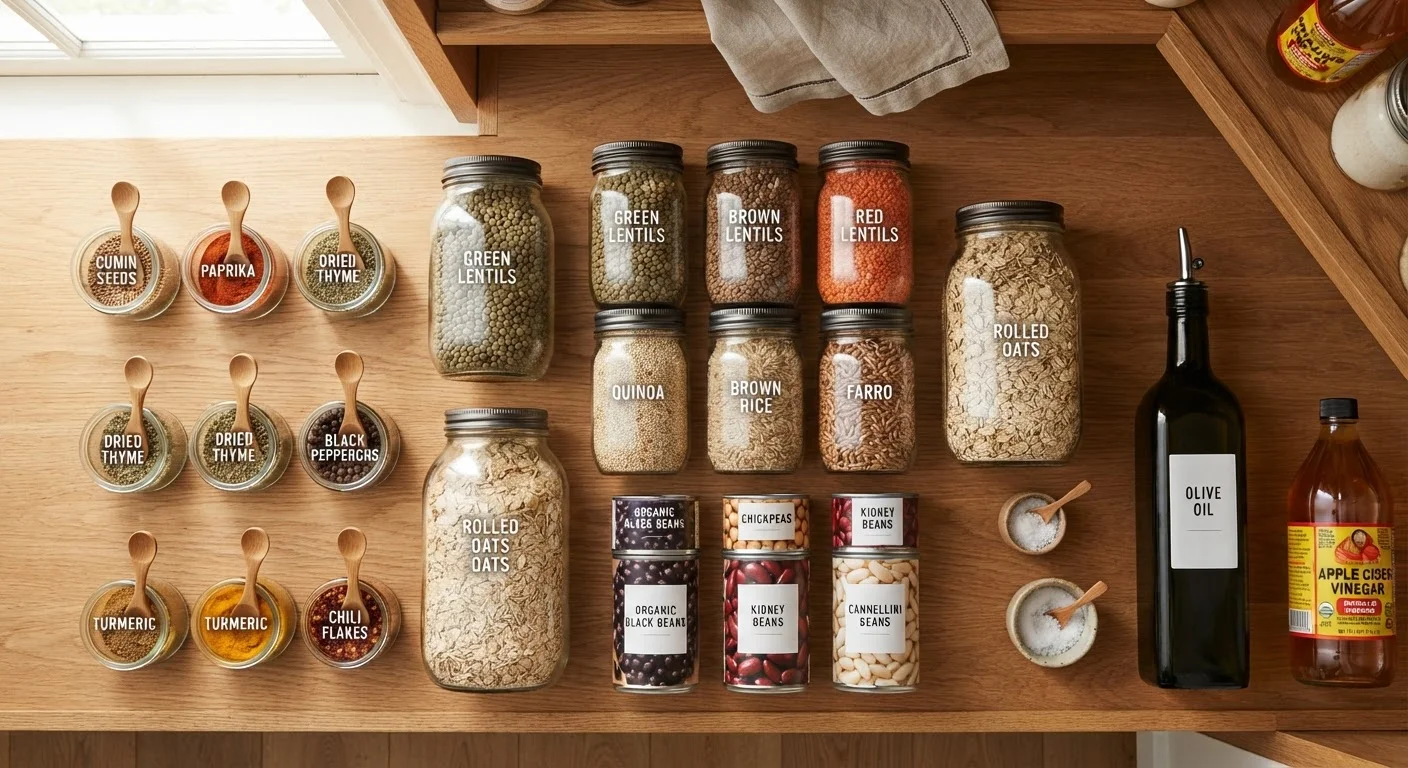
Photo credit: InsightsGrove.com | Discover Joy In Reading
A practical checklist of affordable staples to keep stocked so you can build balanced meals without frequent or expensive shopping trips.
Key Takeaways
- A small set of versatile staples can anchor dozens of nutritious, low-cost meals.
- Shelf-stable proteins like canned beans and lentils deliver strong nutritional value at low cost.
- Whole grains, canned vegetables, and healthy fats are the foundation of a budget pantry.
- Buying in bulk for non-perishables reduces per-serving cost without sacrificing quality.
- A stocked pantry reduces reliance on expensive convenience food and last-minute shopping.
Why a Stocked Pantry Changes How You Eat
Reaching for convenient, processed food often comes down to one thing: not having anything better available. A deliberately stocked pantry removes that friction. When your shelves already hold protein, whole grains, and flavour essentials, pulling together a balanced meal becomes a matter of minutes rather than a last-minute scramble - or an expensive delivery order.
For budget-conscious young adults, the pantry strategy pays off in two ways. First, shelf-stable staples bought in slightly larger quantities cost less per serving than fresh items purchased meal by meal. Second, fewer emergency shopping trips mean less impulse spending. If you want to see how specific staples rank for nutritional value per dollar, our guide to affordable high-nutrition foods breaks down the most effective choices. For translating a stocked pantry into actual meals, see our weekly meal planning walkthrough.
The checklist below is designed as an audit tool. Work through it to see where your pantry has gaps, then fill them gradually. You do not need everything at once - prioritise the must items first, then add should and nice_to_have items over time.
Shelf-Stable Proteins
Whole Grains and Complex Carbohydrates
Canned and Dried Vegetables
Healthy Fats and Oils
Flavour Builders and Condiments
Pantry Audit and Maintenance
Tools to Keep Your Pantry Functional
The right storage set-up extends the life of your staples and makes it easier to see what you have. Bulk-bought lentils stored in a resealable plastic bag, for example, absorb moisture and lose quality faster than those kept in a sealed glass or plastic container. Investing a small amount in organisation now prevents waste - and wasted food is wasted money.
Airtight storage containers
Keep dry goods like grains, legumes, and oats fresh and pest-free for longer periods.
Dry-erase or paper pantry inventory list
Track what you have on hand and what needs restocking to avoid unnecessary purchases.
Kitchen scale
Measure bulk purchases accurately for portioning and cost tracking per serving.
Stackable shelf organisers
Maximise vertical pantry space so all items are visible and accessible.
Tracking inventory doesn't need to be complicated. A sheet of paper taped inside a cupboard door with a column for each item is genuinely effective. Knowing you have two cans of chickpeas but are nearly out of oats means your next shopping trip is focused and efficient - aligned with the principles covered in smart shopping habits.
Sodium Levels in Canned Goods
Many canned beans and vegetables contain added sodium to preserve freshness. When possible, look for low-sodium or no-salt-added versions. If regular canned beans are what's available, rinsing them under cold water before use can help reduce sodium content. This is general guidance - if you have specific dietary restrictions or health conditions, speak with a registered dietitian or healthcare provider.
This article is for general informational and educational purposes only and is not a substitute for personalised medical or dietary advice. Consult a qualified healthcare professional or registered dietitian for guidance specific to your health and nutritional needs.

Author
Health & Wellness Editorial Team
Health & Wellness Editorial Team is the collective byline for our editorial team and contributor network. Articles published under this byline or an editorial pen name are researched, written, and reviewed according to our editorial standards for clarity, consistency, and independence before publication.
View all articles →