
Brake Wear Myths That Cost Drivers Money
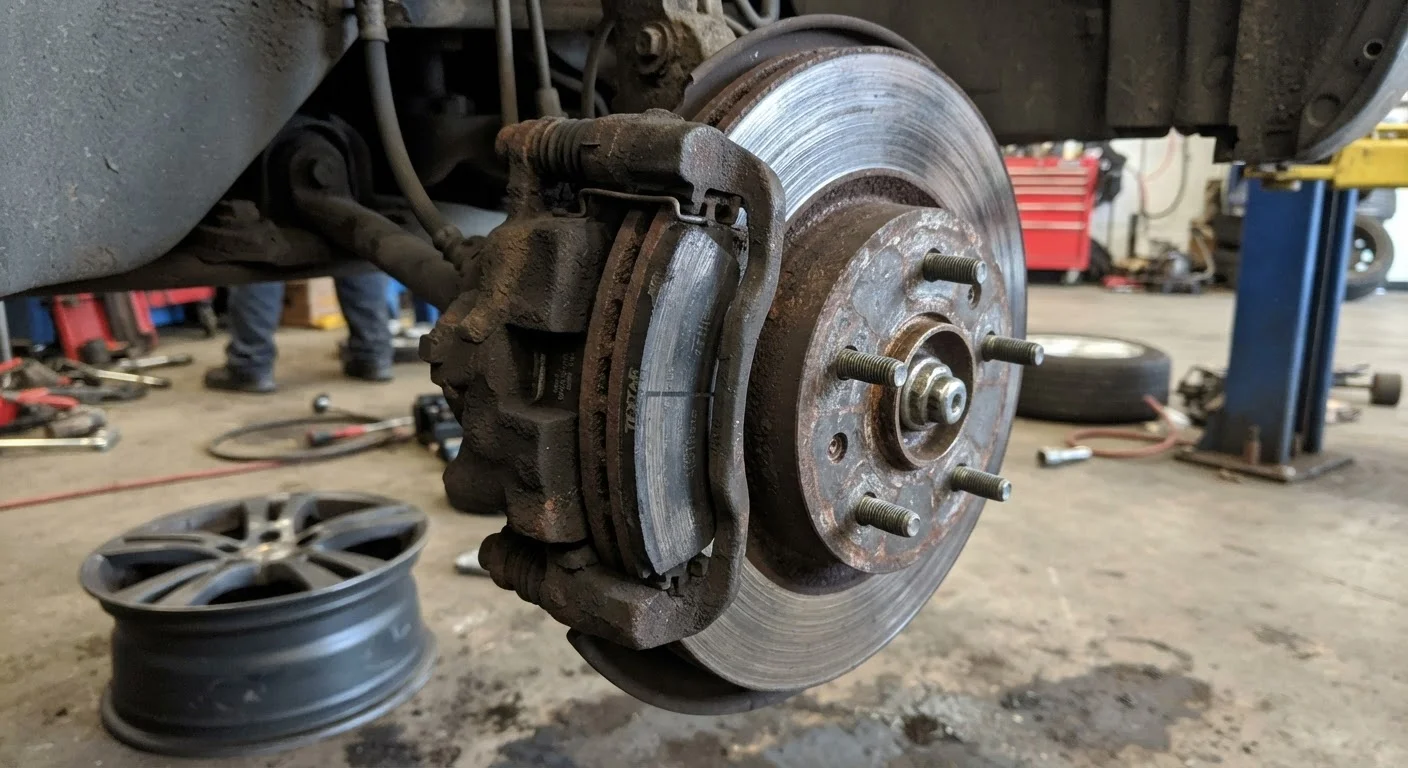
Photo credit: InsightsGrove.com | Discover Joy In Reading
Separating fact from fiction on brake pad lifespan, grinding noises, and when you really need a full brake replacement versus a straightforward pad swap.
Key Takeaways
- Brake pad lifespan varies widely by driving style, not just mileage - averages are rough guides only.
- Grinding noises don't always mean immediate pad replacement; diagnosing the cause first saves money.
- Rotors don't automatically need replacing every time brake pads are swapped out.
- Waiting until squealing starts to inspect brakes can lead to significantly more expensive repairs.
- DIY brake pad swaps are feasible for many owners, but rotor and caliper work often warrants a mechanic.
Why Brake Myths Are Expensive
Brakes are one of the most misunderstood systems on a car - and that misunderstanding tends to benefit repair shops more than drivers. Some owners replace pads far too early after hearing a single squeak; others push worn brakes dangerously long because they believe a grinding sound is normal. Both patterns cost real money.
The core problem is that brake wear advice often gets oversimplified into rules of thumb that don't account for how differently drivers actually use their vehicles. A commuter who rides their brakes down mountain grades will burn through pads in a fraction of the mileage of a highway cruiser. Treating everyone the same way is how unnecessary service gets sold.
Sorting out what's true from what's shop lore is a practical money-saving skill. It also pairs well with broader maintenance habits - the kind covered in our guide on maintenance tasks that pay for themselves.
Myth
Brake pads need replacing every 25,000-30,000 miles, no matter what.
Fact
Pad lifespan commonly ranges from 25,000 to 70,000 miles depending on driving habits, pad material, and vehicle weight.
The 25,000-mile figure gets repeated so often it feels official - it isn't. Front pads on a compact car driven mostly on flat highways may last well over 50,000 miles. The same pads on a heavier SUV driven in stop-and-go urban traffic might wear out in under 20,000. Pad compound also matters: organic pads wear faster but are gentler on rotors; ceramic pads last longer but cost more upfront. The only reliable way to know when to replace pads is to physically inspect them - most mechanics check pad thickness during tire rotations. The general threshold for replacement is around 3-4mm of remaining friction material, but consult your owner's manual for the manufacturer's guidance.
Myth
If you hear a grinding noise, your brakes are fine - it's just dust or debris.
Fact
Persistent grinding almost always signals metal-on-metal contact and requires prompt inspection; ignoring it damages rotors and raises costs.
A brief squeal when backing out after a car has sat overnight can be surface rust burning off - that's generally harmless. But grinding that persists under normal braking is a different matter. Most brake pads include a small metal wear indicator that deliberately squeals when pads thin to a critical level. If that warning goes unheeded, the metal backing plate contacts the rotor directly, scoring the rotor surface. What might have been a straightforward pad swap now requires rotor resurfacing or replacement, typically adding hundreds of dollars to the bill.
Myth
You always need to replace rotors when you replace brake pads.
Fact
Rotors only need replacement if they fall below minimum thickness, show significant scoring, or are warped - not as a default rule.
This myth is one of the most reliable profit generators in automotive service. Rotors are machined with a minimum thickness specification - usually stamped directly onto the rotor hub - and a competent brake inspection involves measuring the current thickness against that spec with a micrometer. If the rotor is within spec and the surface is in good condition, it can serve multiple pad sets. Ask for the measurement reading. A shop that can't or won't provide it is a shop worth getting a second opinion from.
Myth
Braking harder and later saves brake wear over time.
Fact
Hard, late braking generates significantly more heat and friction, wearing pads and rotors faster than smooth, gradual braking.
Brake wear is largely a function of heat. Smooth, progressive braking allows friction to dissipate gradually; aggressive late braking dumps large amounts of energy into the braking system in a short period, accelerating thermal wear on both pads and rotors. Drivers who consistently brake early and smoothly - often called "engine braking" when they downshift or lift off the throttle to slow before applying the brake - report noticeably longer pad life. This isn't a minor effect: driving style is one of the strongest predictors of brake service intervals.
Myth
Rear brakes wear out at the same rate as front brakes.
Fact
Front brakes typically handle 70-80% of stopping force on most passenger vehicles and wear considerably faster than rear brakes.
Weight transfers forward during braking, which means the front axle bears the majority of stopping load. On most front-wheel-drive passenger cars, it's not unusual for rear pads to outlast two or even three sets of front pads. Some vehicles with rear-biased brake systems or integrated parking brake mechanisms on rear rotors complicate this picture, but the general principle holds. This is why inspecting all four corners separately matters - quoting a full four-wheel brake job when only the fronts are worn is a common and unnecessary upsell.
What Actually Drives Brake Costs Up
Most inflated brake bills trace back to one of two mistakes: acting too late or being talked into more work than the situation requires. Both are avoidable with basic knowledge.
70-80%
Stopping force handled by front brakes
Physics of weight transfer under braking means front pads consistently wear faster on most passenger vehicles.
~3-4mm
Typical brake pad replacement threshold
Most manufacturers and mechanics recommend replacing pads at or before this remaining friction material depth; verify against your owner's manual.
25,000-70,000 mi
Realistic brake pad lifespan range
Driving habits, pad compound, and vehicle type create wide variation - mileage alone is an unreliable replacement trigger.
Rotors are the most common upsell. When pads are replaced, some shops automatically quote rotor resurfacing or replacement. In reality, rotors have a minimum thickness specification stamped into the metal. If the rotor still meets that spec and shows no deep scoring, warping, or heat cracking, a pad swap alone is often sufficient. Ask to see the rotor measurement - a shop performing this check honestly will have no problem showing you the numbers.
Calipers are another area where costs escalate unnecessarily. A sticking caliper causes uneven pad wear and should be addressed, but a full caliper replacement isn't always required. Sometimes a caliper service - cleaning and lubricating the sliding pins - resolves the issue at a fraction of the replacement cost. When a full replacement is genuinely needed, that's a job most owners should leave to a qualified mechanic given the hydraulic connections involved.
Don't Delay If Braking Performance Feels Off
Increased stopping distances, a spongy brake pedal, or a vehicle that pulls to one side under braking are all signs that warrant prompt professional inspection - not a wait-and-see approach. These symptoms can point to hydraulic issues, a failing caliper, or severely worn pads, any of which affect your ability to stop safely. When in doubt, have a qualified mechanic inspect the system before driving further.
For a broader look at how cutting corners on maintenance creates larger bills down the road, see our piece on cheap shortcuts that cost more. And if you're evaluating the overall cost picture of ownership, the Car Costs & Savings hub is a useful starting point.

Author
Car Ownership Editorial Team
Car Ownership Editorial Team is the collective byline for our editorial team and contributor network. Articles published under this byline or an editorial pen name are researched, written, and reviewed according to our editorial standards for clarity, consistency, and independence before publication.
View all articles →