
Checked Bag vs. Carry-On: Which Costs You Less on a Budget Trip?
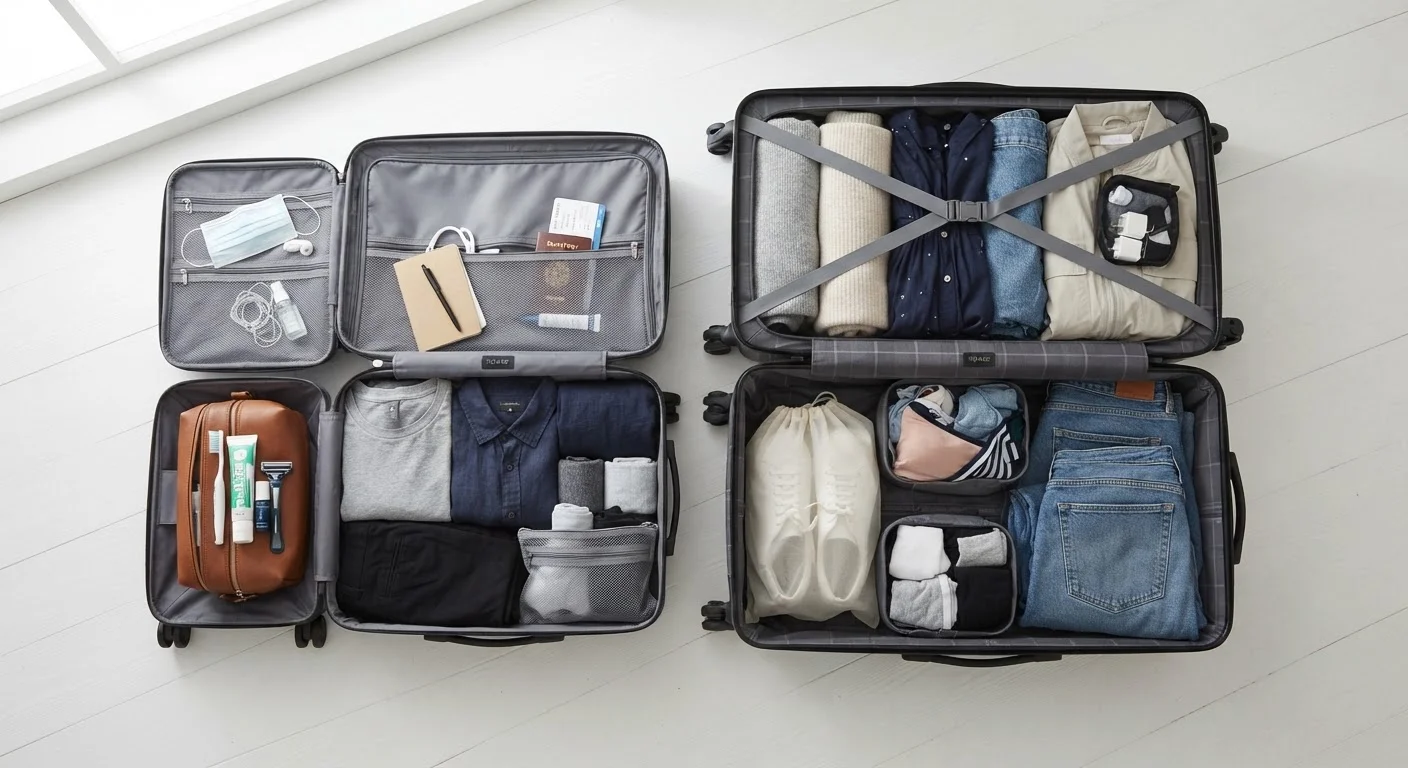
Photo credit: InsightsGrove.com | Discover Joy In Reading
In this article
Weighing the real costs and trade-offs of checking a bag versus travelling carry-on only for budget-conscious flyers.
Key Takeaways
- Checked bag fees on US carriers typically range from $30 to $40 per bag, per one-way flight, adding up fast on round trips.
- Carry-on travel eliminates most bag fees but requires disciplined packing and awareness of airline size restrictions.
- Budget airlines often charge for carry-on bags too — always verify the specific fare tier before assuming carry-on is free.
- Gate-checking a stroller or car seat is generally free on most US airlines, which doesn't help solo travelers but matters for families.
- The real savings from carry-on travel go beyond fees: faster airport exits, no lost luggage risk, and more flexibility.
The Real Dollar Difference
Bag fees are one of the most predictable costs in air travel — and one of the easiest to underestimate. On most major US carriers, a first checked bag runs roughly $30 to $40 each way. On a round trip, that's $60 to $80 before you've paid for a single meal or transit fare. Add a second bag and you can be looking at $120 or more for the bag fees alone.
Carry-on travel sidesteps most of that — but it's not automatically free. As our breakdown of how airline baggage fee structures actually work explains, ultra-low-cost carriers (ULCCs) like Spirit and Frontier often charge for full-size carry-ons under certain fare tiers. The "free" carry-on may only apply to a personal item that fits under the seat. If your bag is overhead-bin sized, you could pay $25–$75 depending on when you add it — more at the gate than online.
Bottom line: carry-on is generally cheaper, but the savings depend entirely on which airline, which fare class, and how early you plan ahead.
| Criterion | Checked Bag | Carry-On Only |
|---|---|---|
| Typical fee (major US carriers) | $30–$40 each way | Often free (verify fare tier) |
| Fee on ultra-low-cost carriers | $45–$80+ each way | $25–$75 if full-size overhead |
| Airport time added | 20–45 min (check-in + claim) | Minimal — skip both queues |
| Lost luggage risk | Present — handled by airline | None — stays with you |
| Packing volume | 50+ lbs, large items possible | Limited to ~22" bag + personal item |
| Flexibility for last-minute flights | Lower — logistics more complex | High — grab and go |
| Best trip length | Extended or gear-heavy trips | Weekend to ~2 weeks |
Hidden Costs Beyond the Fee Tag
The sticker price of a checked bag fee is only part of the story. As we detail in why overpacking costs more than just baggage fees, the downstream costs of hauling more stuff — physically and financially — add up. Checked bag travellers spend more time at the airport (check-in lines, baggage claim waits that can stretch 20–40 minutes), and face the risk of delayed or lost luggage, which can mean emergency clothing purchases at destination prices.
Carry-on travel offers flexibility that translates to real money. You can take last-minute flights without worrying about bag logistics, shift to a cheaper airline without a checked-bag rebooking headache, and exit the airport faster — which matters when you're paying for taxis or trains by distance or time.
$6.8B
US airline baggage fee revenue (2023)
According to the US Bureau of Transportation Statistics, US airlines collected approximately $6.8 billion in baggage fees in 2023 — a figure that underscores just how routinely travellers absorb these costs.
20–40 min
Average baggage claim wait time
Industry estimates from airport operations research suggest domestic baggage claim waits average 20–40 minutes, time that carry-on travellers spend exiting the terminal.
~1 in 170
Checked bags mishandled per passenger
The SITA 2023 Baggage IT Insights report noted a global mishandling rate of roughly 6 bags per 1,000 passengers, meaning delays or losses remain a real, if infrequent, risk.
That said, carry-on only travel has a real constraint: packing discipline. If you struggle to limit yourself, you may end up buying things at your destination you could have brought — or paying to check a bag at the gate after all, which is almost always the most expensive way to do it.
When a Checked Bag Actually Makes Sense
Carry-on travel isn't universally smarter. There are specific scenarios where checking a bag is the more rational financial move:
- You already have the fee waived. Some airline co-branded credit cards include a free first checked bag for the cardholder and travel companions. If that applies to you, the cost equation shifts entirely.
- You're travelling for an extended period. Packing two weeks of varied clothing, toiletries, and gear into a 22-inch bag requires real strategy. If you haven't done it before, the carry-on experiment mid-trip can turn into an unexpected purchase spree.
- You need gear that won't fit. Camping equipment, surfboards, golf clubs, or medical devices often can't be carried on. In those cases, the checked bag isn't a choice — it's a necessity, and the fee becomes part of your trip's fixed cost.
For everything else — weekend trips, city breaks, one-climate travel — carry-on only is almost always the leaner option. See our smart packing guide for first-time budget flyers for practical help making that work.
Always Check the Specific Fare Rules
Baggage policies vary not just by airline but by fare type within the same airline. A basic economy ticket on a major carrier may not include a full-size overhead carry-on, even if a standard economy fare does. Before assuming anything is included, check the fare's specific baggage allowance at the time of booking — not just the airline's general policy page. Policies also change periodically, so verify at the time of each booking.
How to Decide for Your Next Trip
Run a quick mental calculation before every trip. Add up the round-trip bag fees for your specific airline and route. Then ask whether that amount changes what else you can do on the trip — a night's accommodation, a day's food budget, a local experience. If it does, carry-on is worth the effort to figure out.
If you're not sure how to pack light enough to make carry-on work, our complete guide to travelling light on any budget covers bag selection, clothing strategy, and the specific categories where overpacking is most common. And if you want to go further, carry-on only travel: what it takes to pack your whole trip into one bag offers a practical, trip-by-trip walkthrough.
For flyers watching every dollar, it also pays to keep an eye on the hidden costs of budget airlines — bag fees are just one line item in a longer list of potential add-ons that can erode a low headline fare.
The bag you bring shouldn't be an afterthought. It's one of the few travel costs you have near-total control over — and with a bit of planning, it's a straightforward way to keep more money in your pocket for the trip itself.

Author
Travel Smarter Editorial Team
Travel Smarter Editorial Team is the collective byline for our editorial team and contributor network. Articles published under this byline or an editorial pen name are researched, written, and reviewed according to our editorial standards for clarity, consistency, and independence before publication.
View all articles →