
Airline Baggage Fee Structures, Decoded
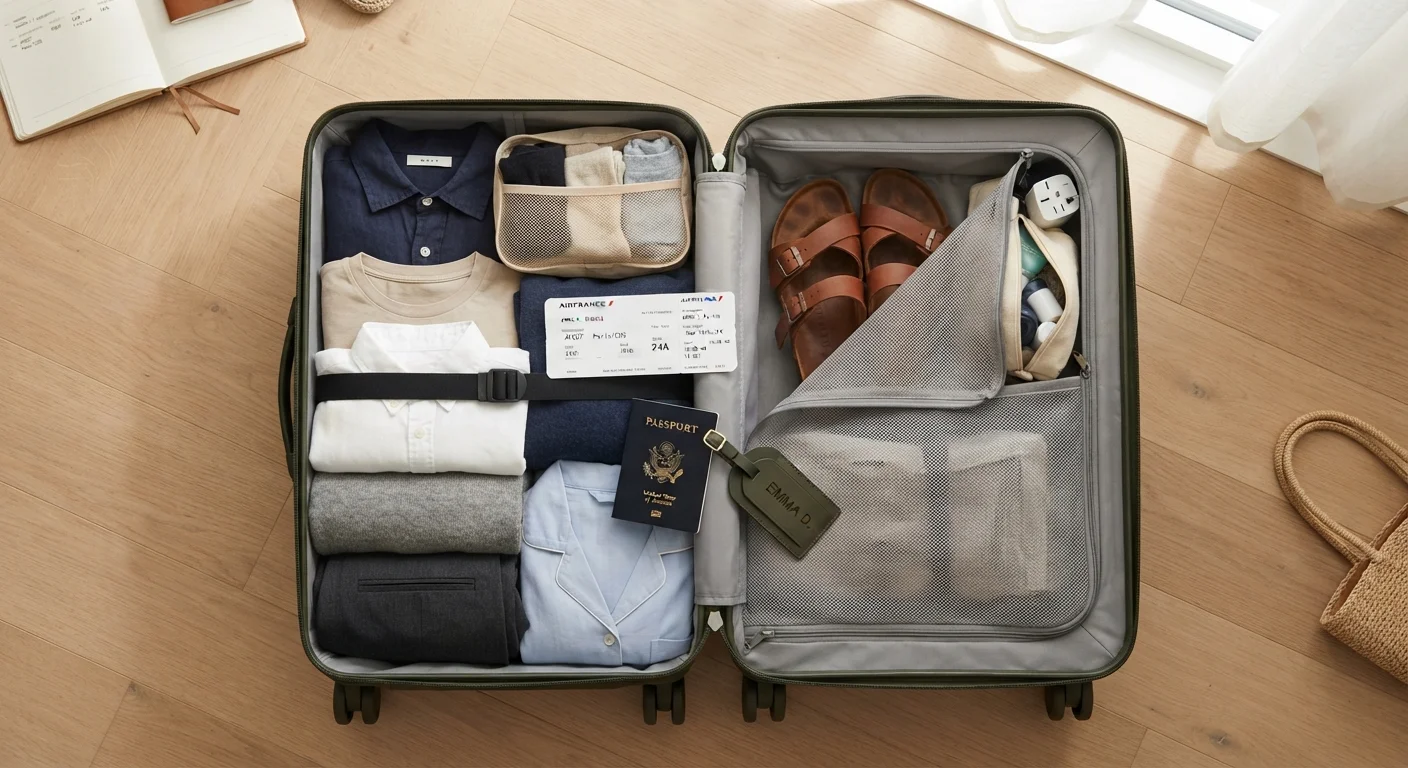
Photo credit: InsightsGrove.com | Discover Joy In Reading
In this article
A clear breakdown of how checked bag fees, carry-on rules, and weight limits actually work across fare types.
How Baggage Fees Are Actually Structured
Airline baggage fees are not a flat charge — they're layered by bag type, bag count, weight, and the fare you purchased. Understanding this structure is the first step to not paying more than you have to.
The three bag categories airlines charge for:
- Personal item: Fits under the seat. Free on almost all fares. Dimensions vary by carrier (typically around 18 × 14 × 8 inches).
- Carry-on bag: Goes in the overhead bin. Free on standard fares, but not always free on basic economy tickets — several major US carriers now charge for overhead-bin access on their lowest fare tier.
- Checked bag: Goes in the hold. Fees apply per bag, per direction, and increase with each additional bag.
The fare class you book determines which of these is included. A passenger on a standard main cabin ticket and one on basic economy may be on the same flight but face very different baggage costs. For a deeper look at which option tends to save money, see our checked bag vs. carry-on cost comparison.
| Standard carry-on size limit (most US carriers) | 22 × 14 × 9 inches |
| Standard checked bag weight limit | 50 lbs (23 kg) |
| Overweight bag threshold (most US carriers) | 51–70 lbs triggers surcharge |
| Personal item allowance | Free on virtually all US fare types |
| Typical first checked bag fee range (domestic US) | $35–$45 each way (General industry range; verify with your carrier before booking) |
| Second checked bag surcharge (domestic US) | $45–$65 each way (General industry range; fees vary by carrier and route) |
Weight Limits and Overage Fees
Most US carriers set a 50 lb (23 kg) limit on standard checked bags. Exceeding that triggers an overweight fee — typically $100 or more per bag — on top of the standard checked bag charge. Some carriers cap acceptance at 70 lbs; bags heavier than that may be refused entirely.
A few things travelers frequently miss:
- Your carry-on also has a weight limit on many international carriers and budget airlines — often 15–22 lbs. US legacy carriers rarely enforce carry-on weight at the gate, but budget and international carriers sometimes do.
- Gate-checking isn't always free. If the overhead bins fill up and staff ask you to gate-check, it's typically free domestically — but some budget carriers charge for it regardless.
- Dimensional weight rarely applies to leisure travelers' standard soft-sided luggage but can affect rigid, oversized bags.
Basic Economy
The lowest published fare class on many airlines. It typically comes with significant restrictions, including no free carry-on bag on some carriers and no seat selection until check-in.
Checked Bag Fee
A charge airlines apply for bags transported in the aircraft hold. Fees vary by carrier, fare class, route, and the order in which bags are added.
Personal Item
A small bag — such as a backpack, purse, or laptop bag — that fits under the seat in front of you. Most airlines allow one personal item free of charge, even on basic fares.
Dimensional Weight
A pricing method some carriers use that calculates a bag's billable weight based on its size (length × width × height) rather than actual scale weight. If dimensional weight exceeds actual weight, the higher figure applies.
Overweight Fee
An additional surcharge applied when a checked bag exceeds the carrier's weight limit, typically 50 lbs (23 kg) for standard bags and 70 lbs (32 kg) for oversized bags.
Fare Class
A booking category (e.g., Basic Economy, Main Cabin, Business) that determines which perks — including baggage allowances — are included with a ticket.
The simplest protection: weigh your bag at home before you leave. A luggage scale costs little and pays for itself after one avoided overage fee.
Budget Airlines: A Different Fee Logic Entirely
Ultra-low-cost carriers (ULCCs) — airlines whose headline fares strip out nearly every standard inclusion — operate on a fundamentally different model. Their base fares can look dramatically lower, but carry-on bags, checked bags, and even seat selection are all priced as add-ons.
On some ULCCs, a carry-on bag can cost more than the base ticket itself on short routes. The personal item (under-seat bag) often remains free, which is why experienced budget travelers on these airlines pack exclusively in a personal-item-sized bag.
For a full picture of what to expect beyond the headline price, read our breakdown of budget airline hidden costs.
Fee Structures Change — Always Verify
Airline baggage policies are updated frequently, sometimes with little public notice. The figures in this article reflect general industry patterns as a reference point. Before booking or packing, check the exact policy on your carrier's official website for your specific fare class and route. International routes often carry different allowances than domestic ones.
One practical rule: when comparing fares across carriers, add the cost of your specific bag plan to each ticket before deciding which is actually cheaper.
How to Minimize What You Pay
Most baggage fees are avoidable with planning. Here's what consistently works for budget-conscious travelers:
- Book the right fare class. On legacy carriers, even stepping up one tier from basic economy can restore carry-on access and eliminate the fee.
- Pre-pay for bags online. Airlines typically charge less if you add a checked bag during booking or in advance online than at the airport counter or gate.
- Pack to personal-item size. A well-organized 20–25 liter backpack fits under most seats and travels completely free. This is the single highest-leverage change for frequent short-trip travelers.
- Understand co-branded credit card perks. Many airline-affiliated cards waive the first checked bag fee for the cardholder and sometimes companions. This is general financial information — evaluate card costs versus benefits based on your own situation before applying.
Overpacking doesn't just cost you at the airline counter — it slows you down across the whole trip. See why the real cost of overpacking goes beyond bag fees. If you're ready to commit to carry-on-only travel, our guide to carry-on only travel covers exactly how to make it work for a full trip.

Author
Travel Smarter Editorial Team
Travel Smarter Editorial Team is the collective byline for our editorial team and contributor network. Articles published under this byline or an editorial pen name are researched, written, and reviewed according to our editorial standards for clarity, consistency, and independence before publication.
View all articles →