
Carry-On Only Travel: What It Takes to Pack Your Whole Trip Into One Bag
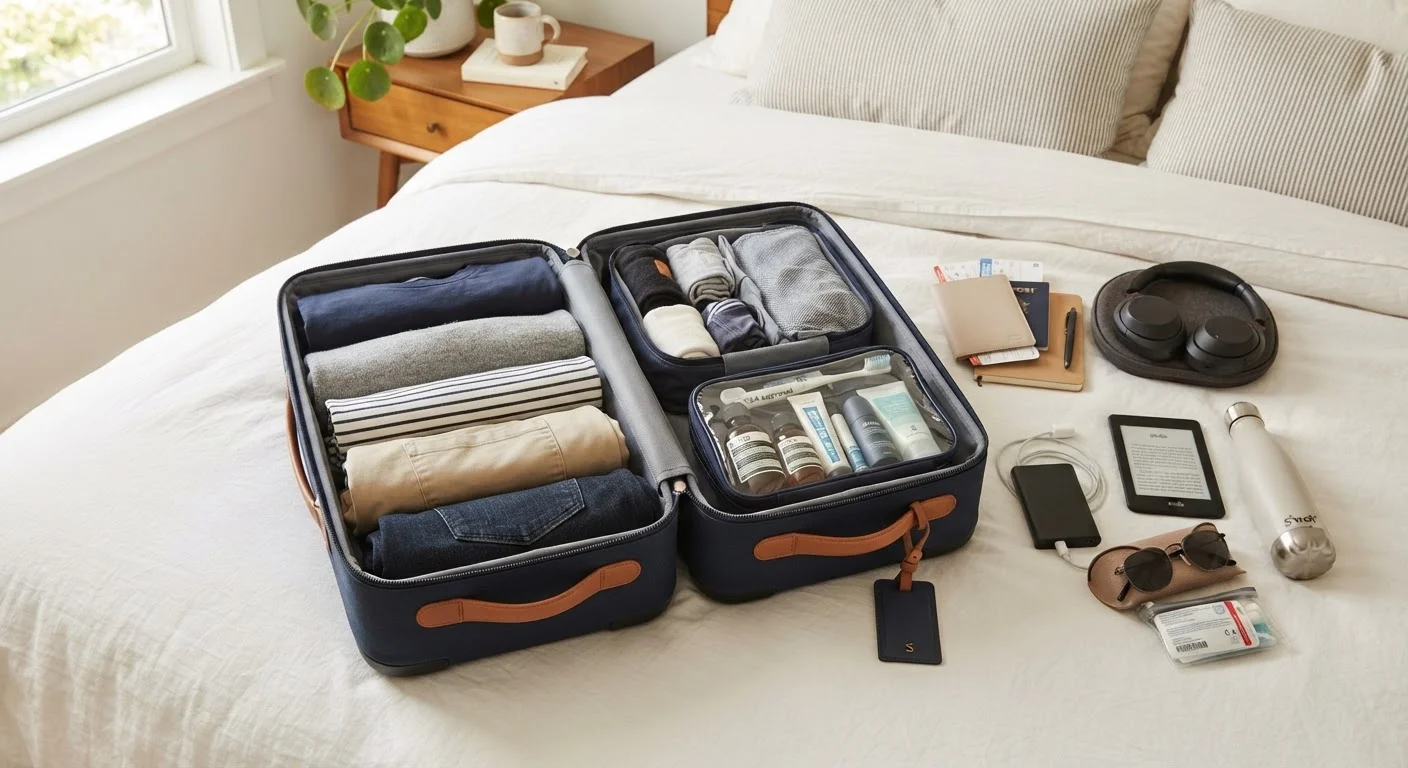
Photo credit: InsightsGrove.com | Discover Joy In Reading
In this article
Skip checked bag fees for good. A practical walkthrough of planning, packing, and traveling light without giving anything up.
Key Takeaways
- Choosing the right bag size upfront is the single most important carry-on decision you will make.
- A versatile clothing system built around neutral colors eliminates the need to overpack.
- Solid toiletry alternatives and travel-size liquids keep you within TSA's 3-1-1 rule without sacrificing hygiene.
- Packing cubes and compression bags can meaningfully reduce the volume your clothes occupy.
- Checking your airline's carry-on dimensions before you fly prevents gate-check surprises.
- Carry-on-only travel routinely saves $50–$100 or more per round trip in checked baggage fees.
Why Carry-On Only Is Worth the Upfront Effort
Checked bag fees on US carriers typically run $35–$45 each way per bag. On a round trip, that's $70–$90 gone before you've touched a drop of local food or bought a single souvenir. Over several trips a year, the math becomes hard to ignore. Carry-on-only travel eliminates that cost entirely, and it comes with non-financial perks too: no waiting at baggage claim, no risk of lost luggage, and the freedom to book the cheapest connecting flight without worrying about tight transfer windows.
The Smart Packing hub covers the full ecosystem of light travel, but this article focuses on the practical decision-making and execution that actually gets you to the gate with everything you need in one bag. The system requires some deliberate choices up front — what bag to use, how to build a clothing set, how to handle liquids — but once you've done it once, it becomes second nature.
Start With One Trip as a Test Run
If you've never traveled carry-on only before, try it first on a short domestic trip of two to three nights. The lower stakes make it easier to identify what you actually need versus what you thought you needed. Most people find they over-packed even on a test run — and that's useful information to carry into every future trip.
What You Need Before You Start Packing
Before pulling anything from your closet, gather the information and gear that will define your constraints.
What you will need
Packing cubes
Compress and organize clothing by category so your bag stays tidy and space-efficient throughout the trip.
Luggage scale
Verify your packed bag meets airline weight limits before you arrive at the airport.
Quart-sized clear zip-top bag
Required for carrying liquids through TSA security in the cabin under the 3-1-1 rule.
Travel-size reusable containers
Transfer full-size liquid toiletries into TSA-compliant 3.4 oz containers.
Compression packing bag
Further reduce the volume of bulky items like fleeces or down jackets.
Tape measure or ruler
Measure your packed bag against airline dimension limits before you leave home.
Step-by-Step: Packing Your Whole Trip Into One Bag
Follow these steps in order. Each one builds on the last — skipping ahead tends to result in overpacking or forgetting something critical. After you're done, run through the pre-trip packing audit to catch anything you missed before you zip up.
Confirm your airline's carry-on size limits
Every airline sets its own carry-on dimensions and weight limits, and they vary — sometimes significantly. Look up the specific policy for each carrier on your itinerary, including any regional or budget airlines operating connecting legs. The most common US domestic allowance is 22 × 14 × 9 inches, but international carriers and budget airlines often use stricter limits. Write down the most restrictive set of dimensions if you're on a multi-carrier trip.
Choose a bag that fits within those limits
Select a bag — hard-sided roller, soft-sided roller, or travel backpack — that fits within your confirmed dimensions with room to spare. A 40L bag generally works for most domestic trips; 30–35L is safer for international and budget airlines. Prioritize bags with a clamshell opening (opens flat like a suitcase) for easiest packing access. Compression straps are a bonus.
Build a clothing list before touching your closet
Write out your planned outfits day by day. Then look for repetition: identify 2–3 bottoms and 4–5 tops that can rotate across multiple outfits. Neutral colors (navy, grey, black, white) mix better and disguise re-wearing. Plan one outfit for travel days, one for any formal or specific-context occasion, and the rest for general use. Aim for no more than 5–7 clothing items total for trips up to a week.
Apply the toiletries rule and cut ruthlessly
Lay out every toiletry you would normally pack. Remove anything available at your destination (hotel shampoo, pharmacies). Transfer liquids into 3.4 oz or smaller containers or switch to solid alternatives. Fit everything into a single quart-sized clear zip-top bag. If it doesn't fit, remove items — not the bag. Medications go in their original labeled containers in your personal item or personal stash for easy security access.
Pack using a system, not intuition
Use packing cubes to separate clothing categories (tops, bottoms, undergarments). Roll clothes instead of folding — rolling reduces creasing and often fits more per cube. Place heavier items (shoes, toiletry bag) at the bottom near the wheels or back panel. Lighter, softer items go on top. Use every pocket intentionally: charging cables, a travel adapter, and your quart bag in exterior pockets for easy security removal.
Do a final weight and size check
Lift your packed bag and measure it fully stuffed. If your airline enforces a weight limit for carry-ons (common on international carriers — often 15–22 lbs), use a luggage scale. If you're over, remove items rather than redistributing; a bag that passes visual inspection can still be flagged at the gate if it appears overstuffed. Then run the pre-trip packing audit to verify nothing essential is missing.
Budget Airlines Play by Different Rules
Ultra-low-cost carriers in the US and internationally often charge for overhead bin access, treating only a small personal item (which fits under the seat) as truly free. A bag that flies free on one airline may cost $60 each way on another. Always read the fare conditions for your specific ticket, not just the airline's general policy page.
Common Challenges and How to Handle Them
Mixed climates: If your trip spans warm and cold weather, layering is more efficient than packing separate wardrobes for each. A lightweight merino base layer, a mid-layer fleece, and a packable outer shell cover a wide temperature range without taking up much space. See the detailed breakdown in Packing for Mixed Climates Without Doubling Your Bag Size.
Longer trips: Seven or more days is where most people feel carry-on-only breaks down. It doesn't have to. The week-long trip in a single backpack guide shows how to plan around laundry access rather than packing more clothes. Most destinations — even budget ones — have coin laundry, hotel laundry services, or sink-wash-friendly fabrics.
Toiletries and the 3-1-1 rule: TSA requires all liquids in carry-on bags to be in containers of 3.4 oz (100ml) or less, all fitting in a single quart-sized clear bag. Solid alternatives — shampoo bars, solid conditioner, solid sunscreen — bypass this rule entirely. For a full breakdown of what's allowed and what works as a substitute, see Toiletries and the 100ml Rule.
Gate-Check Risk Is Real — Plan for It
Even a compliant bag can be gate-checked on full flights when overhead space runs out. Remove any valuables, electronics, and medications from your carry-on before boarding and transfer them to your personal item, which stays with you under the seat. This protects your essentials regardless of what happens to your bag.

Author
Travel Smarter Editorial Team
Travel Smarter Editorial Team is the collective byline for our editorial team and contributor network. Articles published under this byline or an editorial pen name are researched, written, and reviewed according to our editorial standards for clarity, consistency, and independence before publication.
View all articles →