
How to Build a Week-Long Trip Into a Single Backpack
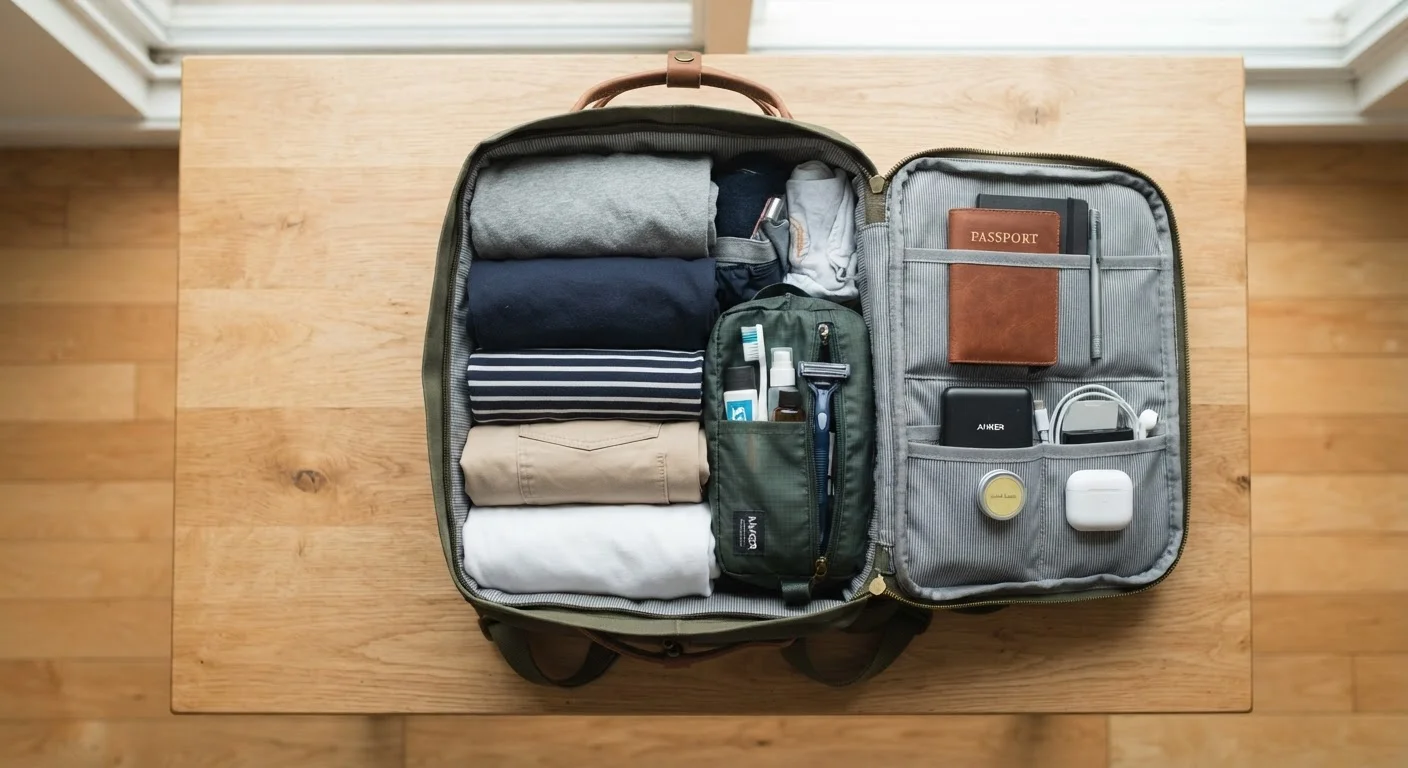
Photo credit: InsightsGrove.com | Discover Joy In Reading
In this article
A practical walkthrough for fitting seven days of travel into a 20–30 litre backpack without compromising on essentials.
Key Takeaways
- A 20–30 litre backpack can cover a full week when you choose versatile, quick-dry clothing.
- Eliminating checked baggage fees alone can save $50–$100+ per round trip on budget carriers.
- The roll-and-layer packing method consistently outperforms folding for space efficiency.
- Limiting toiletries to solid or travel-size formats removes the heaviest dead weight from your bag.
- Doing one mid-trip laundry run of roughly 30–60 minutes cuts your clothing count roughly in half.
Why One Backpack Changes the Economics of a Trip
Checked bag fees on budget carriers frequently add $40–$70 each way — sometimes more than the base fare itself. Traveling with a single personal-item or carry-on-sized backpack sidesteps that cost entirely and removes the risk of lost luggage. It also forces a discipline that makes you a more efficient traveler overall.
The sweet spot for a week-long trip is a 20–30 litre bag. That range fits under most airline seats and in overhead bins, while still holding enough for seven days if you're selective. For a broader look at the trade-offs involved in going carry-on only, see carry-on only travel strategies.
The goal isn't deprivation — it's intentionality. Everything in this guide is oriented toward fitting real, practical needs into minimal space without leaving you short on essentials.
What you will need
What You Actually Need for Seven Days
Most overpacking traces back to two habits: packing for hypotheticals ("what if it gets cold?") and duplicating items you can easily access on the road. Stripping both habits out leaves a surprisingly workable kit.
Clothing
The core principle is remix, don't replace. Aim for pieces that work across multiple outfits and wash quickly:
- 3–4 tops in neutral tones that layer and mix
- 2 bottoms (one can double as smart-casual)
- 1 lightweight layer (packable jacket or merino cardigan)
- 4–5 pairs of underwear and socks in merino or synthetic — both dry overnight
- 1 pair of shoes you're wearing, 1 pair of compact flats or sandals packed
Toiletries
Switch liquid products to solid bars where possible — shampoo bars, solid conditioner, and bar soap eliminate the 100ml limit problem and weigh less. Decant other liquids into small refillable containers rather than bringing full-size bottles. A compact microfiber towel replaces a full bath towel in a fraction of the space.
Merino Wool Is Worth the Investment
Merino wool clothing resists odor significantly longer than synthetic or cotton alternatives, which means you can wear pieces multiple times before they need washing. A single merino t-shirt worn three times during a week trip functionally replaces three cotton shirts in your bag. It's a one-time cost that pays off across every future trip.
Tech and Documents
One charging cable per device, a compact multi-port USB charger, and a universal adapter if you're crossing plug standards. Keep documents in a flat neck wallet or inner bag pocket — never in an exterior zip.
Step-by-Step: Packing Your Bag
Follow these steps in order. Each one builds on the last, and skipping ahead typically results in wasted space or a bag that won't close cleanly.
Lay everything out before anything goes in
Place every item you're considering on a flat surface. Physically seeing the pile makes it easier to cut — items that seem essential in the abstract become obviously redundant when they're next to three similar things. Remove any duplicate-function items immediately.
Pack the heaviest items closest to your back
Dense items — shoes, tech gear, toiletry bag — go in the main compartment against the panel that sits closest to your spine. This keeps the center of gravity close to your body and reduces shoulder strain over long transit days.
Roll all clothing before placing it
Rolling compresses clothing more consistently than folding and makes individual items easier to retrieve without disturbing the rest of the bag. Stand rolls upright in a packing cube so you can see each item at a glance — this is the file-folder method and it's faster than digging.
Fill gaps with flat or compressible items
Scarves, packable jackets, and underwear are flexible enough to fill odd-shaped gaps that rigid items leave behind. A packable jacket can wrap around a tech organizer to prevent shifting. Use every cubic centimeter deliberately.
Test the bag fully packed before your departure day
Lift the bag, carry it for ten minutes, then set it down and check that everything you need for the first 24 hours is accessible without full unpacking. If you had to dig past three layers to reach your adapter, reorder now — not at the gate.
Once you've packed, run through the pre-trip packing audit checklist to confirm nothing essential was left out and nothing unnecessary made it in. For a complete breakdown of bag selection and packing methods, the complete guide to travelling light covers the full picture.
Making It Work Mid-Trip
One laundry session mid-week — typically $3–$8 at a self-service laundromat, or free if your accommodation offers a sink and you use quick-dry fabrics — effectively doubles your wardrobe. Plan it for a low-activity half day.
Resist the urge to buy and pack souvenirs as you go. Ship purchases home flat-rate or buy digital items (photos, experiences) instead. If you do pick up physical items, wear or use something you'd otherwise carry so the bag stays balanced.
Don't Expand Your Bag at the Airport
Many backpacks have expansion zippers that add 5–10 litres of capacity. Using them mid-trip almost always pushes you over airline personal item size limits on the return journey. Keep the bag at its base volume throughout the trip so re-entry through the gate is consistent and fee-free.
Budget destinations where one backpack makes the most financial sense tend to be places with reliable laundry access and warm climates that reduce layering needs. If you're planning a week in a high-cost-of-living city, the savings calculation still holds — the bag fee savings are consistent regardless of destination. For destination-specific cost context, see what a week in Vietnam realistically costs as a worked example of budget travel math. You'll find more destination ideas through the Budget Destinations hub.

Author
Travel Smarter Editorial Team
Travel Smarter Editorial Team is the collective byline for our editorial team and contributor network. Articles published under this byline or an editorial pen name are researched, written, and reviewed according to our editorial standards for clarity, consistency, and independence before publication.
View all articles →