
The Hidden Costs of Budget Airlines That Don't Show Up in the Headline Price
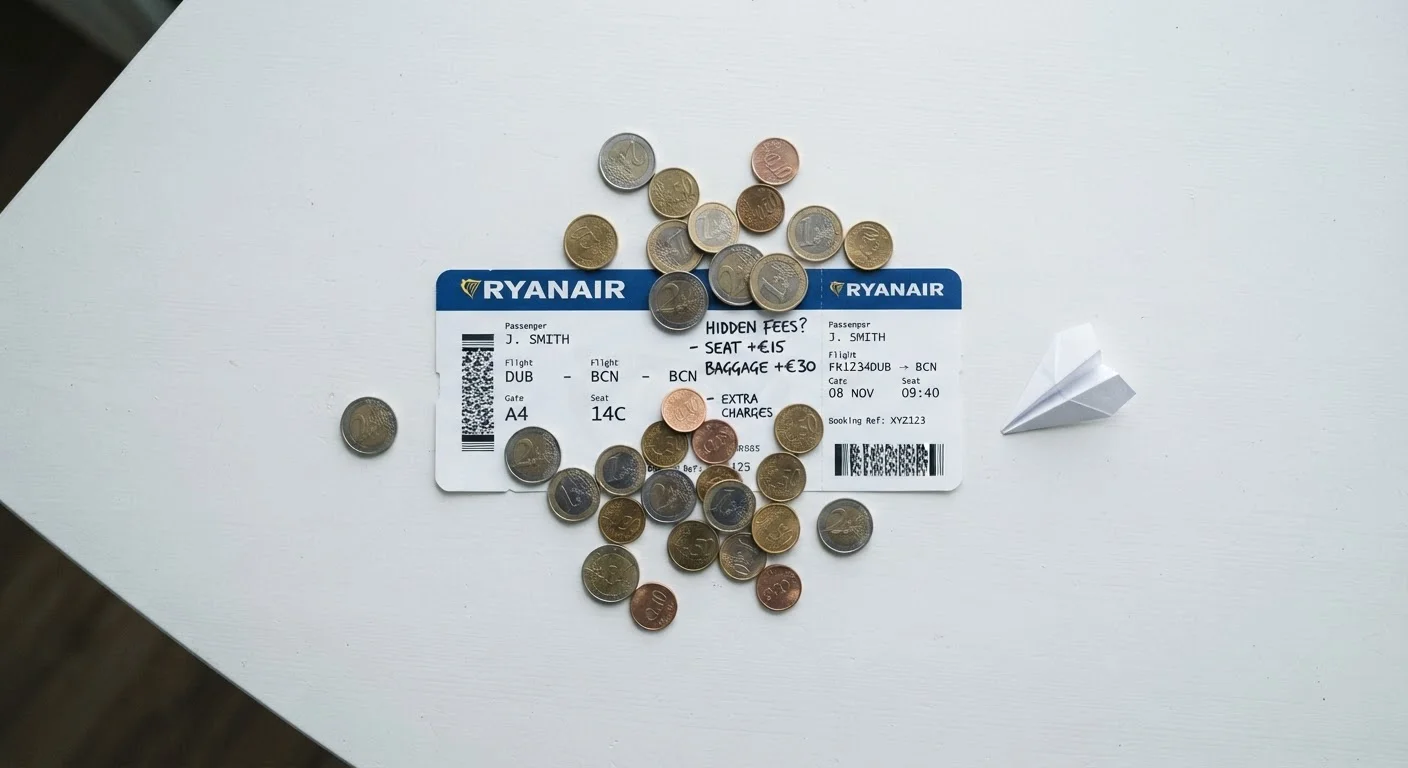
Photo credit: InsightsGrove.com | Discover Joy In Reading
In this article
Low-cost carriers can still be worth it — but only if you know what extras to expect before you book.
Key Takeaways
- Budget airline headline prices routinely exclude seat selection, bags, and payment processing fees.
- Comparing total costs — not just base fares — is the only reliable way to evaluate a budget carrier deal.
- Airport location, travel time to the terminal, and onboard food costs can add significant hidden expenses.
- Checking in online in advance and packing within free allowance limits are among the easiest ways to avoid surcharges.
- Budget carriers can still represent genuine savings, but only when you account for every likely add-on before booking.
Why the Sticker Price Is Almost Never the Final Price
Low-cost carriers (LCCs) built their business model on one core idea: strip the fare down to its absolute floor, then charge separately for everything else. That's not inherently dishonest — it's a pricing structure. The problem is that most travelers compare the headline number to a competitor's all-in fare without realizing they're not comparing the same product.
A $49 base fare that requires a $35 carry-on fee, a $12 seat selection charge, and a $8 payment processing fee quickly lands at $104 — sometimes higher than a conventional carrier's fare that includes those features by default. Understanding the full fee architecture before you book is the single most effective way to use budget airlines to your actual advantage.
For a closer look at how baggage pricing works across different carriers and fare types, see the breakdown of airline baggage fee structures.
Comparing only the base fare without totaling all mandatory and likely add-on fees.
Why it happens: Flight search tools typically surface the lowest possible starting price, making budget carriers appear dramatically cheaper than they may actually be once fees are added.
Ignoring the airport's actual location relative to where you're staying.
Why it happens: Search results list the airport code without signaling that it may be a secondary airport an hour or more from the city center.
Assuming a personal item or carry-on is always free on a budget carrier.
Why it happens: Many travelers assume the rules they know from one airline apply universally, but budget carriers vary widely — some charge for overhead-bin carry-ons while allowing only a small under-seat bag for free.
Paying for seat selection without considering whether it's necessary for your trip.
Why it happens: The booking flow often presents seat selection as a near-mandatory step, creating anxiety about being separated from travel companions or stuck in a poor seat.
Booking a budget fare without budgeting for onboard food and beverages.
Why it happens: Travelers accustomed to carriers that include a complimentary snack or drink forget that LCCs charge for everything, sometimes at elevated airport-style prices.
The Extras That Catch Travelers Most Off Guard
Beyond the obvious bag fees, several charges consistently blindside even experienced travelers on budget carriers.
~50%
Of budget airline revenue from ancillary fees
Industry analysts have noted that ancillary fees — bags, seat selection, and extras — can account for roughly half of some low-cost carriers' total revenue, reflecting how central add-ons are to their business model.
$30–$60
Typical round-trip ground transport premium for secondary airports
Travelers using secondary or regional airports served by many budget carriers often pay significantly more in ground transportation compared to major hub airports closer to city centers.
Airport location: Many LCCs operate from secondary airports that are cheaper for the airline but further from city centers. Ground transportation to a distant airport can easily add $30–$60 round-trip — a cost that never appears in any flight comparison tool. Always verify which airport a fare uses and factor in realistic transfer costs.
Seat selection fees: On many budget carriers, declining to pay for seat selection means the airline assigns you a seat automatically — often a middle seat near the back. For solo travelers, this may be tolerable. For couples or families who need to sit together, unplanned seat fees can stack up fast.
Payment surcharges: Some carriers add a per-passenger, per-leg fee for credit card payments. Checking whether a debit card or specific card type avoids the surcharge takes less than a minute and can save several dollars per ticket.
Onboard food and drinks: Nothing on a budget carrier is complimentary. A coffee and a snack during a three-hour flight can run $15–$20 per person. Packing your own snacks (within security rules) eliminates this cost entirely.
These spending patterns connect to a broader problem worth understanding — see where budget travelers tend to overspend and why it keeps happening for a fuller picture.
Watch for Last-Minute Airport Check-In Fees
Several budget carriers charge a substantial fee — sometimes $25–$50 per person — for checking in at the airport counter rather than online in advance. This fee rarely appears prominently during booking. Set a reminder to check in online during the window the airline specifies, typically 24–48 hours before departure, to avoid it entirely.
Building a Smarter Comparison Before You Book
The most reliable way to evaluate a budget airline offer is to build a complete cost estimate before entering your payment details. That means identifying: the base fare, any mandatory booking fee, your likely bag configuration, seat selection (or the risk of separation), and ground transport from the departure airport.
If you're weighing whether to check a bag or travel carry-on only, the analysis is more nuanced than it first appears. The checked bag vs. carry-on cost comparison walks through the real trade-offs for budget flyers.
It's also worth noting that booking directly through the airline versus using a third-party platform can affect the final price and what fees are visible. When booking direct is actually cheaper explains when each approach tends to work in your favor.
Budget airlines aren't a trap — they're a tool. Used with full information, they can deliver genuine savings. Used carelessly, they can cost more than a conventional fare while delivering fewer amenities. The difference comes down entirely to doing the math before you click purchase.
This article is for general informational purposes only. Prices, fees, and airline policies change frequently. Always verify current charges directly with the carrier before booking.

Author
Travel Smarter Editorial Team
Travel Smarter Editorial Team is the collective byline for our editorial team and contributor network. Articles published under this byline or an editorial pen name are researched, written, and reviewed according to our editorial standards for clarity, consistency, and independence before publication.
View all articles →