
Where Budget Travelers Tend to Overspend — and Why It Keeps Happening
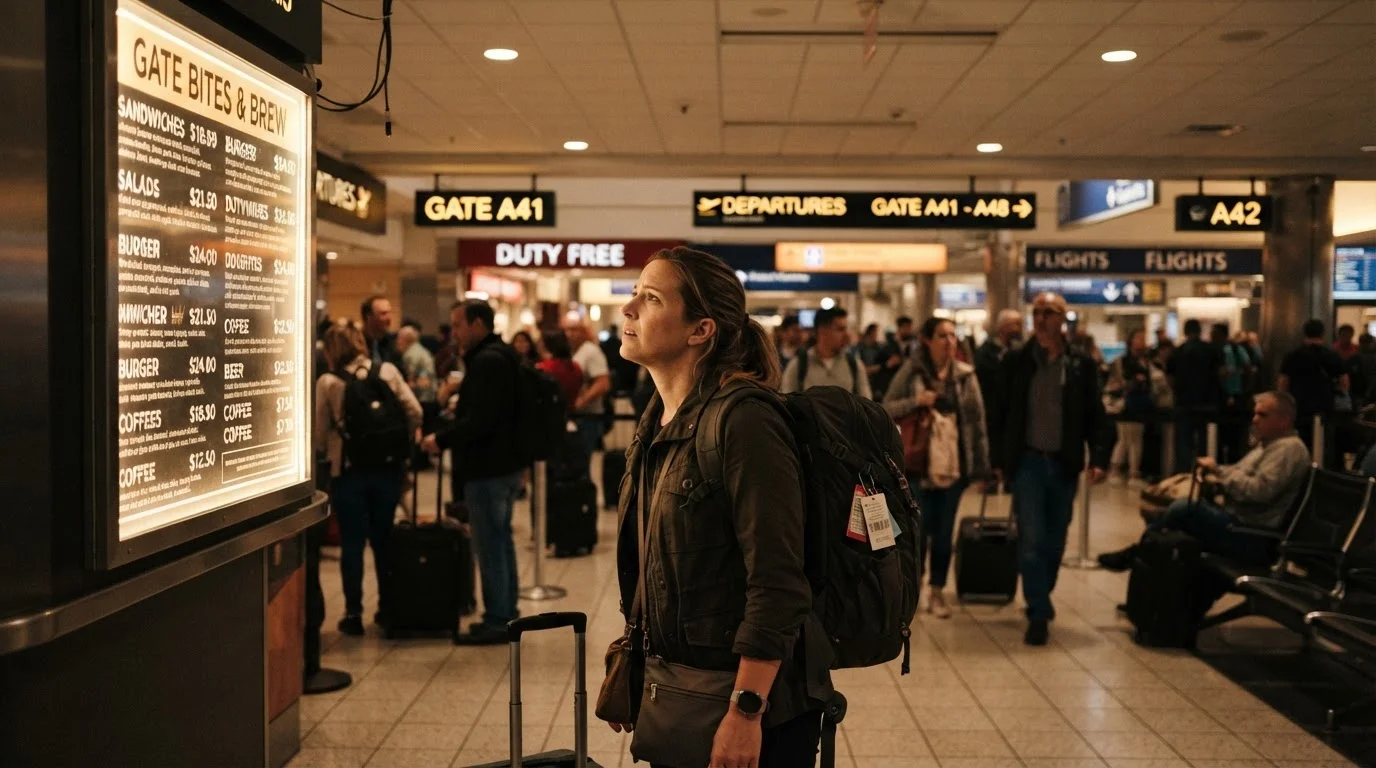
Photo credit: InsightsGrove.com | Discover Joy In Reading
In this article
Airport meals, last-minute bookings, and tourist-trap exchanges are just the start. These are the spending patterns that quietly drain travel budgets — and how to sidestep them.
Key Takeaways
- Airport food, drinks, and transport consistently cost far more than comparable options just outside the terminal.
- Last-minute bookings and vague daily budgets are structural habits that reliably push spending over plan.
- Currency exchange at airports and tourist areas typically charges the highest fees and worst rates.
- Destination choice matters as much as in-trip decisions — some places are structurally harder to travel cheaply.
- Small, repeated daily purchases — not single big splurges — are usually where budgets quietly collapse.
The Pattern Behind the Overspend
Most budget travel failures aren't caused by one expensive decision. They're caused by a series of small, predictable ones — each individually justifiable in the moment, collectively ruinous to the plan. Airport meals, impulse currency exchanges, and last-minute accommodation bookings all share a common structure: low awareness, high cost, and a situational pressure that makes the cheaper option feel inaccessible right then.
Understanding why these patterns happen is more useful than simply knowing they exist. When you recognize the mechanism — hunger, time pressure, a feeling of safety in the familiar — you can design around it rather than just trying to willpower your way through.
The mistakes below aren't obscure edge cases. They're the categories where budget travelers most consistently spend more than they planned to, based on the structural dynamics of how travel decisions get made. If you're building habits across other areas of your finances too, everyday budgeting strategies apply the same pattern-awareness to daily spending at home.
The Mistakes — and How to Sidestep Them
Eating and drinking inside the airport without planning ahead.
Why it happens: Hunger, stress, and limited time push travelers toward whatever food option is immediately visible — which is almost always airport-priced.
Booking flights, accommodation, or tours at the last minute without a cost comparison.
Why it happens: Flexible travel sounds appealing in theory, but spontaneous booking almost always means paying peak or panic rates with no time to find alternatives.
Exchanging currency at airport booths, hotel desks, or tourist-area kiosks.
Why it happens: These locations feel safe and official, so travelers assume the rates are fair. In reality, high-traffic exchange points charge a premium precisely because their customers have few immediate alternatives.
Traveling to a destination without factoring in day-to-day costs beyond the headline trip price.
Why it happens: Flights and hotels dominate the mental budget, leaving food, local transport, activities, and incidentals underestimated or ignored entirely.
Paying for checked baggage on low-cost carriers without realizing it's extra.
Why it happens: Headline fares exclude nearly everything, and add-on fees are often buried in the booking flow. Travelers compare base fares and assume the price is close to final.
Skipping shoulder or off-season dates because of vague concerns about weather or crowds.
Why it happens: Peak-season travel is the default. Many travelers don't investigate whether off-peak timing is actually a problem for their specific destination and plans.
Booking platforms add another layer of complexity. Whether you use an online travel agency or a supplier's own site affects both price and flexibility — and neither is always cheaper. When booking direct actually saves money depends on the specific situation, not a blanket rule.
Destination Choice Is a Budget Decision Too
Where you go shapes how much you'll spend before you ever touch your wallet on the ground. Some cities and countries have structural cost floors — transit, accommodation, and food simply cost more regardless of how careful you are. Others make budget travel genuinely easy because local pricing is low relative to the US dollar.
That gap between destinations is often larger than the gap between a careful spender and a loose one in the same place. How experienced budget travelers evaluate destinations goes beyond gut feel — cost-of-living indexes, visa costs, and flight routing all factor into the real price of a trip.
Airport Currency Exchange Costs More Than You Think
Exchange booths inside airports and hotel lobbies routinely build margins of 10–15% into their rates on top of any stated fees. That gap compounds fast on larger amounts. Using a fee-aware bank card or withdrawing local currency from an in-city ATM after arrival is generally a lower-cost approach — but always verify your card's foreign transaction terms before you travel.
If you find yourself consistently going over budget on travel, it's worth examining whether the issue is in-trip habits or destination selection. Both matter, and the full range of travel money considerations covers both sides of that equation.
~10–15%
Typical airport currency exchange margin above mid-market rate
Currency exchange specialists and consumer finance researchers consistently document airport and hotel exchange booths charging well above the interbank mid-market rate through fees and built-in spreads.
3–5×
Markup on airport food vs. nearby off-airport options
Studies of airport concession pricing across major US airports have found food and beverage prices frequently running two to five times higher than comparable off-airport alternatives in the same city.

Author
Travel Smarter Editorial Team
Travel Smarter Editorial Team is the collective byline for our editorial team and contributor network. Articles published under this byline or an editorial pen name are researched, written, and reviewed according to our editorial standards for clarity, consistency, and independence before publication.
View all articles →