
Rolling vs. Folding vs. Bundle Wrapping: Packing Methods Compared
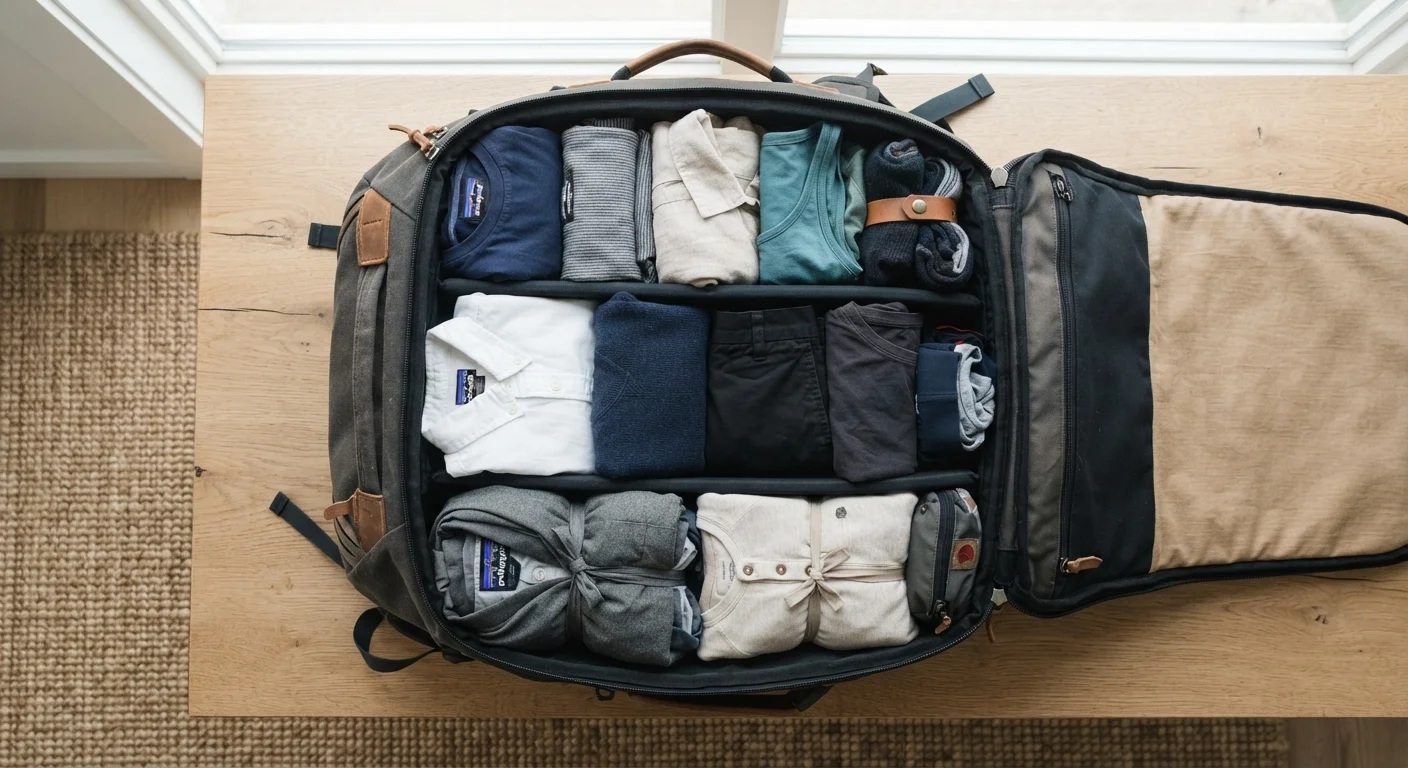
Photo credit: InsightsGrove.com | Discover Joy In Reading
In this article
An honest comparison of the three most popular clothing packing techniques — what each does well and where each falls short.
Key Takeaways
- Rolling saves the most space for casual, wrinkle-resistant fabrics like t-shirts and jeans.
- Folding works best for structured garments — dress shirts, blazers, and trousers that crease along natural lines.
- Bundle wrapping minimizes wrinkles across the board but requires a dedicated packing sequence that takes practice.
- No single method wins for every trip — mixing techniques based on your clothing type is often the smartest approach.
- Your packing method matters less than choosing the right clothes to begin with.
Why Packing Method Actually Matters
Most packing advice fixates on what to bring. But how you pack directly affects whether your clothes arrive wearable, whether you can access items mid-trip without unpacking everything, and whether your bag stays under airline weight and size limits.
For budget travelers, that last point is real money. Checking a bag because you ran out of space — or repacking on the sidewalk outside an airport — are both avoidable problems. Choosing and combining packing methods deliberately can help you carry more in less space with fewer wrinkles. This comparison covers the three most widely used techniques: rolling, folding, and bundle wrapping.
If you haven't sorted out which clothes to bring yet, the capsule wardrobe approach is worth reviewing first — your packing method only performs as well as the clothing selection behind it.
Rolling: High Efficiency, Low Fuss
Rolling involves tightly coiling individual garments into cylinders before placing them in your bag. It's the most widely recommended method for casual travelers, and for good reason.
What it does well
- Space efficiency: Rolls pack into gaps and corners that flat-folded items can't reach, making better use of every cubic inch.
- Visibility: Standing rolls upright in a bag lets you see every item at a glance — no digging required.
- Fewer creases in the right fabrics: T-shirts, jeans, knitwear, synthetic athletic wear, and linen all roll without significant wrinkling.
Where it falls short
- Structured fabrics — dress shirts, blazers, suit trousers — tend to crease unpredictably when rolled. These items don't have natural fold lines, so the rolling process creates random wrinkles that are hard to steam out.
- Bulky items like thick sweaters can produce awkward, uneven rolls that waste space rather than save it.
Rolling Works Best When Clothes Are Dry
Rolling damp or even slightly humid clothing traps moisture and can lead to odor or mildew by the time you unpack. Always ensure garments are fully dry before rolling, especially quick-dry synthetics that may feel dry on the surface but retain moisture in the seams.
Folding: Structure and Precision
Folding is the default packing method most people learned from organizing a dresser drawer. Done correctly, it's not simply laying clothes flat — it involves folding along the garment's natural seams and crease lines.
What it does well
- Wrinkle control on structured items: A dress shirt folded along its existing seams arrives with predictable, intentional creases — the kind a quick shake or brief hang can remove.
- Simplicity: No technique to learn. Fold the same way you would at home.
- Works well in hard-shell luggage: Flat-folded stacks fit cleanly into rectangular suitcase cavities.
Where it falls short
- Folded stacks collapse and shift in transit, especially in soft-sided bags or backpacks. Items at the bottom get crushed under the weight of everything above them.
- Space efficiency is lower than rolling for casual fabrics — folded clothes leave more dead air in a bag.
For a deeper look at what else affects bag organization, see how packing cubes interact with folded and rolled items.
Bundle Wrapping: Wrinkle Reduction at the Cost of Speed
Bundle wrapping — sometimes called the bundle method — works by layering garments around a central core object (often a small pouch or rolled soft item). Each garment is wrapped around the bundle rather than folded independently, so creases in any single item are distributed across the whole bundle instead of concentrating along one fold line.
What it does well
- Wrinkle minimization: Because no garment has a sharp independent fold, this method consistently produces the smoothest results of the three.
- Compression: The finished bundle is compact and dense — a single cohesive unit that resists shifting in transit.
Where it falls short
- It requires packing and unpacking everything in a set sequence. If you need one item mid-trip, the whole bundle comes apart.
- It works best with a consistent, planned clothing set — exactly the kind you'd build using versatile, multi-use clothing items. Variable or bulky items don't wrap cleanly.
- There's a learning curve. Your first bundle will likely be loose and uneven.
| Rolling | Folding | Bundle Wrapping | |
|---|---|---|---|
| Space efficiency | High — fills gaps and corners | Moderate — leaves dead air | High — dense, compact unit |
| Wrinkle control | Good for casual fabrics only | Good for structured items | Best overall wrinkle reduction |
| Mid-trip accessibility | Excellent — grab individual rolls | Good — lift top layers | Poor — bundle must be fully unwrapped |
| Learning curve | Minimal | None | Moderate — requires practice |
| Best bag type | Backpacks and soft bags | Hard-shell suitcases | Any bag with a flat base |
| Best clothing type | Casual, stretchy fabrics | Structured, seamed garments | Mix of lightweight dressier items |
| Time to pack | Fast | Fast | Slow |
How to Combine All Three
Professional packers rarely use a single method. A practical hybrid approach:
- Roll all casual items — t-shirts, underwear, socks, workout clothes — and stand them upright in the main compartment or packing cubes.
- Fold any structured garments flat against the back or sides of your bag, where they're least likely to shift.
- Bundle wrap if you're carrying three or more dressier items for a longer trip and you have the time to practice the sequence before departure.
For first-time travelers working out a full system from scratch, this overview of budget packing essentials covers bag selection and what to leave behind — both of which affect how much any packing technique can help.
The harder truth is that method optimization has a ceiling. As noted in common packing myths, technique can't compensate for bringing too much. A disciplined clothing list will always matter more than a perfect roll.
This article provides general travel packing guidance for educational purposes. Airline baggage policies, size limits, and fees vary by carrier and route — always verify current rules directly with your airline before traveling.

Author
Travel Smarter Editorial Team
Travel Smarter Editorial Team is the collective byline for our editorial team and contributor network. Articles published under this byline or an editorial pen name are researched, written, and reviewed according to our editorial standards for clarity, consistency, and independence before publication.
View all articles →