
The Capsule Wardrobe Approach to Packing Light
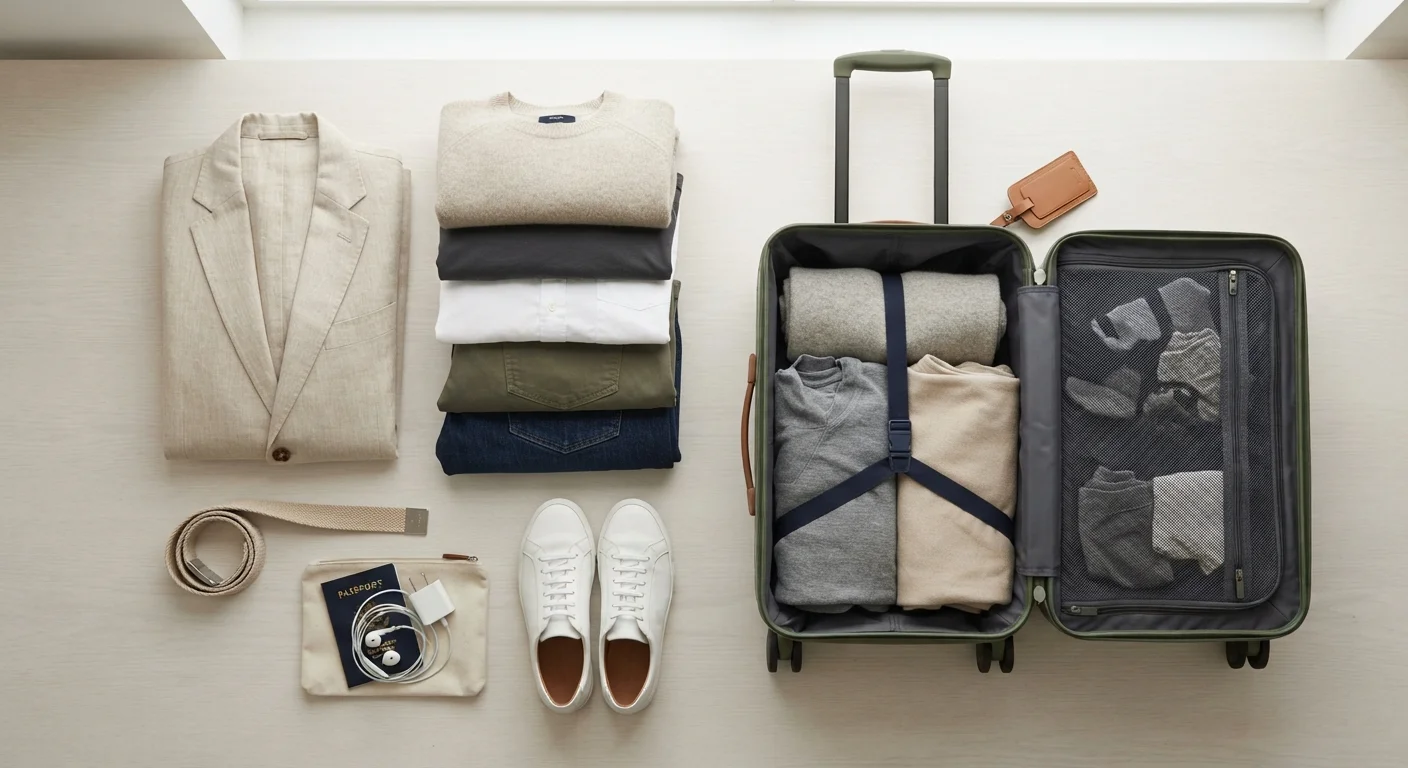
Photo credit: InsightsGrove.com | Discover Joy In Reading
In this article
How selecting a small, mix-and-match clothing set can cut your bag weight dramatically without sacrificing outfit variety.
Key Takeaways
- A travel capsule wardrobe uses 10–15 coordinated pieces to generate dozens of outfit combinations.
- Sticking to a unified color palette is what makes mix-and-match packing actually work.
- Choosing items by versatility — not volume — is how experienced packers avoid checked bag fees.
- Neutral, quick-dry fabrics stretch the utility of every piece without adding weight.
- Planning outfits before you pack exposes redundant items you can eliminate before departure.
Why Most Travelers Overpack — and Pay for It
The average first-time traveler packs for worst-case scenarios: a formal event that may never happen, a cold snap that might not arrive, outfit variety for Instagram moments. The result is a bag that triggers checked luggage fees, strains backs on transit, and ironically still leaves the traveler wearing the same three outfits on rotation.
Checked bag fees on domestic US flights commonly run $30–$40 each way, and on international budget carriers, they can exceed $60 per leg. Over a two-week trip with two flights, that's a real cost that the capsule approach can eliminate outright — especially when combined with carry-on only travel.
The capsule wardrobe method reframes packing as an exercise in intentional selection rather than hedging against every possibility.
$30–$60+
Typical checked bag fee per flight leg
Fees vary by airline and route; budget carriers on international routes frequently charge at the higher end of this range.
15+
Outfit combinations from 5 tops and 3 bottoms
Simple combinatorics — 5 tops × 3 bottoms — illustrate why item count and outfit count are not the same thing in a coordinated wardrobe.
40L
Carry-on bag volume that fits most airline limits
Most major US carriers allow carry-on bags up to approximately 45 linear inches; a 40L bag typically fits within this range, though policies vary.
The Core Mechanics: How Mix-and-Match Actually Works
The math behind a capsule wardrobe is straightforward. Five tops combined with three bottoms produces 15 distinct outfits. Add two layering pieces and the combinations multiply further. The condition that makes this work is color coherence: every item must pair logically with every other item in the set.
A typical travel capsule might look like:
- 3 tops (neutral + one accent color)
- 2 bottoms (one casual, one smart-casual)
- 1 dress or versatile one-piece (if applicable)
- 1 lightweight layer (packable jacket or cardigan)
- 1 pair of shoes that handles walking and evenings
- Undergarments and socks planned around laundry cadence
The strict discipline is eliminating anything that only works with one other item. A statement piece that pairs with nothing else is dead weight — literally.
Test Your Capsule Before You Fly
A week before your trip, live out of only the items you plan to pack. Cook, go out, and do your normal routine using only those pieces. You'll quickly discover which items you actually reach for and which were wishful thinking. This trial run consistently reveals two or three items you can cut.
Fabric Choice Determines How Far Your Wardrobe Stretches
A capsule wardrobe's effectiveness depends heavily on fabric. Natural-fiber clothing like cotton, while comfortable, absorbs odor, takes hours to dry, and wrinkles easily. Travelers who've switched to merino wool or moisture-wicking synthetics often report being able to re-wear tops two or three times between washes without issue.
Quick-dry fabrics also open up hand-washing as a viable strategy — rinse a shirt in a hotel sink at night, hang it up, and it's dry by morning. That single habit can cut your total clothing count nearly in half. For a deeper look at which item types deliver the most versatility per ounce, see clothing items that pull the most weight in a minimalist pack.
Building Your Capsule: A Practical Process
Start by listing every outfit you expect to need — not every item, every outfit. Then work backwards to identify the minimum set of pieces that generates all those outfits. This approach consistently surfaces items that can be eliminated without losing any outfit combination you actually planned to wear.
A few practical steps that consistently help:
- Photograph your planned outfits on your bed before you pack. Seeing them together makes redundancies obvious.
- Set a hard item limit before you start — not after. Deciding in advance forces tighter choices.
- Wear your bulkiest item on travel days, not in your bag. Boots or a thick jacket worn instead of packed frees significant volume.
- Check laundry access at your destination. Even one laundry stop mid-trip changes the equation significantly.
For first-time budget flyers newer to this process, the broader context is covered in smart packing for first-time budget flyers.
Laundry Access Changes Everything
The number of clothing items you need scales directly with how long you go between washes. If your accommodation has laundry facilities or you're near a laundromat, a 7-piece capsule can realistically cover two weeks. Always check laundry options when booking — it's a packing variable as important as weather.
Packing Methods That Complement the Capsule Approach
Choosing the right items is only half the equation — how you pack them determines whether they fit in a carry-on. Rolling is generally preferred for wrinkle-prone knits and casual wear; bundle wrapping (wrapping garments around a central core) is particularly effective for structured items. Each method has trade-offs covered in detail in our comparison of rolling, folding, and bundle wrapping.
Packing cubes help segment your capsule by category, making outfit assembly at your destination faster and keeping the bag organized through multiple stops. They don't compress clothing significantly, but they prevent the chaotic reshuffling that leads travelers to pack more than necessary as a buffer.
Done well, a capsule wardrobe paired with deliberate packing technique is what makes one-bag travel genuinely practical for trips of a week or longer — not just an aspirational idea.
This article is for general informational purposes. Prices, airline policies, and fee structures change frequently — always verify current baggage rules directly with your carrier before traveling.
Frequently Asked Questions

Author
Travel Smarter Editorial Team
Travel Smarter Editorial Team is the collective byline for our editorial team and contributor network. Articles published under this byline or an editorial pen name are researched, written, and reviewed according to our editorial standards for clarity, consistency, and independence before publication.
View all articles →