
Carry-On Only: What the One-Bag Philosophy Actually Means
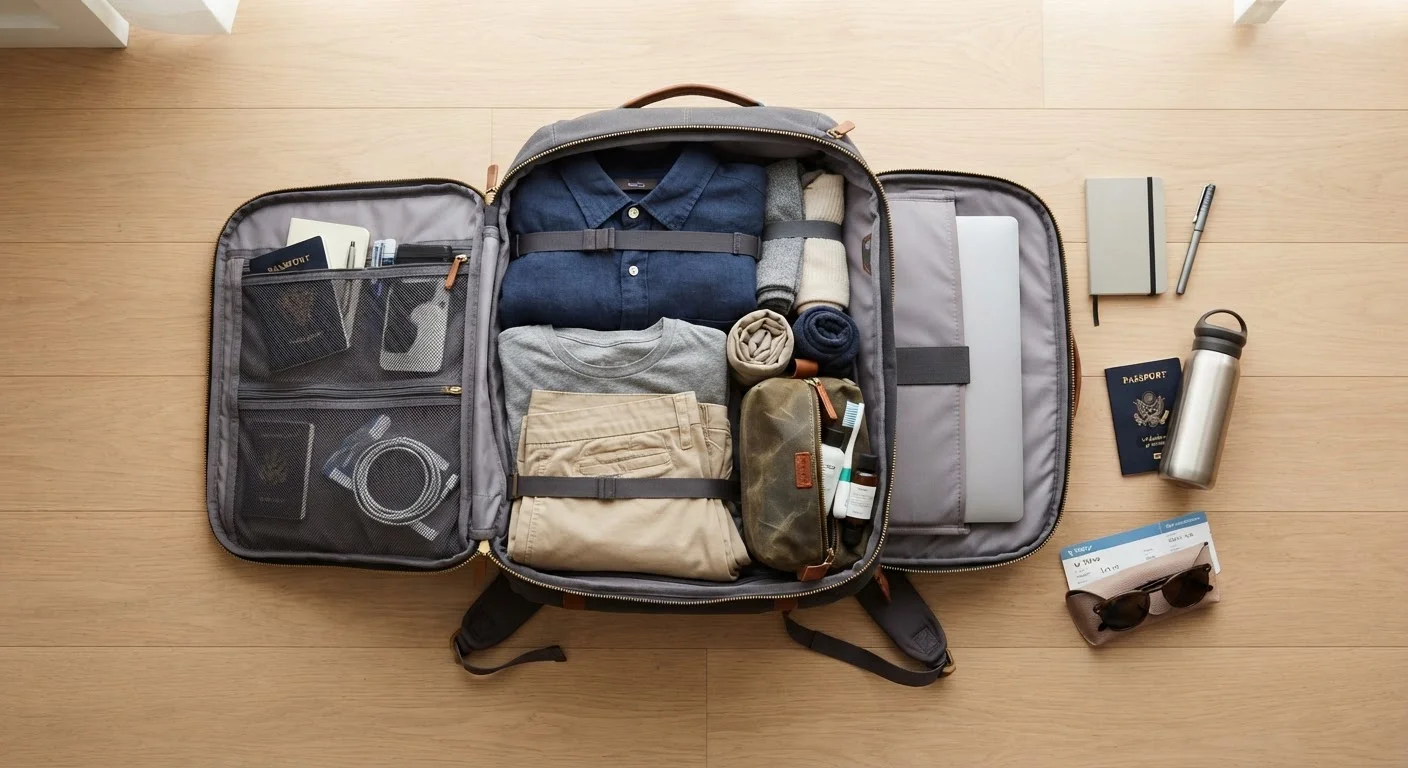
Photo credit: InsightsGrove.com | Discover Joy In Reading
In this article
The one-bag travel approach explained — what it is, why it works, and whether it suits your travel style.
Key Takeaways
- One-bag travel means fitting everything into a single carry-on — no checked luggage.
- Skipping checked bags can eliminate $30–$70 or more in round-trip airline fees.
- The approach requires deliberate clothing choices, often built around mix-and-match pieces.
- It works best for trips under two weeks but can be adapted for longer travel with laundry planning.
- The philosophy is a habit and mindset shift, not just a packing technique.
What the One-Bag Philosophy Actually Is
Strip the buzzword away and the one-bag philosophy is a simple constraint: one carry-on bag, nothing else checked at the airport. Everything you're bringing on the trip lives in that single bag — clothing, toiletries, electronics, documents, all of it.
It's a travel approach that's been popularized by frequent travelers, digital nomads, and budget flyers who got tired of paying checked bag fees, waiting at baggage carousels, and losing luggage to airline mishaps. The discipline behind it isn't about suffering through a trip with fewer clothes — it's about packing smarter so you don't need more.
The one-bag model fits neatly into the broader conversation about travel money strategy, because the single biggest mechanical win is financial: no checked bag fees on every flight you take.
Airline Size Rules Vary — Always Check
Carry-on size and weight limits differ by airline, and budget carriers in particular enforce them strictly. A bag that sails through on one airline may trigger a gate-check fee on another. Before each trip, verify the specific carry-on policy for every airline on your itinerary — don't rely on a general rule of thumb.
Why People Do It — and What They Actually Gain
The benefits stack up fast once you experience them firsthand. At the airport, you walk straight to security without stopping at a check-in counter. When you land, you walk straight off the plane and out the door — no 20-minute wait at baggage claim, no anxiety about whether your bag made the connection.
The financial case is straightforward. As explored in the carry-on vs. checked bag cost breakdown, fees for a single checked bag can run $30–$70 or more each way on many US carriers, and budget airlines can charge even more. Across several trips a year, that's real money.
There's also a subtler benefit: decision fatigue drops. Fewer items means less to track, less to pack and repack, and less to worry about. Travelers who commit to the one-bag approach often describe it as the thing that made travel feel lighter — not just physically.
$70+
Typical round-trip checked bag fee per bag
Checked bag fees on many US domestic carriers range from $30 to over $70 each way, depending on the airline and fare class.
20–40L
Common bag size range for one-bag travelers
Most carry-on compliant bags used in the one-bag community fall between 20 and 40 liters, balancing capacity with airline size compliance.
3–5
Days of clothing most one-bag travelers pack
Rather than packing for every day of a trip, one-bag travelers typically pack a 3–5 day clothing rotation and plan for laundry access.
The Core Habits That Make It Work
The one-bag philosophy doesn't run on willpower alone — it runs on systems. The most effective one-bag travelers rely on a few repeatable habits:
- Clothing built around mix-and-match logic: A small set of neutral pieces that layer and combine freely. The capsule wardrobe approach describes exactly how to build this kind of travel-ready clothing set.
- Laundry as part of the trip plan: Packing 3–5 days of clothing and planning one laundry run per week is standard practice for longer trips. Quick-dry fabrics are worth it.
- Toiletries kept minimal and TSA-compliant: Travel-sized containers, solid toiletry bars, and buying certain items (like shampoo or sunscreen) at the destination rather than packing them.
- Electronics audited ruthlessly: Every cable, adapter, and device takes up space and weight. One-bag travelers question whether each item is actually needed — not just possibly useful.
Many of the assumptions that push people toward heavy packing don't hold up under scrutiny. Common packing myths — like the idea that you'll always need outfit options or that more is safer — are worth examining before your next trip.
Start With One Trip Before Committing Fully
If you're unsure whether one-bag travel suits you, test it on a short 3–4 day trip before applying it to a longer journey. Pack your usual amount, then set aside everything you think you could skip. Travel with just that edited version and note what you actually reached for. Most first-timers are surprised by how little they actually needed.
When One Bag Works — and When It Gets Complicated
One-bag travel is genuinely well-suited to trips under two weeks, warm-weather destinations, and travelers with flexible, low-formality itineraries. It also excels for anyone bouncing between multiple cities where lugging a large bag becomes a real physical burden.
It gets harder in a few specific scenarios: extended cold-weather trips (winter gear is bulky by nature), trips that mix very different dress codes (a business conference followed by a hiking leg), or travel with young children where the gear-to-adult ratio is high.
None of these are dealbreakers — they just require more planning and realistic tradeoffs. The practical walkthrough of carry-on only travel covers how to handle those harder cases step by step.
For a full system covering bag selection, packing methods, and fee avoidance, the complete guide to travelling light is a useful next step once the core concept clicks.
“The best gear is the gear you don't have to carry. Every item you leave behind is a problem you don't have to solve on the road.”
— Graham Hill, Founder of LifeEdited, advocate for minimalist living and travel
Frequently Asked Questions

Author
Travel Smarter Editorial Team
Travel Smarter Editorial Team is the collective byline for our editorial team and contributor network. Articles published under this byline or an editorial pen name are researched, written, and reviewed according to our editorial standards for clarity, consistency, and independence before publication.
View all articles →