
Packing Myths That Keep Travellers Lugging Heavy Bags
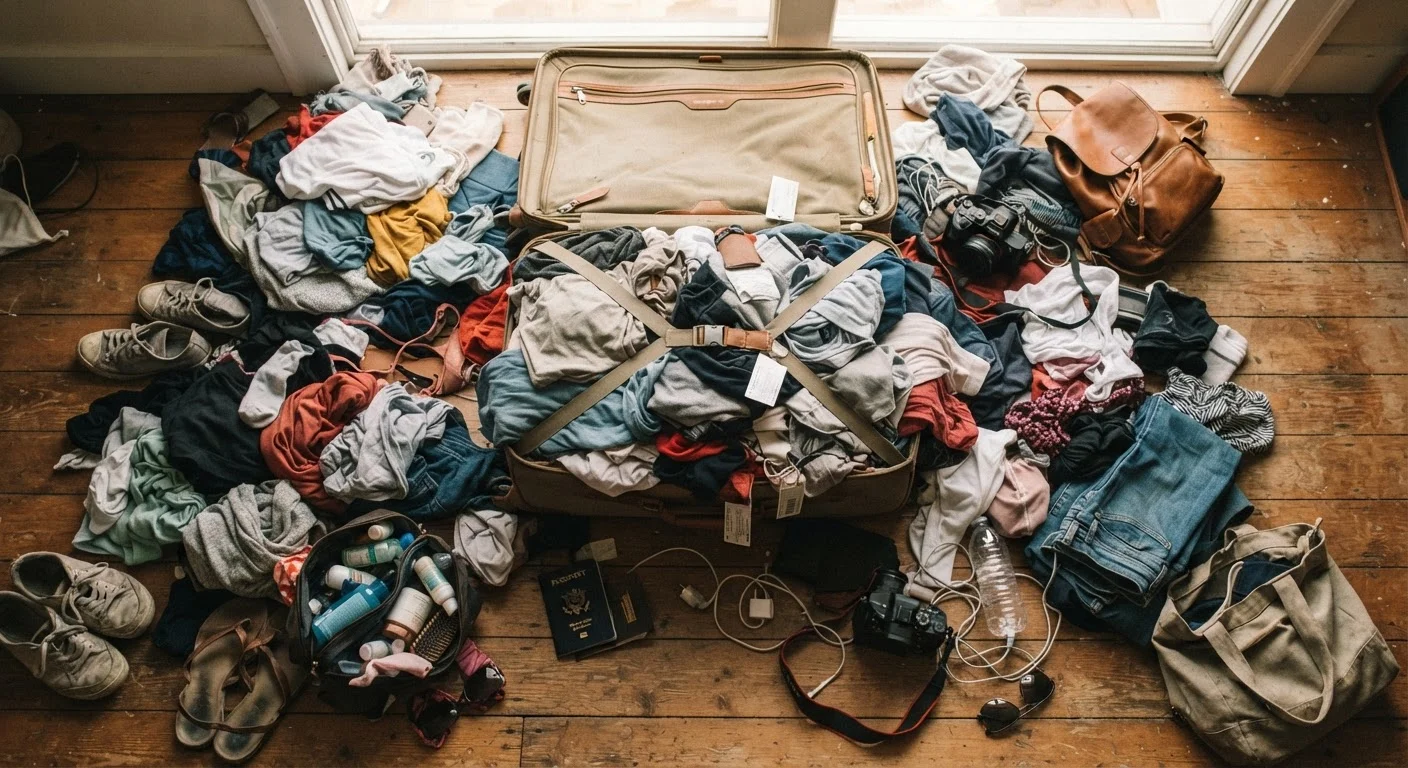
Photo credit: InsightsGrove.com | Discover Joy In Reading
In this article
Common packing beliefs — like 'you always need options' or 'heavier bags mean better prepared' — examined against reality.
Key Takeaways
- Checked baggage fees can add significant cost to a trip that carry-on packing easily avoids.
- Most travellers use only a fraction of what they pack, making 'just in case' items a costly habit.
- Layering and versatile fabrics eliminate the need to pack separate outfits for every occasion.
- Toiletries and gear are widely available at destinations, so packing full-size versions wastes space.
- Heavier bags slow you down, increase injury risk, and limit transportation options abroad.
Why Packing Myths Are Expensive
Overpacking is one of the most common — and costly — travel mistakes. Beyond the obvious baggage fees, a heavy bag eats into your budget in ways that are easy to miss: taxi rides instead of buses because your bag won't fit in the overhead rack, checked-bag surprises at low-cost airline gates, and the physical toll of hauling extra weight through airports and cobblestone streets. See why overpacking costs more than just baggage fees for a fuller breakdown of those hidden expenses.
Most of these costs trace back to beliefs that feel like common sense but don't hold up when examined. The myth-and-fact pairs below address the most persistent ones.
Myth
You need outfit options for every occasion, so packing more clothes means you're better prepared.
Fact
Most travellers wear roughly 20% of what they pack. Versatile, mix-and-match pieces cover far more combinations than packing individual outfits.
The 'options' mindset leads to suitcases filled with items worn once or not at all. A handful of neutral-toned pieces in quick-dry fabric can generate more daily outfit combinations than a bag stuffed with single-purpose items. The mental cost of managing more choices at the destination is also real — decision fatigue applies to your wardrobe too. Focus on function and versatility, not volume.
Myth
You should always pack full-size toiletries from home because products abroad are expensive or hard to find.
Fact
Shampoo, toothpaste, and most personal care items are available in pharmacies and supermarkets throughout most destinations — often at comparable prices.
Packing full-size toiletries adds immediate weight and volume, and frequently triggers checked-bag requirements for travellers who could otherwise go carry-on only. Travel-size containers or solid formats (shampoo bars, for example) handle most needs, and basic supplies can be purchased on arrival if needed. The 'hard to find' concern is rarely supported by experience in practice.
Myth
A bigger, heavier bag means you're better prepared for anything that comes up.
Fact
Larger bags primarily create more problems: higher fees, slower movement, restricted transportation options, and physical strain.
Preparedness comes from smart choices, not bag size. A traveller carrying a 35L pack can board any bus, stow under any seat, walk to accommodation without a taxi, and avoid checked-bag queues entirely. The same traveller with a 70L checked bag pays more, waits longer, and has fewer transport options at the destination. Carry-on only travel: what it takes to pack your whole trip into one bag walks through exactly how to make a single bag work across extended trips.
Myth
Rolling clothes always saves more space than folding — packing method is the key to a lighter bag.
Fact
Packing method affects organization and wrinkles more than it reduces the total volume of what you bring. What you leave out matters more than how you pack it.
Rolling, folding, and bundle wrapping each have real trade-offs in terms of wrinkle prevention and compression, but none of them will compensate for bringing too much. Rolling vs. folding vs. bundle wrapping compared gives an honest breakdown of what each method actually achieves. The most impactful packing decision remains the edit — removing items before you zip up, not rearranging the same items more cleverly.
Myth
Packing cubes let you fit significantly more into your bag.
Fact
Packing cubes improve organization and retrieval speed but do not meaningfully compress or increase the total capacity of your bag.
Packing cubes are widely marketed as space-saving tools, but their primary benefit is structure: knowing exactly where your socks are without unpacking everything. Some compression cubes do reduce air in soft items like fleeces, but the overall effect on bag capacity is modest. What packing cubes actually do — and what they don't covers this honestly. Don't buy a larger bag to accommodate cubes; use cubes to organize a bag that's already the right size.
Putting It Into Practice
Debunking these myths is useful only if it changes how you actually pack. A few practical starting points:
- Build a capsule wardrobe for your trip. Choose 4–6 clothing items in neutral tones that mix and match across multiple outfits. Prioritize fabrics that dry overnight. Versatile clothing types used by experienced light packers explains which categories earn their place in a minimalist pack.
- Apply the one-bag test before every trip. If everything doesn't fit in a single carry-on sized bag, ask what you can remove rather than what bag you can upgrade to. What the one-bag philosophy actually means is a useful frame for this mindset shift.
- Handle mixed climates with layers, not bulk. A trip spanning cold mornings and warm afternoons doesn't require two separate wardrobes. Packing for mixed climates without doubling your bag size covers how to handle temperature swings without adding volume.
Airline Bag Rules Change — Always Verify Before You Fly
Carry-on size limits, personal item policies, and checked bag fees differ by airline and route, and carriers update them regularly. Before committing to a packing strategy around a specific bag size, check the airline's current policy directly on their website. Gate-checking fees at the boarding door are often higher than fees paid in advance.
The same skepticism that helps here applies to other spending decisions. Shopping myths that cost you money covers similar patterns in everyday purchases — from assuming price equals quality to panic-buying during sales.
For a more complete framework on light travel — from bag selection to toiletry strategy — The complete guide to travelling light on any budget is a useful next step.

Author
Travel Smarter Editorial Team
Travel Smarter Editorial Team is the collective byline for our editorial team and contributor network. Articles published under this byline or an editorial pen name are researched, written, and reviewed according to our editorial standards for clarity, consistency, and independence before publication.
View all articles →