
Clothing Items That Pull the Most Weight in a Minimalist Pack
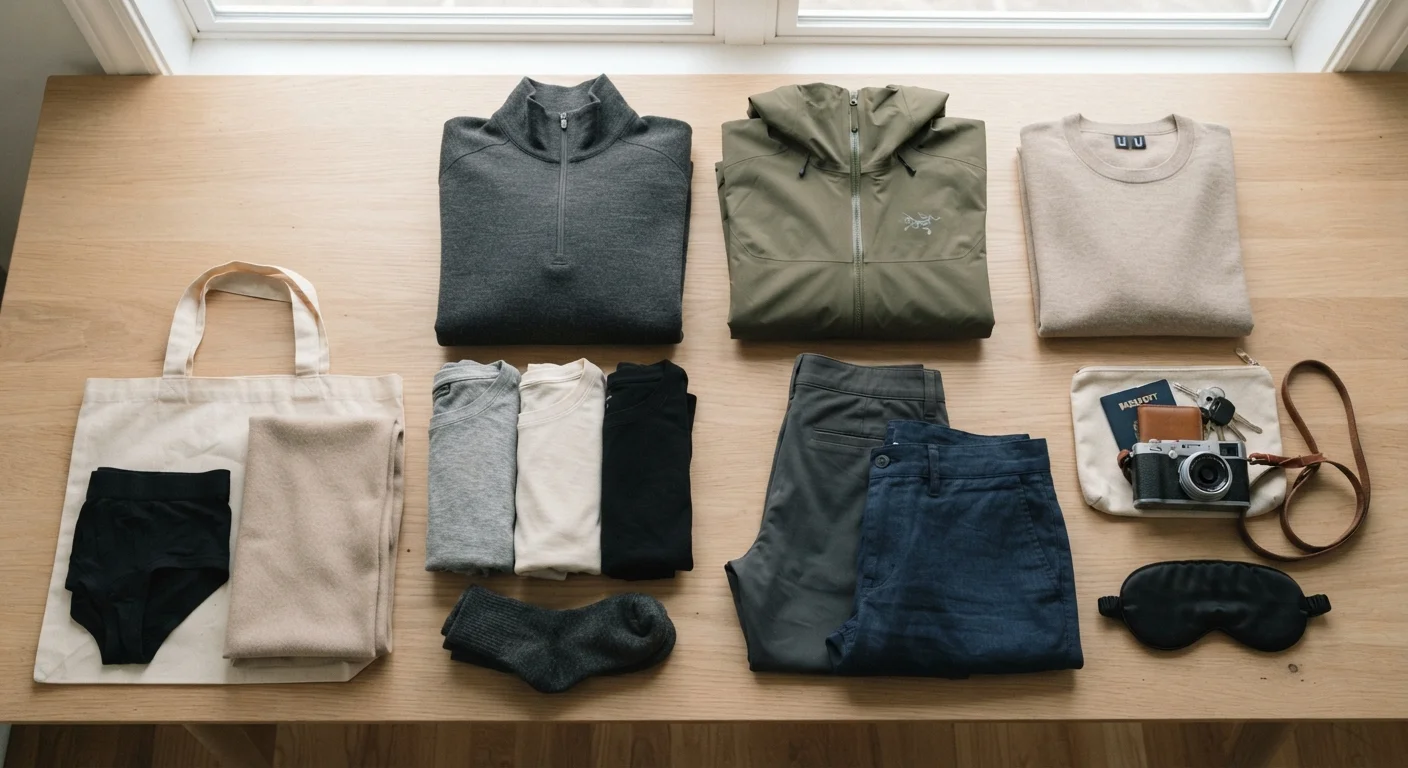
Photo credit: InsightsGrove.com | Discover Joy In Reading
In this article
A curated look at the types of clothing — by function and versatility — that experienced light packers consistently rely on.
Key Takeaways
- Merino wool garments regulate temperature and resist odor, reducing how many items you need to carry.
- A single neutral-toned layer that works for both casual and semi-formal settings earns its place in any minimalist pack.
- Lightweight, quick-dry fabrics let you wash and wear on the road, shrinking your total clothing count.
- Choosing items with multiple functional uses — like a scarf that doubles as a blanket — is a core light-packing strategy.
- Investing in a few higher-quality versatile pieces usually saves money compared to packing cheap single-use items.
Why What You Wear Matters More Than How You Pack
Every experienced light traveler eventually reaches the same conclusion: packing technique matters far less than what you actually choose to bring. You can master rolling, bundle wrapping, and compression cubes — and still haul a heavy bag — if the clothes themselves are wrong. The myths around needing "options" are exactly what leads travelers to overpack in the first place.
A minimalist clothing strategy isn't about deprivation. It's about selecting items that work harder individually — pieces that cross occasions, climates, and dress codes without needing a backup. This approach pairs naturally with a capsule wardrobe mindset, where every item you pack can combine with at least two or three others.
Below are the clothing categories that consistently pull the most weight — literally and figuratively — in a well-edited travel pack.
Merino Wool Base Layers
Merino wool is the closest thing to a cheat code in minimalist packing. The natural fiber regulates body temperature across a surprisingly wide range — warm enough for cool evenings, breathable enough for active days — and it resists odor significantly longer than synthetic or cotton alternatives. That odor resistance is the key: it means you can rewear a merino t-shirt or long-sleeve multiple days in a row without it becoming a problem, which directly reduces how many tops you need to carry.
Merino also dries relatively quickly when hand-washed, making it practical for sink laundry during longer trips. A single merino base layer that works as both a standalone shirt and an underlayer beneath a jacket earns a disproportionate amount of pack real estate.
Merino's odor resistance means fewer tops in your bag — that alone justifies the weight trade-off.
A Packable, Versatile Outer Layer
A lightweight jacket or shell that compresses into its own pocket is one of the highest-return items a minimalist packer can own. The key qualifier is versatility across contexts: it should work as a wind layer on a hike, a light rain barrier in the city, and feel presentable enough for a restaurant or transit. Bulky or heavily branded outerwear fails this test because it signals a single use case.
Look for jackets in neutral or muted colors that blend with the rest of your clothing. The compression factor matters too — if it packs to the size of a water bottle, it can live in a side pocket and come out only when needed, rather than occupying core bag space.
If your jacket can't compress to a fist-sized bundle, it's already asking too much of your pack.
Neutral-Toned, Quick-Dry Bottoms
Pants and shorts in quick-dry synthetic or nylon blends solve two problems simultaneously: they dry overnight after a wash, and their neutral tones mix with almost any top you've packed. Dark navy, olive, and charcoal are particularly forgiving — they hide minor dirt, pair with most colors, and read as either casual or smart-casual depending on the occasion.
A single pair of well-chosen pants can cover hiking trails, city exploration, and a casual dinner without standing out in any context. That multi-setting function is what earns bottom weight in a minimalist kit. Avoid jeans for travel — they take far too long to dry, add significant weight, and offer minimal stretch for active movement.
Quick-dry neutral pants that work on a trail and at dinner eliminate the need for a second pair.
A Lightweight, Packable Scarf or Wrap
A large, lightweight scarf or wrap is one of the most underrated multifunction items in travel clothing. In a single trip it can serve as a neck layer for warmth, a sun cover for shoulders, a makeshift pillow on overnight transit, a light blanket on an air-conditioned bus, and a modest cover in religious or culturally conservative spaces. Very few items at this weight — typically well under 100 grams — deliver that range of function.
Natural fabrics like cotton or linen wraps pack flat without bulk and are breathable in warm climates. This is an item worth owning before you pack a dedicated travel pillow or extra cardigan, because it often makes both redundant.
A lightweight wrap doing five jobs replaces several items that would each do only one.
Low-Profile, Slip-On Footwear
Footwear is where many minimalist packers surrender hard-won space. Shoes are heavy, bulky, and difficult to compress — which makes the case for choosing a single versatile pair that handles the majority of your trip's activities, with a lightweight secondary option for the remainder.
Slip-on shoes or minimalist sneakers in a neutral color (black or gray) tend to work across the most settings: walking, low-key dining, and light hiking on improved trails. A pair of packable sandals or flip-flops weighing under 200 grams can cover showers, beach days, and hostel common areas. Two pairs of shoes is almost always enough; a third is rarely justified unless the trip has highly specific activity demands. See our complete advice for first-time budget flyers on managing footwear within carry-on limits.
Two shoe choices cover nearly every travel scenario — the third pair is almost always dead weight.
Quick-Dry Underwear and Socks
Underwear and socks are the easiest clothing category to over-pack and the easiest to optimize. Quick-dry synthetics or merino wool underwear can be washed and dried overnight in most climates, meaning you need far fewer pairs than you'd bring for a standard trip. Three to four pairs is a realistic number for most travel durations when you're washing every few days.
The same principle applies to socks. Merino wool socks in particular resist odor well enough that they can be worn two days in a row in mild conditions. Lightweight compression socks serve double duty — reducing fatigue on long flights and functioning as regular walking socks at the destination. That dual purpose is exactly the kind of efficiency a minimalist kit needs from its smallest items.
Three or four quick-dry pairs are all you need when sink laundry is part of your routine.
Building Your Minimalist Kit Without Overspending
You don't need to replace your entire wardrobe to pack light. Start by auditing what you already own against the categories above. Many travelers find they already have two or three of these functional types; the goal is to fill the remaining gaps thoughtfully rather than impulsively.
Test Your Kit Before You Travel
Pack your bag completely, then live out of it for a weekend at home before your trip. Note what you reach for, what stays untouched, and what you wish you had. That experiment almost always reveals at least one or two items worth dropping — and occasionally something worth adding. It's also a useful way to confirm your packing method works with your specific clothing choices. For a breakdown of packing techniques, see rolling vs. folding vs. bundle wrapping compared.
When you do need to purchase something new, focus on function and fabric rather than brand names. The principles of smart shopping habits apply here: compare material specs, check return policies, and resist buying items "just in case." A piece that does one thing brilliantly is almost always worth more than three that do several things poorly.
For a fuller picture of how clothing strategy fits into an overall packing system, see the complete guide to travelling light on any budget, and if you're still deciding on your bag, understanding backpack features will help you match your clothing volume to the right carry-on size.

Author
Travel Smarter Editorial Team
Travel Smarter Editorial Team is the collective byline for our editorial team and contributor network. Articles published under this byline or an editorial pen name are researched, written, and reviewed according to our editorial standards for clarity, consistency, and independence before publication.
View all articles →