
Features That Separate a Useful Backpack from an Overbuilt One
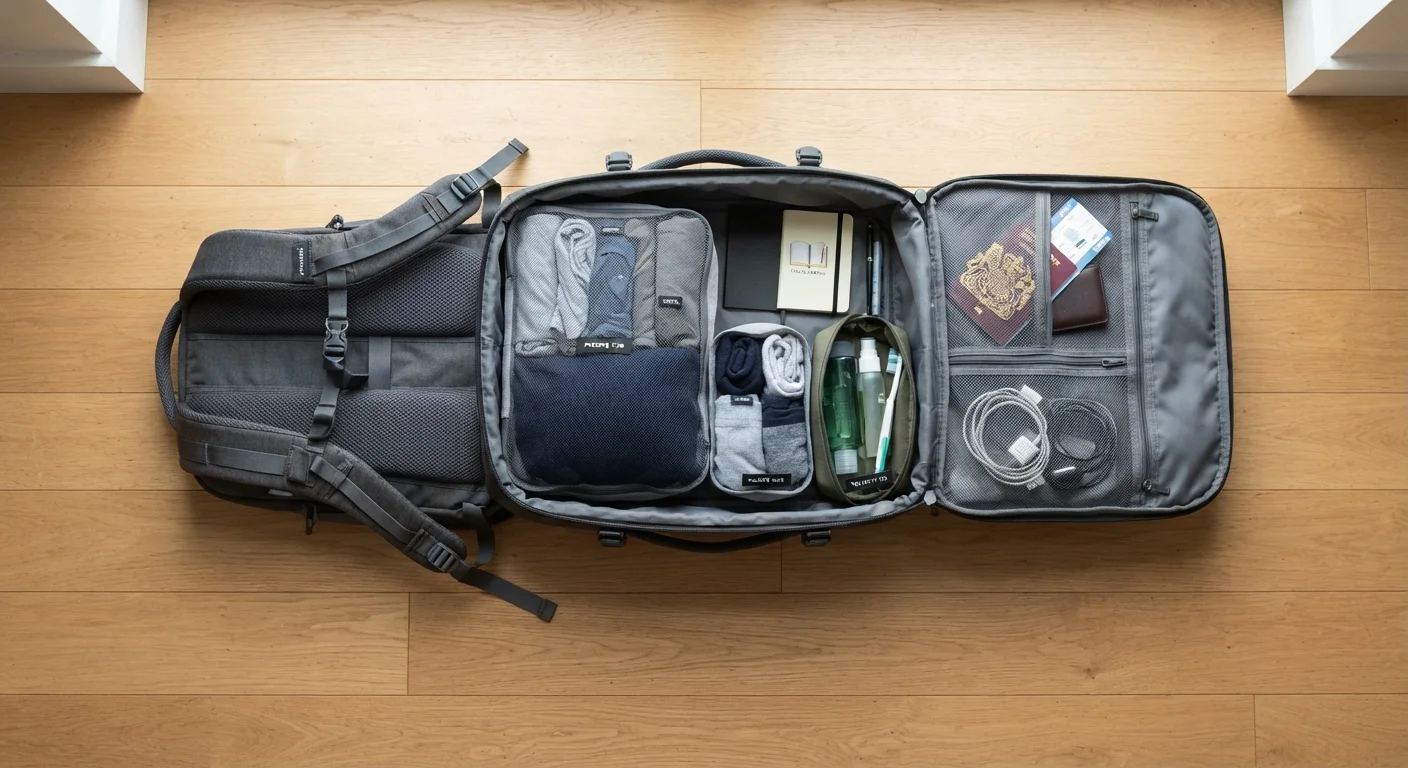
Photo credit: InsightsGrove.com | Discover Joy In Reading
In this article
Suspension systems, capacity ratings, and material weights — understand what backpack features are worth seeking out.
Key Takeaways
- Suspension systems and hip belts matter most for loads over 20 pounds - skip them for lighter carry-ons.
- Capacity ratings in liters are standardized, but panel-loading vs. top-loading design affects real-world usability more.
- Fabric weight and denier rating tell you durability without requiring a brand name to verify it.
- More pockets and compartments add weight and complexity without always adding function.
- A suspension-free 20-30L pack often outperforms a feature-heavy 45L for most travelers.
Capacity Numbers Lie More Than You'd Think
Liter capacity is the spec everyone quotes and almost no one interprets correctly. A 40L bag built with a top-loading barrel shape is harder to access and pack efficiently than a 30L bag with a clamshell panel opening. Before fixating on the number, ask how the volume is distributed - is it one main compartment, or is it split across a large front pocket that eats 8L of "capacity" you'll rarely use?
For most trips under a week, a 20-30L pack is sufficient when paired with smart packing habits. See how to fit a week into a single backpack for a practical breakdown of what that actually requires. Going larger than you need encourages overpacking - a cost that compounds beyond baggage fees, as explored in why overpacking costs more than just baggage fees.
Match capacity to your actual packing list, not your aspirational one.
Choosing a bag larger than needed reliably leads to overpacking, which increases physical strain and the risk of checked-bag fees. Most travelers systematically overestimate how much they need. Matching the bag's volume to a real, written packing list forces honest decisions before purchase.
Evaluate the suspension system relative to your expected load weight.
Suspension features add meaningful weight - sometimes 8 to 12 ounces - that only pays off when the load justifies it. Paying for a full frame and structured hip belt on a bag you'll carry half-full defeats the purpose of the feature. Align the suspension system to your actual load, not the maximum the bag supports.
Check denier ratings before comparing price across bags.
Two bags at similar price points may use dramatically different fabrics. Without checking denier, you can't assess durability honestly. A lower-priced bag with 420D nylon may outlast a higher-priced bag built from 210D polyester in heavy-use conditions.
Prioritize panel-loading designs for travel and commuting use cases.
Top-loading bags require you to unpack from the top to access items at the bottom, creating friction every time you need something mid-trip. Panel-loading bags open flat, making packing and access faster in airports, hotels, and transit hubs.
Audit pockets for specific function before counting them as benefits.
Pocket count is a common marketing metric that doesn't correlate with usability. Each pocket that doesn't serve a specific, identifiable need in your workflow adds weight and complexity. Useful pockets are ones you can name a specific item for.
When Suspension Systems Are Worth the Weight
A suspension system - the internal frame, padded hip belt, and load-lifter straps - is genuinely valuable when you're carrying 20 or more pounds over uneven terrain for extended periods. It transfers load from your shoulders to your hips, reducing fatigue. For a day traveler or commuter carrying a laptop and a change of clothes, that same system adds bulk and weight without meaningful benefit.
Hip belts, specifically, are worth scrutinizing. A thin foam hip belt on a 20L bag is mostly decorative - it can't transfer load effectively. If you're buying a pack specifically for hiking or multi-day travel, look for a hip belt with a structured frame. If you're buying for urban use or weekend travel, skip it and save the weight. The same logic applies to sternum straps and load-lifter tabs: useful when loaded, irrelevant when not.
“The best gear is the gear that gets out of your way. Features that solve problems you don't have are just weight you're carrying for no reason.”
— Andrew Skurka, Professional wilderness guide and author on lightweight travel and backpacking
Material Specs: What Denier Actually Tells You
Fabric weight is measured in denier (D) - the linear mass density of the fibers. Higher denier means heavier, more abrasion-resistant fabric. A pack made from 420D nylon is noticeably more durable under friction (think dragging across concrete or airline overhead bins) than one made from 210D. But 210D ripstop may still be adequate for travel that doesn't involve rough terrain or heavy daily use.
Common fabric types to recognize:
- Nylon ripstop: Lightweight with a grid weave that limits tear propagation. Common in ultralight and travel packs.
- Ballistic nylon: High-denier, very abrasion-resistant. Heavier but built for hard daily use.
- Polyester: Less expensive, slightly heavier than nylon at equivalent denier, adequate for casual use.
Water resistance is often listed as a feature but deserves scrutiny. Most fabrics have a DWR coating that handles light moisture, not sustained rain. A waterproof-rated pack requires taped seams and a waterproof zipper - features worth the premium only if you're regularly in wet conditions.
Test Fabric Water Resistance Before You Rely On It
Most packs with DWR coating will repel light rain initially, but the coating degrades with washing and use. Spray the fabric with water and watch whether it beads up or soaks in - if it soaks in, the DWR needs refreshing with a spray-on treatment. Don't assume a "water-resistant" label means rain protection for a full day outdoors.
Pockets and Compartments: Useful Versus Overcomplicated
Every additional pocket adds weight and manufacturing cost. The design question is whether that pocket solves a real organizational problem or just adds the appearance of utility. A dedicated water bottle sleeve, a quick-access top pocket for transit documents, and a padded internal sleeve for a laptop are pockets with genuine, specific functions. A fourth zippered compartment that's too small for anything but loose change is not.
Panel-loading bags (those that open flat like a suitcase) are objectively easier to pack and access than top-loaders for most travel scenarios. If you're pulling the bag in and out of overhead bins or lockers multiple times a day, this matters. Top-loaders are better suited to hiking where you're setting the pack down and accessing it infrequently.
External attachment points - MOLLE webbing, gear loops, compression straps - follow the same rule. They're legitimately useful for specific activities. For general travel, they snag on conveyor belts and add visual clutter. Understand what items you're actually carrying before deciding whether those attachment points serve you.
Reading Past the Marketing to the Spec Sheet
Backpack marketing often conflates features with quality. "Military-grade" is not a standardized spec. "Ergonomic" means different things to different manufacturers. When evaluating a pack, focus on the verifiable numbers: denier rating, weight in ounces or grams, internal dimensions, and carry capacity in liters. These are comparable across products without relying on brand claims.
A lightweight pack with a simple panel-loading design, 420D fabric, and a single padded laptop sleeve will outperform a heavier, overbuilt pack for most travelers - and typically cost less. The same principle applies across product categories; knowing which specs genuinely affect performance is a transferable skill. Start from your actual use case, map features to that use, and ignore anything left over. That's the fastest path to a bag you'll use for years without regret.
For a broader framework on traveling efficiently, The Complete Guide to Travelling Light on Any Budget covers bag selection alongside packing strategy and common fee traps.
420D
Nylon denier suitable for daily-use durability
420-denier nylon is widely referenced in outdoor gear and travel product specifications as a benchmark for balanced weight-to-durability performance.
20-30L
Capacity range covering most trips under one week
Experienced light packers and travel writers consistently cite this range as sufficient for trips of five to seven days when paired with disciplined packing habits.

Author
Savvy Shopping Editorial Team
Savvy Shopping Editorial Team is the collective byline for our editorial team and contributor network. Articles published under this byline or an editorial pen name are researched, written, and reviewed according to our editorial standards for clarity, consistency, and independence before publication.
View all articles →