
Packing Cubes: What They Actually Do (and What They Don't)
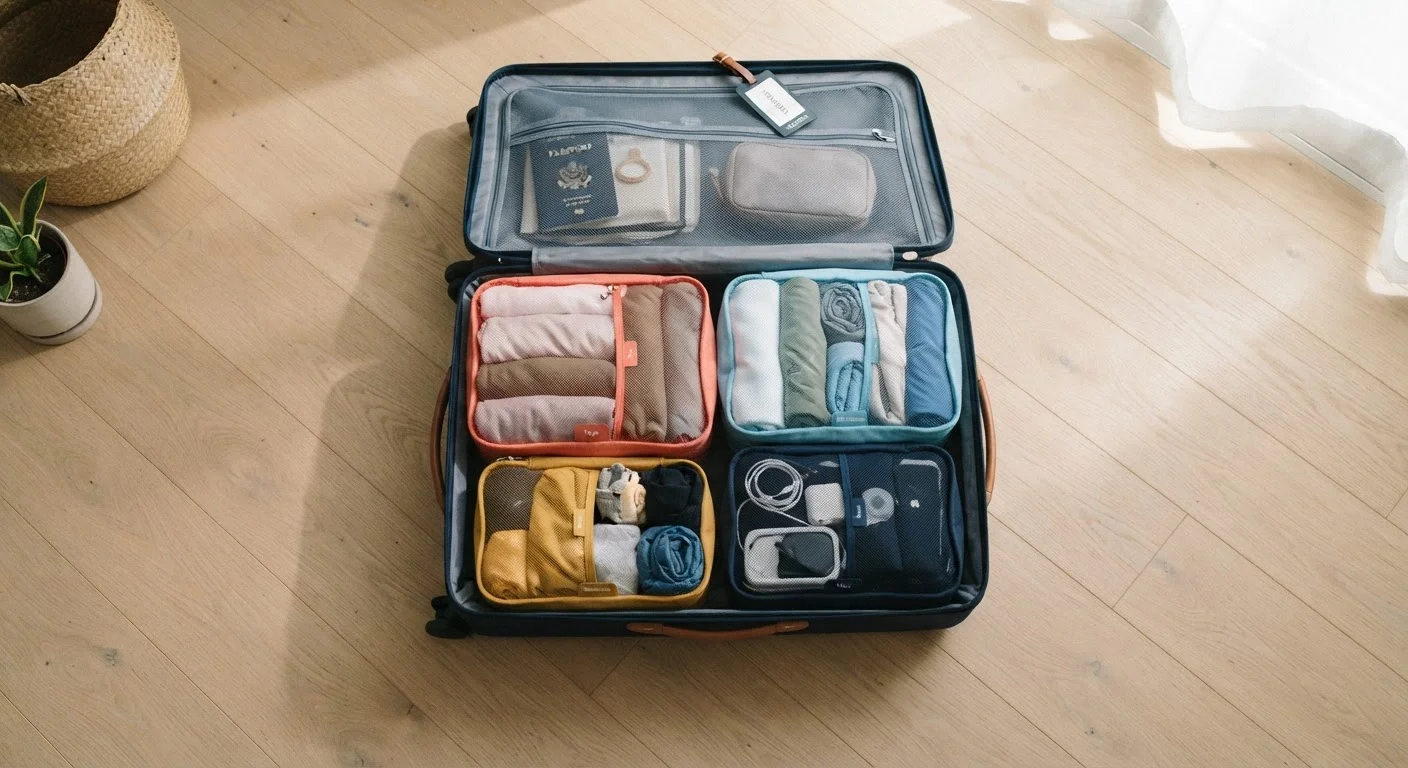
Photo credit: InsightsGrove.com | Discover Joy In Reading
In this article
Packing cubes are widely promoted — here's an honest look at their real benefits, limitations, and whether they're worth using.
Key Takeaways
- Packing cubes improve organization and speed up repacking but do not compress clothing or reduce total weight.
- They add marginal weight to your bag — a real consideration for strict carry-on limits.
- The biggest benefit is behavioral: cubes create natural limits that can discourage overpacking.
- They are genuinely useful for multi-stop trips but less necessary for a single-destination weekend.
Faster repacking at each destination
Grouping items by category means you grab a cube, not individual items. Repacking a hotel room takes minutes rather than a frantic search across the bed.
Easier navigation inside a full bag
Cubes prevent the 'archaeological dig' problem — no more unpacking half a bag to find one item buried at the bottom.
Natural limit on how much you pack
Each cube has a fixed capacity, which can discourage adding 'just one more' item. This built-in constraint helps habitual overpackers self-edit.
Keeps clean and worn clothing separate
A simple two-cube system — one for clean, one for worn — eliminates the need for separate laundry bags and reduces odor transfer in your luggage.
Works with any packing method
Cubes are method-agnostic: you can roll, fold, or bundle-wrap inside them, and the organizational benefit still applies.
Do not compress clothing or save space
Standard packing cubes do not reduce the volume of your clothes. A folded shirt inside a cube takes up the same space as a folded shirt without one — the cube itself adds a small amount of bulk.
Add weight to your bag
A set of three to four cubes typically adds 3–8 ounces of dead weight. That's marginal for checked luggage but meaningful if you're targeting a strict personal-item or carry-on weight limit.
Upfront cost for a benefit that can be replicated free
Gallon-sized zip-close bags achieve similar categorization at near-zero cost, though they're less durable and less rigid than purpose-built cubes.
Can create false sense of packing efficiency
Neatly organized cubes can make an overloaded bag feel manageable, masking the fact that you've brought too much. Organization and minimalism are not the same thing.
Less useful for minimalist one-bag travelers
If your entire packing list fits in one small backpack with minimal clothing, the organizational gain from cubes is negligible — the bag itself is already easy to navigate.
What Packing Cubes Actually Are
Packing cubes are zippered fabric containers — typically rectangular — that sit inside a larger bag and group your clothing into categories. Common setups include a cube for tops, one for bottoms, and a smaller pouch for underwear and socks. They come in a range of sizes, materials, and price points.
The concept is simple: instead of a bag full of loose items, you have a bag full of organized units. Think of them as drawers inside your luggage. That framing is useful because it clarifies what cubes actually solve — a sorting problem — and what they were never designed to solve — a volume problem.
If you want a broader look at how packing technique affects luggage efficiency, packing methods compared covers rolling, folding, and bundle wrapping side by side.
The Real Advantages
Faster repacking at each destination
Grouping items by category means you grab a cube, not individual items. Repacking a hotel room takes minutes rather than a frantic search across the bed.
Easier navigation inside a full bag
Cubes prevent the 'archaeological dig' problem — no more unpacking half a bag to find one item buried at the bottom.
Natural limit on how much you pack
Each cube has a fixed capacity, which can discourage adding 'just one more' item. This built-in constraint helps habitual overpackers self-edit.
Keeps clean and worn clothing separate
A simple two-cube system — one for clean, one for worn — eliminates the need for separate laundry bags and reduces odor transfer in your luggage.
Works with any packing method
Cubes are method-agnostic: you can roll, fold, or bundle-wrap inside them, and the organizational benefit still applies.
The behavioral benefit deserves special attention. When you pack with cubes, each cube has a finite capacity. Many travelers find that physical constraint acts as a natural edit — if a shirt doesn't fit in the cube, it doesn't come. That kind of built-in discipline is one reason cubes work well for people prone to overpacking, a habit that carries hidden costs beyond baggage fees. Overpacking costs more than most travelers realize, from slower airport movement to decision fatigue on the road.
The Limitations Worth Knowing
Do not compress clothing or save space
Standard packing cubes do not reduce the volume of your clothes. A folded shirt inside a cube takes up the same space as a folded shirt without one — the cube itself adds a small amount of bulk.
Add weight to your bag
A set of three to four cubes typically adds 3–8 ounces of dead weight. That's marginal for checked luggage but meaningful if you're targeting a strict personal-item or carry-on weight limit.
Upfront cost for a benefit that can be replicated free
Gallon-sized zip-close bags achieve similar categorization at near-zero cost, though they're less durable and less rigid than purpose-built cubes.
Can create false sense of packing efficiency
Neatly organized cubes can make an overloaded bag feel manageable, masking the fact that you've brought too much. Organization and minimalism are not the same thing.
Less useful for minimalist one-bag travelers
If your entire packing list fits in one small backpack with minimal clothing, the organizational gain from cubes is negligible — the bag itself is already easy to navigate.
Compression Cubes Are a Different Product
Some cubes marketed as 'compression' versions use a double zipper to squeeze out air and reduce volume. The compression effect is real but modest — generally more effective with bulky items like fleeces than with thin clothing. They also tend to cost more and can be harder on delicate fabrics. If volume reduction is your primary goal, they're worth considering, but verify the actual compression rating rather than relying on marketing language.
For travelers new to packing light, cubes can actually mask overpacking — everything fits neatly into organized units, so the bag feels under control even when it's overloaded. Common packing myths like "organized means efficient" are worth examining before you buy into any system.
When They're Worth It — and When They're Not
Packing cubes make the most sense for:
- Multi-stop itineraries — being able to pull out one cube rather than unpack everything is a genuine time-saver when you're switching hotels every two nights.
- Shared luggage — cubes let two travelers keep their clothing separate in a single checked bag.
- Longer trips — the organizational payoff compounds over a week or more.
They add less value for:
- A solo overnight or weekend trip where a small bag and one outfit change is all you need.
- Travelers who already pack minimally and rarely struggle to find items.
If you're still building your packing system from scratch, smart packing for first-time budget flyers is a practical starting point before investing in any accessories.
3–8 oz
Typical weight added by a cube set
A standard set of three to four fabric packing cubes generally adds between three and eight ounces to total luggage weight, depending on material and size.
~$15–$40
General price range for a basic cube set
Entry-level packing cube sets are widely available across this price range; more specialized or compression versions typically cost more.

Author
Travel Smarter Editorial Team
Travel Smarter Editorial Team is the collective byline for our editorial team and contributor network. Articles published under this byline or an editorial pen name are researched, written, and reviewed according to our editorial standards for clarity, consistency, and independence before publication.
View all articles →