
Raised Beds vs. In-Ground Planting: A Budget Gardener's Comparison
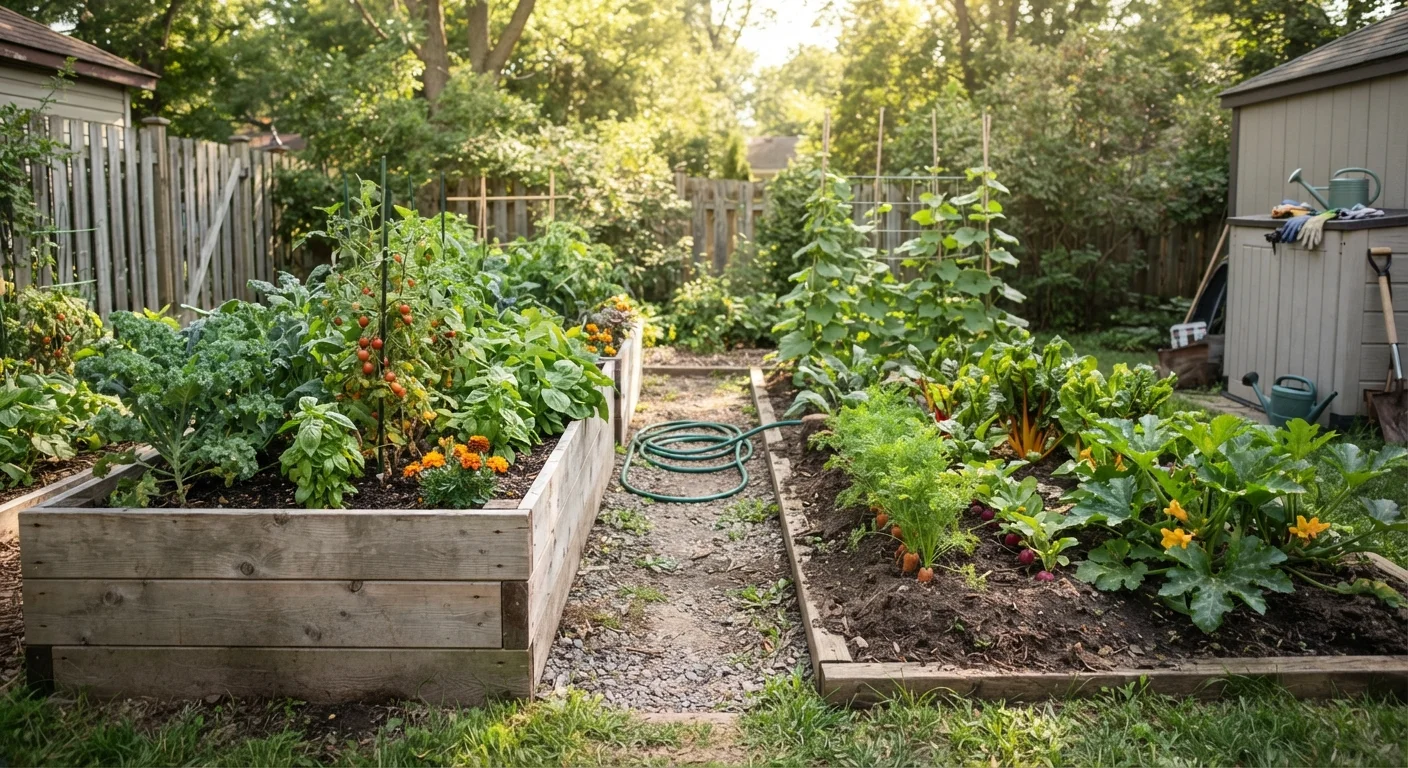
Photo credit: InsightsGrove.com | Discover Joy In Reading
In this article
Raised beds offer control and convenience, but in-ground growing costs far less to start. Here's how the two approaches stack up.
Key Takeaways
- In-ground planting typically costs far less to start, often requiring minimal materials beyond seeds and basic tools.
- Raised beds offer better soil control and drainage but can involve significant upfront lumber and fill costs.
- Soil quality is the single biggest variable that affects how each method performs long-term.
- Either approach can be productive on a budget - the right choice depends on your existing soil, space, and timeline.
The Core Trade-Off: Cost vs. Control
The debate between raised beds and in-ground planting usually comes down to one tension: how much control you want over your growing environment, and how much you're willing to spend to get it. In-ground gardening works with your existing soil - for free. Raised beds let you engineer ideal conditions from scratch, but that engineering has a price tag.
For a budget-conscious gardener starting out, this distinction matters more than most gardening guides admit. See our breakdown of real gardening startup costs for a fuller picture of where money typically goes in year one.
| In-Ground Planting | Raised Beds | |
|---|---|---|
| Typical startup cost | Very low (under $30 with good soil) | Moderate to high ($100-$300+ per bed) |
| Soil control | Limited by native conditions | Full control over growing mix |
| Drainage | Varies; poor in clay soils | Generally excellent |
| Scalability | Easy and low-cost to expand | Each addition costs money |
| Spring warm-up speed | Slower; soil warms gradually | Faster; exposed sides warm quickly |
| Physical accessibility | Requires kneeling or bending | Easier with taller frames |
| Long-term maintenance cost | Low with annual composting | Moderate; soil replenishment needed |
Startup Costs: Where the Gap Is Widest
In-ground planting can begin with little more than a shovel, some compost, and seeds. If your soil is reasonably loamy and drains well, you may spend under $30 to get a modest vegetable plot going. That's hard to beat.
Raised beds, by contrast, involve material costs that add up fast. A single 4x8-foot cedar frame can cost $60-$150 in lumber alone, and you'll still need to fill it. A standard 4x8 bed raised 10 inches deep requires roughly 27 cubic feet of growing mix. Buying bagged soil at retail prices to fill that volume is expensive - this is where many first-time raised-bed gardeners experience sticker shock. Choosing the right soil mix matters here, because cutting corners on fill can undermine the whole point of the raised bed approach.
One way to reduce lumber costs: untreated pine or spruce (though shorter-lived than cedar), reclaimed wood, or cinder blocks can all work as frame materials. Just verify that any reclaimed lumber hasn't been treated with older preservatives that can leach into soil.
Cut Lumber Costs Without Sacrificing Durability
Cedar and redwood resist rot longest but cost more. Untreated spruce or pine can last 3-5 years at a fraction of the price - long enough to see whether raised bed gardening works for your situation before committing to a permanent structure. Avoid railroad ties or pressure-treated wood with older chemical treatments near edible crops.
Soil Quality and Long-Term Performance
In-ground gardening lives or dies by your native soil. Sandy soil drains too fast and loses nutrients quickly; dense clay drains too slowly and compacts around roots. If you're working with either extreme, you'll spend time and money amending it - often repeatedly. That said, native soil that's been improved with annual compost additions can become extremely productive over several years, at very low ongoing cost.
Raised beds sidestep native soil problems entirely. You fill with a custom mix - typically a blend of topsoil, compost, and an aerating agent like perlite - and plants rarely hit drainage or compaction problems. The trade-off is that raised bed soil can dry out faster in summer and may need replenishing each season as organic matter breaks down.
Either way, your plant starting method interacts with soil choice. Seeds started in poor, compacted soil struggle; the same seeds in a well-prepared raised bed tend to germinate more reliably.
27 cu ft
Soil needed to fill one 4×8×10" raised bed
A commonly cited volume estimate for standard raised bed dimensions, highlighting why fill costs catch beginners off guard.
2-4 weeks
Earlier spring planting possible with raised beds
Raised bed soil warms faster than in-ground soil, potentially extending the growing season in cooler US climates.
Space, Scale, and Flexibility
In-ground plots scale almost limitlessly. If you have yard space, you can expand an in-ground garden without meaningful additional cost - just dig and amend more ground. That's a significant advantage if you want to grow a serious quantity of food.
Raised beds are modular but each new unit costs money. They work especially well in compact or urban settings where precise use of limited space matters. If you don't have a backyard at all, neither method applies - in that case, container gardening is worth exploring as a separate approach.
One often-overlooked factor: raised beds warm up faster in spring because the soil mass is above ground level and exposed to air on the sides. This can translate to an earlier planting window in cooler climates - a real practical advantage even if it doesn't show up in a cost comparison.
It's also worth thinking about plant type. Some crops - sprawling squash, deep-rooted carrots, perennial herbs - behave differently across methods. For more on matching plant choices to your long-term budget, see annual vs. perennial planning. And if gardening myths are holding you back from starting either way, this overview of common misconceptions is worth a read.

Author
Home & Living Editorial Team
Home & Living Editorial Team is the collective byline for our editorial team and contributor network. Articles published under this byline or an editorial pen name are researched, written, and reviewed according to our editorial standards for clarity, consistency, and independence before publication.
View all articles →