
Raw Feeding for Dogs: What the Evidence Actually Shows
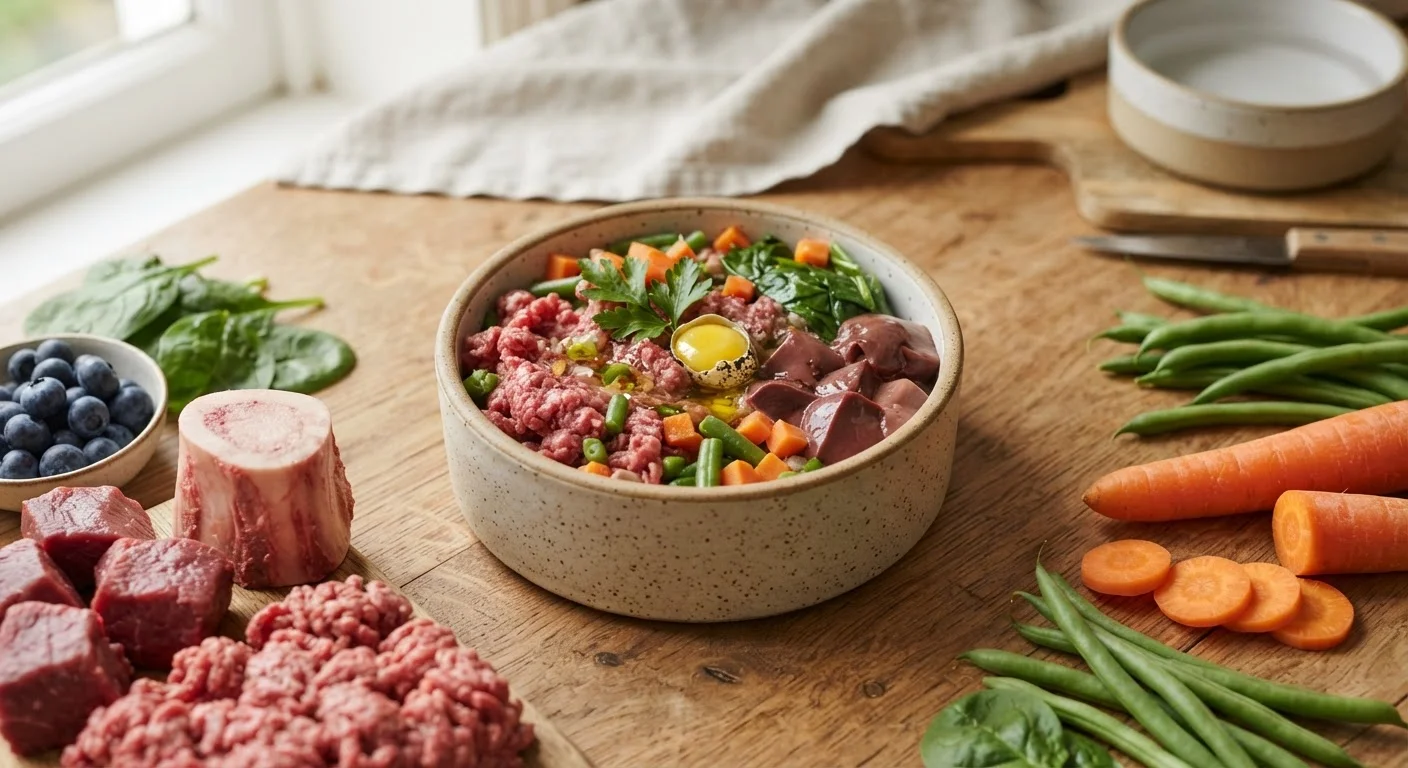
Photo credit: InsightsGrove.com | Discover Joy In Reading
In this article
Proponents and critics of raw dog food both make strong claims. Here's what current research and veterinary guidance actually say.
Key Takeaways
- Raw diets for dogs carry real bacterial contamination risks that can affect both pets and people in the household.
- Some dogs may show coat and stool improvements on raw food, though controlled research is limited.
- Nutritional imbalances are common in homemade raw diets without expert formulation guidance.
- Veterinary organizations broadly caution against raw feeding, citing public and animal health concerns.
- Cost and food safety handling demands make raw feeding a significant commitment for budget-conscious owners.
High-quality protein from whole animal sources
Raw diets typically feature unprocessed muscle meat, which some proponents argue preserves protein structure better than heat processing. However, dogs digest cooked protein efficiently too, so the practical advantage is not firmly established.
Reported improvements in coat and skin condition
Many owners report shinier coats after switching to raw. This may relate to higher fat content from whole-prey ingredients, though the same effect can often be achieved by adjusting fat and omega-3 levels in a commercial diet.
Smaller, firmer stools in some dogs
Because raw diets tend to be lower in fermentable carbohydrates, some dogs produce less stool volume. This is a real, commonly observed change, though it doesn't necessarily indicate superior nutritional absorption.
Greater control over ingredients for sensitive dogs
A carefully formulated raw diet can eliminate specific allergens or intolerances more precisely than many commercial options. This is only a genuine advantage if the diet is properly balanced by a veterinary nutritionist.
Consistent bacterial contamination risk
Multiple studies have detected Salmonella, Listeria, and other pathogens in commercially prepared raw pet foods at rates far exceeding those found in cooked commercial diets. This poses risk to both the dog and humans in the home.
Nutritional imbalances are common without expert formulation
Research has found that a large proportion of homemade raw diets - and some commercial ones - fail to meet established nutritional guidelines. Deficiencies in calcium, zinc, and vitamins D and E are particularly documented.
Bone feeding carries injury risk
Raw bones can cause tooth fractures, gastrointestinal obstruction, and internal punctures. Cooked bones are even more dangerous, but raw bones are not risk-free - a distinction often understated by raw feeding advocates.
Not appropriate for all dogs or households
Dogs with compromised immune systems, liver or kidney disease, or pancreatitis may be poorly suited to raw diets. Households with young children, elderly members, or immunocompromised individuals face elevated exposure risk.
Higher cost and significant food handling demands
Sourcing, storing, and preparing raw food safely requires daily effort and can cost substantially more than quality commercial alternatives, making it a challenging long-term commitment on a tight budget.
What Is Raw Feeding, and Why Does It Spark So Much Debate?
Raw feeding - broadly defined as giving dogs uncooked meat, bones, organs, and sometimes raw fruits or vegetables - has grown steadily in popularity. Proponents argue it mirrors a more ancestral canine diet. Critics, including most mainstream veterinary organizations, point to measurable risks that they say outweigh the claimed benefits.
The debate is partly scientific and partly cultural. Many owners report visible improvements in their dogs after switching; researchers and vets caution that individual anecdote is not the same as controlled evidence. Understanding where the data actually stands - rather than relying on marketing claims or forum testimonials - is essential before making any dietary change for your dog.
For broader context on evaluating any pet diet, see our breakdown of homemade vs. commercial pet food.
The Case For Raw Feeding
Supporters of raw diets often cite improvements in coat condition, digestion, dental health, and energy levels. Some of these observations have limited research support, though most studies are small or industry-adjacent.
High-quality protein from whole animal sources
Raw diets typically feature unprocessed muscle meat, which some proponents argue preserves protein structure better than heat processing. However, dogs digest cooked protein efficiently too, so the practical advantage is not firmly established.
Reported improvements in coat and skin condition
Many owners report shinier coats after switching to raw. This may relate to higher fat content from whole-prey ingredients, though the same effect can often be achieved by adjusting fat and omega-3 levels in a commercial diet.
Smaller, firmer stools in some dogs
Because raw diets tend to be lower in fermentable carbohydrates, some dogs produce less stool volume. This is a real, commonly observed change, though it doesn't necessarily indicate superior nutritional absorption.
Greater control over ingredients for sensitive dogs
A carefully formulated raw diet can eliminate specific allergens or intolerances more precisely than many commercial options. This is only a genuine advantage if the diet is properly balanced by a veterinary nutritionist.
It's worth noting that any diet shift - including moving to a higher-quality commercial food - can produce similar anecdotal improvements, making it difficult to isolate raw feeding as the specific cause. If protein source transparency matters to you, understanding what protein labels mean is a useful starting point regardless of diet type.
The Case Against Raw Feeding
The concerns about raw feeding are not minor or speculative - several are backed by consistent, peer-reviewed findings and endorsed by major veterinary bodies including the American Veterinary Medical Association (AVMA) and the American Animal Hospital Association (AAHA).
Consistent bacterial contamination risk
Multiple studies have detected Salmonella, Listeria, and other pathogens in commercially prepared raw pet foods at rates far exceeding those found in cooked commercial diets. This poses risk to both the dog and humans in the home.
Nutritional imbalances are common without expert formulation
Research has found that a large proportion of homemade raw diets - and some commercial ones - fail to meet established nutritional guidelines. Deficiencies in calcium, zinc, and vitamins D and E are particularly documented.
Bone feeding carries injury risk
Raw bones can cause tooth fractures, gastrointestinal obstruction, and internal punctures. Cooked bones are even more dangerous, but raw bones are not risk-free - a distinction often understated by raw feeding advocates.
Not appropriate for all dogs or households
Dogs with compromised immune systems, liver or kidney disease, or pancreatitis may be poorly suited to raw diets. Households with young children, elderly members, or immunocompromised individuals face elevated exposure risk.
Higher cost and significant food handling demands
Sourcing, storing, and preparing raw food safely requires daily effort and can cost substantially more than quality commercial alternatives, making it a challenging long-term commitment on a tight budget.
What Veterinary Organizations Currently Say
The AVMA, AAHA, and the Canadian Veterinary Medical Association have all issued formal positions discouraging raw protein diets for pets, citing pathogen risks to animal and human health. These positions are based on accumulated peer-reviewed evidence rather than single studies. If you're considering raw feeding, discussing it with your veterinarian before starting is strongly recommended - especially for puppies, senior dogs, or any dog with a health condition.
Nutritional completeness is a particular challenge. Studies examining commercial and homemade raw diets have found significant rates of imbalance in calcium, phosphorus, and essential vitamins. Learning to read pet food labels critically can help you evaluate any diet's nutritional claims more accurately.
What the Research Actually Shows
The honest answer is that robust, long-term clinical trials on raw feeding in dogs are limited. Most available studies are observational, small-scale, or focus specifically on pathogen risk rather than overall health outcomes.
~74%
Raw pet foods testing positive for pathogens
A review of multiple studies cited by the FDA found pathogen contamination in a substantial proportion of tested raw pet food products, including Salmonella and Listeria monocytogenes.
~60%
Homemade raw diets with nutritional imbalances
Research published in veterinary nutrition literature has found that the majority of analyzed homemade raw diet recipes do not meet established AAFCO nutrient guidelines without professional formulation.
What researchers do agree on: bacterial contamination in raw pet food (including Salmonella, Listeria, and E. coli) is consistently detected at higher rates than in commercial cooked diets. The risk extends beyond the dog - household members, particularly children, the elderly, and immunocompromised individuals, can be exposed through handling food or contact with the dog's saliva and feces.
Claims that raw food is categorically more digestible or nutritionally superior have not been confirmed in well-controlled studies as of current published literature. Some studies suggest modest digestibility differences for certain nutrients, but results vary by formulation.
If you're questioning other diet-related claims, common misconceptions about grain-free diets follows a similar evidence-first approach.
Practical Considerations for Budget-Conscious Owners
Raw feeding is generally more expensive than mid-range commercial kibble, and often comparable in cost to premium wet food. Sourcing human-grade raw meat, storing it safely, and potentially consulting a board-certified veterinary nutritionist to ensure completeness adds meaningful ongoing expense.
Food safety demands are also significant. Raw meat requires careful refrigeration, dedicated preparation surfaces, and thorough handwashing - similar to handling raw meat for human consumption, but every single day. Compare this to the convenience and established safety record of commercial diets covered in our comparison of dry kibble and wet food.
If oral health is part of your motivation for exploring raw feeding, be aware that the evidence around bones and dental benefit is mixed and carries injury risk. Our article on pet dental care myths addresses this directly.
This article is for general informational purposes only and is not veterinary or medical advice. Always consult a licensed veterinarian before making significant changes to your pet's diet, particularly if your dog has any existing health conditions.

Author
Pets & Care Editorial Team
Pets & Care Editorial Team is the collective byline for our editorial team and contributor network. Articles published under this byline or an editorial pen name are researched, written, and reviewed according to our editorial standards for clarity, consistency, and independence before publication.
View all articles →