
Reading Pet Food Labels Without Getting Confused
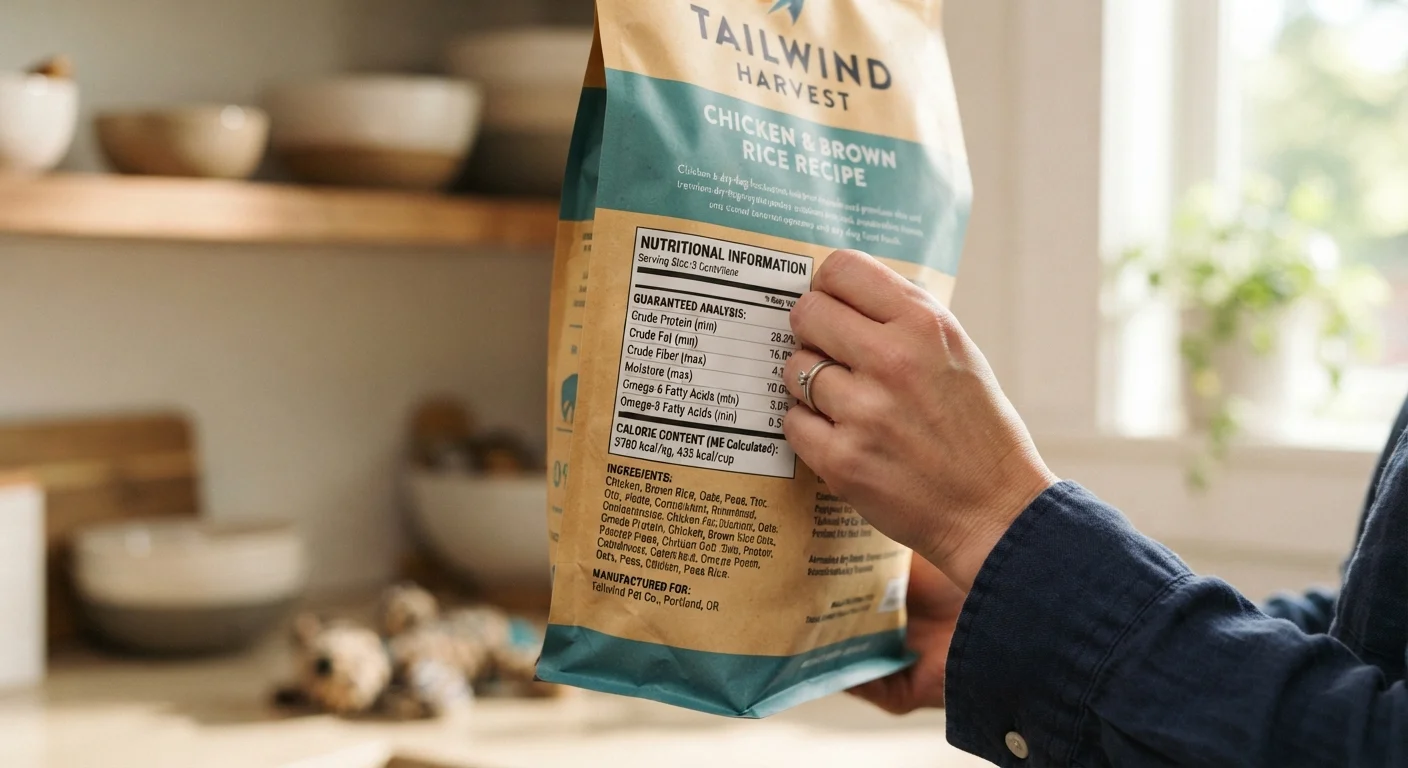
Photo credit: InsightsGrove.com | Discover Joy In Reading
In this article
Ingredient lists, guaranteed analysis, and feeding guidelines can be misleading. This guide breaks down what the label is actually telling you.
Key Takeaways
- Ingredient lists are ordered by pre-cooking weight, which can be misleading without context.
- The guaranteed analysis shows minimum or maximum nutrient levels, not exact amounts.
- An AAFCO nutritional adequacy statement tells you whether the food is complete and balanced.
- Feeding guidelines on packaging are starting points, not precise prescriptions for every pet.
- Marketing terms like 'natural' and 'holistic' have limited or no regulatory definition in pet food.
Why Pet Food Labels Are Harder to Read Than They Look
Pet food packaging is designed to sell - but the regulatory information buried in small print is what actually tells you whether a food is worth buying. The challenge is that labels combine legally defined terms with loosely regulated marketing language, often on the same panel. Knowing which is which changes how you evaluate what you're paying for.
In the US, pet food labeling is governed primarily by the AAFCO and enforced at the state level. AAFCO sets definitions and standards; individual states decide how strictly to apply them. That means the same product can carry claims that are tightly regulated in one state and barely scrutinized in another.
For a deeper comparison of how this differs from reading labels on human food, see our guide to human nutrition labels. The same principle applies here: being label-literate helps you spend smarter without compromising quality, which is central to smart shopping habits for any category.
What you will need
Step-by-Step: Decoding Each Section of the Label
Work through the label in this order to get the most accurate picture of what the food actually contains and whether it suits your pet.
Find the AAFCO Nutritional Adequacy Statement
This is the most important line on the label. Look for a sentence that reads something like: '[Product name] is formulated to meet the nutritional levels established by the AAFCO Dog Food Nutrient Profiles for all life stages.'
This statement tells you two things: whether the food is complete and balanced (meaning it is intended as a sole diet, not a supplement or treat), and which life stage it is formulated for. If a food says 'for supplemental feeding only,' it should not be the only thing your pet eats.
Read the Ingredient List in Order
Ingredients are listed by weight before cooking. Fresh chicken, for example, is roughly 70% water - so after moisture is removed during processing, its actual contribution to the finished food is smaller than its position suggests. This is called 'ingredient splitting' when applied deceptively (e.g., listing 'peas,' 'pea protein,' and 'pea starch' separately to push them lower on the list).
What to look for:
- A named animal protein (chicken, salmon, beef) rather than a generic 'meat' or 'poultry' in the top few ingredients
- Whole grains, vegetables, or named protein meals (e.g., 'chicken meal') as secondary ingredients
- Preservatives - natural options include mixed tocopherols (vitamin E); synthetic options like BHA and BHT are approved but some owners prefer to avoid them
Interpret the Guaranteed Analysis Panel
The guaranteed analysis lists minimum percentages for crude protein and crude fat, and maximum percentages for crude fiber and moisture. These are not exact values - they are regulatory thresholds. The actual protein content of a batch may be higher than the stated minimum.
To compare wet and dry foods fairly, you need to convert both to a dry matter basis. Divide each nutrient percentage by (100 minus the moisture percentage), then multiply by 100. This removes the water variable and puts both products on equal footing.
Check the Feeding Guidelines - Then Adjust
Feeding guidelines are calculated for an average pet of a given weight. They do not account for your individual animal's activity level, metabolism, spay/neuter status, or body condition. Treat them as a starting range.
A useful habit: weigh your pet monthly and adjust portions based on whether body condition is stable. You should be able to feel (but not prominently see) your pet's ribs with gentle pressure. If in doubt, ask your vet to score your pet's body condition at the next visit.
Note the Product Name Rules
AAFCO regulates how prominently an ingredient can be featured in a product name based on its percentage in the formula:
- 'Chicken for Dogs' (or any single-word name): must be at least 95% of the total product weight, excluding water
- 'Chicken Dinner/Entrée/Formula': the named ingredient must make up 25-94% of the product
- 'With Chicken': requires only 3% of the named ingredient
- 'Chicken Flavor': must be detectable but requires no minimum percentage
This means 'Salmon Dinner' and 'Salmon for Dogs' are nutritionally very different propositions, even though both feature salmon prominently on the front of the pack.
Use the AAFCO Statement as Your Starting Filter
Before reading anything else on a label, locate the AAFCO nutritional adequacy statement. If it's absent or says 'for supplemental use only,' the food is not designed as a complete diet. This single check eliminates a lot of confusion before you dive into ingredient lists or guaranteed analysis figures.
Claims That Sound Meaningful but Aren't Regulated
Several common label terms carry real marketing weight but limited legal meaning in the pet food context. Understanding this helps you avoid paying a premium for words rather than nutrition.
- 'Natural': AAFCO defines this term, but the definition is broad. It generally means no synthetic ingredients were added - it says nothing about nutritional quality or sourcing standards.
- 'Holistic': Not defined by AAFCO or any federal body. It is purely a marketing term.
- 'Human-grade': Has a specific AAFCO definition, but most pet foods using this phrase do not legally qualify. The food must be manufactured in a facility that also meets human food standards throughout.
- 'Grain-free': Describes what's absent, not what's present. A grain-free food may substitute legumes or potatoes, which have their own nutritional profiles. Our article on grain-free diet misconceptions explores the evidence behind these claims.
Front-of-Pack Claims Are Marketing, Not Regulation
Large-print claims on the front of packaging - 'premium,' 'natural,' 'ancestral recipe' - are not subject to the same regulatory scrutiny as the ingredient list, guaranteed analysis, and AAFCO statement on the back or side panel. When in doubt, ignore the front and go straight to the regulated sections.
If you're weighing the broader trade-offs between packaged and alternative feeding approaches, our overview of homemade versus commercial pet food provides a balanced breakdown.
Putting It Together for Your Pet
No single number or ingredient tells you whether a food is right for your pet. A complete and balanced AAFCO statement, appropriate life-stage designation, and a named protein source near the top of the ingredient list are reasonable baseline indicators of a thoughtfully formulated food.
If your pet has a health condition - such as kidney disease, diabetes, or food allergies - label reading alone is not sufficient guidance. Always consult your veterinarian before changing diet in those circumstances. For general healthy pets, these skills help you make more confident choices without relying on front-of-pack marketing or price as a proxy for quality.
Once you're comfortable reading labels, you can apply that knowledge to stretching your pet food budget without sacrificing nutritional standards. And if you ever question what's genuinely safe to offer alongside packaged food, our reference on human foods harmful to pets is a useful companion.
This article is for general informational and educational purposes only. It is not a substitute for professional veterinary advice. Always consult a qualified veterinarian for guidance specific to your pet's health and dietary needs.

Author
Pets & Care Editorial Team
Pets & Care Editorial Team is the collective byline for our editorial team and contributor network. Articles published under this byline or an editorial pen name are researched, written, and reviewed according to our editorial standards for clarity, consistency, and independence before publication.
View all articles →