
Stretching Your Pet Food Budget Without Cutting Nutritional Corners
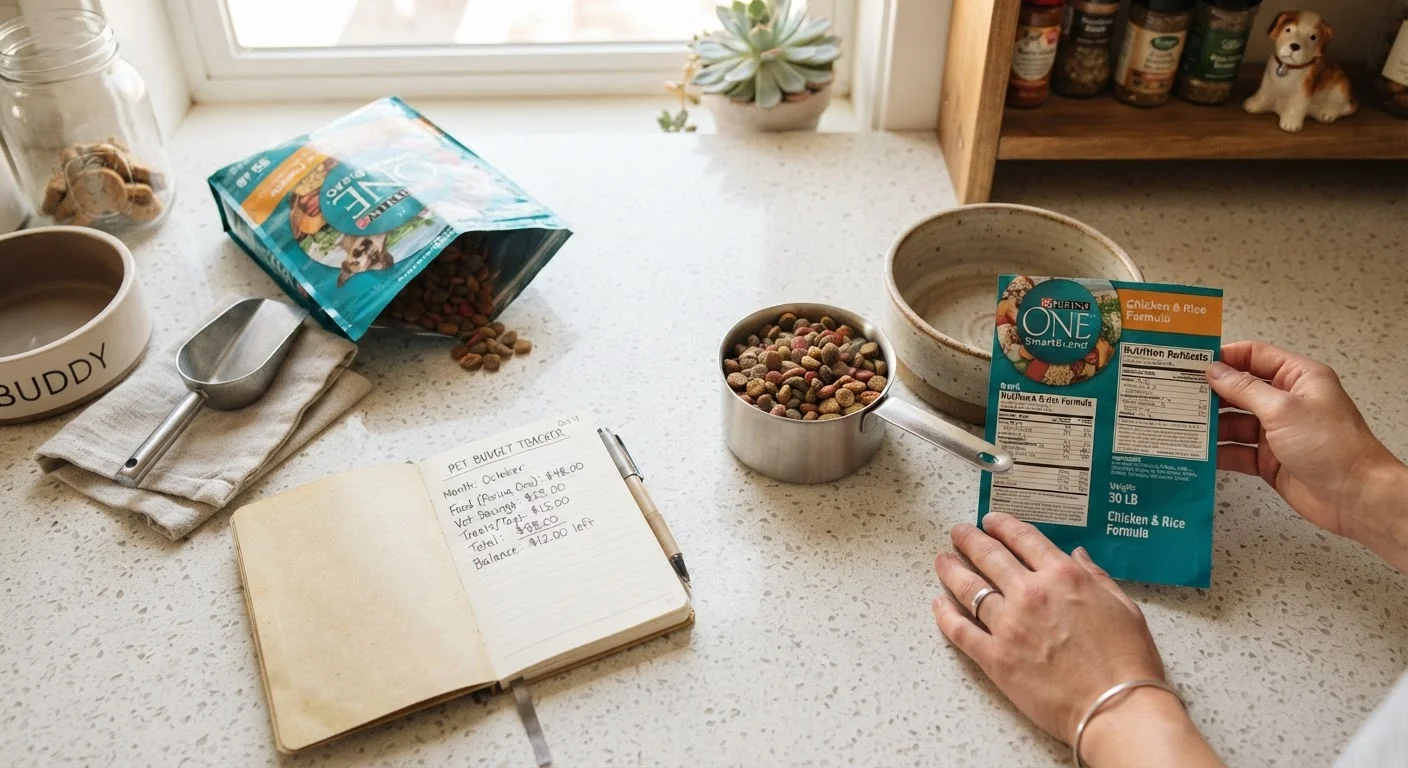
Photo credit: InsightsGrove.com | Discover Joy In Reading
In this article
Practical feeding strategies that keep costs manageable while still meeting your pet's daily nutritional needs.
Key Takeaways
- Precise portioning is one of the most immediate ways to reduce food costs without compromising nutrition.
- Understanding pet food labels helps you compare nutritional value rather than just price per bag.
- Gradual food transitions protect your pet's digestion when switching to a more affordable option.
- Buying in larger quantities can lower cost-per-serving when storage conditions are appropriate.
- Your veterinarian is the most reliable guide for adjusting a pet's diet on a limited budget.
Why Feeding Costs Add Up - and Where the Leverage Is
Pet food is typically one of the largest recurring costs of pet ownership, and it's easy for spending to drift upward without a clear plan. The good news is that several evidence-based adjustments can reduce what you spend without reducing what your pet actually gets nutritionally.
The key distinction to make upfront is between cutting cost and cutting nutritional quality. These are not the same thing. Overfeeding an adequate food costs more than feeding the correct amount of the same food. Paying for packaging, marketing, or premium branding rather than verified nutritional content is money that doesn't reach your pet's bowl. Understanding where your money actually goes is the foundation of every strategy below.
For a broader look at how budget constraints affect nutrition decisions for the whole household, see our guide to eating well on a tight budget.
What you will need
Step-by-Step: Smarter Feeding on a Tighter Budget
Follow these steps in order. Each builds on the last, and together they give you a practical, nutritionally sound framework for managing pet food costs.
Establish Your Pet's Correct Daily Portion
Start by checking the feeding guidelines on your current food's packaging. These are based on your pet's weight, and most guidelines recommend a range rather than a fixed amount. Weigh your pet if you are unsure of their current weight, or ask your vet at the next visit.
Use a kitchen scale or measuring cup consistently - studies in veterinary nutrition have shown that owners frequently overestimate what a correct portion looks like when eyeballing. Correcting an overfeeding habit alone can extend a bag of food noticeably without any other change. See our guide on why portion size matters more than the food you choose for more detail.
Learn to Read the Nutritional Label, Not Just the Price Tag
Price per bag is a poor proxy for value. A less expensive bag that requires larger servings to meet your pet's needs may cost more per day than a denser option. Calculate cost per serving using the feeding guidelines and the bag size together.
Check the guaranteed analysis panel for minimum crude protein and fat, and maximum moisture and fibre - these are the regulated figures that actually tell you what your pet is consuming. Our detailed walkthrough on reading a pet food label without getting lost in the small print explains each section clearly.
Consider Larger Pack Sizes - With Appropriate Storage
Larger quantities of the same food frequently offer a lower cost-per-serving. This only delivers savings if the food remains fresh. Dry kibble should be stored in an airtight container away from heat and light; most manufacturers recommend using kibble within six weeks of opening regardless of the printed expiry date.
Never buy a quantity so large that you cannot use it within the recommended window. Spoiled food is a waste of money and a potential health risk for your pet.
Evaluate Whether Your Current Food Is Matched to Your Pet's Life Stage
Feeding an adult pet a puppy or kitten formula typically means paying for caloric and nutrient levels your pet does not need. Life stage-appropriate food tends to be formulated to match actual requirements, which can mean smaller correct serving sizes and lower daily cost.
For dogs specifically, our article on how life stage shapes what your dog actually needs to eat covers how requirements shift from puppyhood through to senior years. Senior pets in particular may have specific nutritional needs that affect which products represent genuine value - see how health needs shift in senior pets for context.
Transition to Any New Food Gradually
If steps above lead you to switch foods, always transition over seven to ten days by mixing increasing proportions of the new food with the old. Abrupt changes commonly cause loose stools or vomiting, which can prompt unnecessary vet visits - an ironic cost increase from an attempt to save money.
A typical transition schedule: days one to three at roughly 25% new food, days four to six at 50%, days seven to nine at 75%, then fully switched by day ten. Adjust more slowly if your pet has a sensitive stomach.
Track Feeding Costs the Same Way You Track Other Bills
Treating pet food as a tracked line item in your monthly budget - rather than an informal expense - makes it far easier to spot where savings are occurring or slipping. Our hub on smart shopping habits includes straightforward approaches to monitoring recurring spending that apply just as well to pet supplies as to groceries.
If you are considering homemade meals as a cost-saving route, it is worth reading our balanced overview of homemade versus commercial pet food before making changes. Nutritional completeness is harder to guarantee at home than many owners expect.
Common Pitfalls to Avoid
Budget feeding goes wrong most often in predictable ways. Switching foods too abruptly to chase a lower price can cause digestive upset - our article on transitioning your pet to a new food without digestive upset walks through how to do it safely. Buying in very large quantities can backfire if the food goes stale or rancid before use, which actually raises cost-per-serving rather than lowering it.
Reducing portion sizes below the recommended feeding guideline - rather than correcting an existing overfeeding habit - can create genuine nutritional gaps over time. If your pet seems persistently hungry after correctly portioned meals, read about why pets can still seem hungry after eating rather than simply adding more food.
Never Sacrifice Nutritional Completeness to Save Money
A food that is significantly cheaper because it lacks complete and balanced formulation - as indicated on the label - can lead to deficiency-related health problems over time. Treatment costs for nutrition-related conditions typically far exceed any savings made at the food shelf. If you are unsure whether a lower-cost option is nutritionally adequate for your pet, ask your veterinarian before switching.
Budget decisions around pet food sit naturally alongside broader cost management. Our hub on everyday budgeting covers practical habits that can free up room in your monthly spending without requiring major lifestyle changes.
This article is for general informational purposes only and does not constitute veterinary or nutritional advice. Always consult a licensed veterinarian before making significant changes to your pet's diet, particularly if your pet has existing health conditions.

Author
Pets & Care Editorial Team
Pets & Care Editorial Team is the collective byline for our editorial team and contributor network. Articles published under this byline or an editorial pen name are researched, written, and reviewed according to our editorial standards for clarity, consistency, and independence before publication.
View all articles →