
Eating Well on a Tight Budget: What You Actually Need to Know
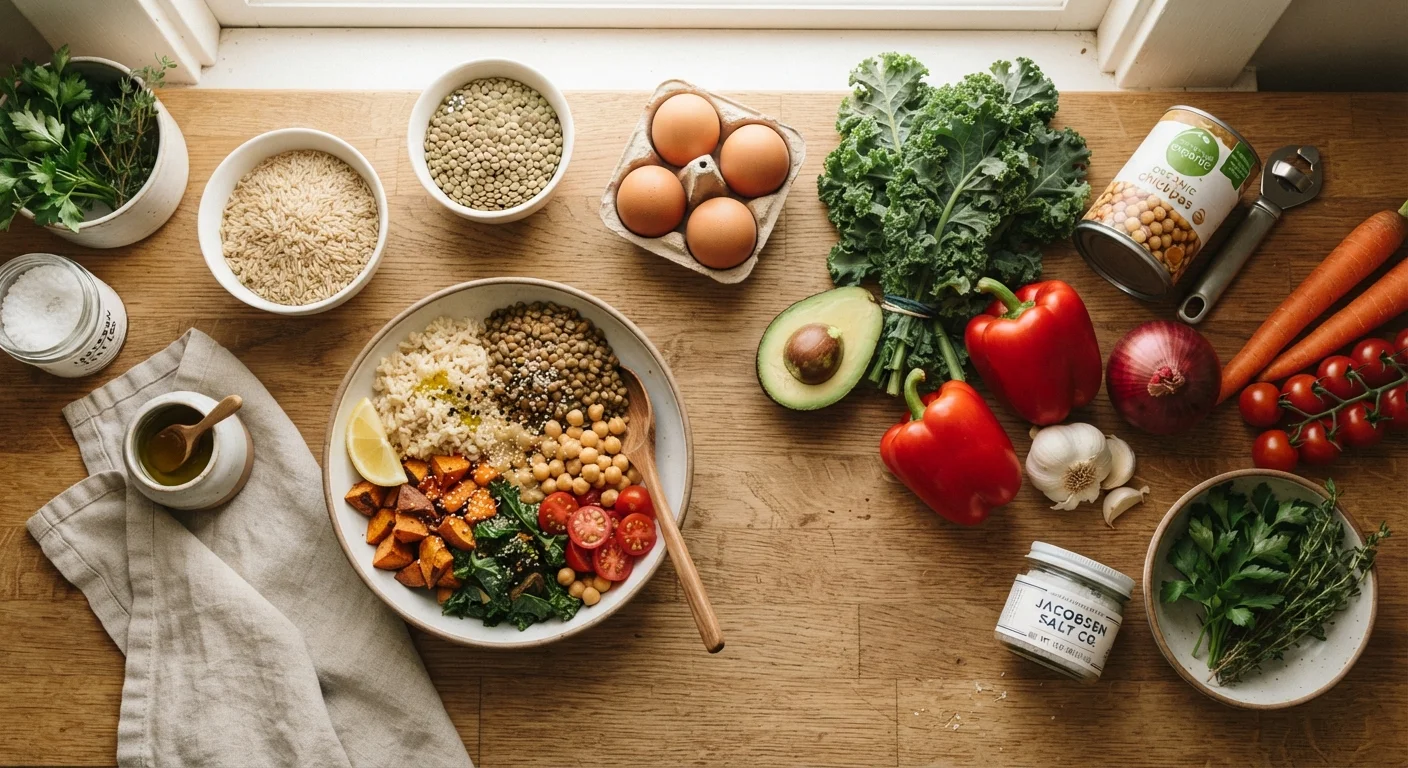
Photo credit: InsightsGrove.com | Discover Joy In Reading
In this article
Understand the core principles of budget nutrition — what to prioritise, what to skip, and how to eat healthily without spending more than you need to.
Key Takeaways
- Whole, minimally processed staple foods deliver strong nutrition at a low cost per serving.
- Protein, fiber, and micronutrient density are the most useful criteria when comparing food value.
- Meal structure - not strict dieting - is what turns cheap ingredients into consistent, balanced eating.
- Several common spending habits quietly increase food costs without improving nutritional outcomes.
- Reading nutrition labels helps you compare options accurately rather than relying on front-of-pack claims.
What Budget Nutrition Actually Means
Budget nutrition is not about eating less or accepting an inferior diet. It is about understanding which foods deliver the most nutritional return per dollar - and building your regular eating habits around them. The core goal is the same as any healthy diet: adequate protein, carbohydrates, fats, fiber, vitamins, and minerals. The constraint is simply cost.
This distinction matters because the reflexive assumption - that cheap food is necessarily poor food - is not well-supported by evidence. Legumes, oats, eggs, canned fish, and frozen vegetables are inexpensive by most measures and are also among the most nutritionally dense food categories available. The challenge is structural: knowing which staples to lean on, how to combine them into satisfying meals, and which spending habits to avoid.
Nutritional density
The amount of beneficial nutrients - such as protein, fiber, vitamins, and minerals - a food provides relative to its caloric content or cost. High nutritional density means more nutritional value per dollar or per calorie.
Complete protein
A protein source that contains all nine essential amino acids the body cannot produce on its own. Animal products like eggs and meat are complete; plant proteins can be combined to achieve this.
Staple foods
Inexpensive, versatile foods that form the base of a diet and are eaten regularly. Examples include rice, oats, lentils, and eggs. They provide reliable calories and nutrients at low per-serving cost.
Dietary fiber
A type of carbohydrate found in plant foods that the body does not fully digest. It supports digestive health, helps regulate blood sugar, and contributes to satiety - the feeling of fullness after eating.
Ultra-processed foods
Products manufactured through multiple industrial processes, often containing additives, preservatives, and ingredients not typically used in home cooking. They tend to be low in fiber and high in added sugars or sodium.
Batch cooking
Preparing larger quantities of food at once - such as a full pot of grains or legumes - to use across multiple meals during the week, reducing time, energy, and per-meal cost.
This article provides general nutritional education and is not a substitute for personalised advice from a qualified healthcare professional or registered dietitian.
The Most Nutritious Foods for the Least Money
When evaluated by cost per gram of protein, fiber, or key micronutrients, a consistent group of foods rises to the top:
- Legumes (dried lentils, split peas, black beans, chickpeas): Rich in protein, fiber, iron, and B vitamins. Dried forms cost significantly less per serving than canned but require more preparation time. Canned versions remain cost-effective and require no soaking.
- Whole grains (oats, brown rice, whole wheat bread): Provide sustained energy and meaningful amounts of fiber and B vitamins at low per-serving cost.
- Eggs: A complete protein source with important micronutrients including choline and vitamins D and B12. Versatile and inexpensive on a per-serving basis.
- Frozen vegetables: Nutritionally comparable to fresh, often less expensive, and far less prone to spoilage - which directly reduces waste and cost.
- Canned fish (sardines, tuna, salmon): High in protein and omega-3 fatty acids, with shelf stability that reduces waste.
- Seasonal fresh produce: In-season vegetables and fruits drop in price significantly. Learning a rough seasonal calendar for your region helps you take advantage of this.
Building a reliable pantry from these categories is one of the most practical first steps. The budget-friendly pantry guide offers a practical checklist to get you started.
Prioritise Protein and Fiber Per Dollar
When comparing two budget options, check the Nutrition Facts panel for protein and dietary fiber content per serving relative to price. These two nutrients do significant nutritional work - supporting satiety, muscle maintenance, and digestive health. Legumes and eggs consistently perform well on this measure and are reliable anchors for a cost-effective diet.
How to Structure Meals Without a Strict Plan
Strict meal planning works for some people but creates friction for others. A more durable approach is to build flexible meal templates around your staple ingredients. The general principle: anchor each meal with a protein source, add a carbohydrate base, and include at least one vegetable. This pattern does not require recipes - it just requires stocked staples.
For example: lentils over rice with frozen spinach; scrambled eggs with canned beans and a side of roasted frozen vegetables; whole-grain pasta with canned fish and whatever fresh vegetable is cheapest that week. These are not recipes to follow rigidly - they are patterns you adapt based on what you have.
Batch cooking dramatically improves consistency. Cooking a large portion of grains or legumes at the start of the week reduces daily decision-making and prep time. The guide to batch cooking explains the method in detail. Similarly, reducing food waste - using vegetable off-cuts, repurposing leftovers - meaningfully extends the value of what you buy. The food waste and frugality guide covers practical habits for this.
Spending Habits That Quietly Drain Your Food Budget
Several common patterns increase food costs without improving nutritional quality:
- Over-relying on convenience and ultra-processed foods: These often cost more per serving than home-prepared equivalents and tend to be lower in protein and fiber relative to their caloric content.
- Buying fresh produce without a use plan: Fresh vegetables and fruit spoil quickly. Without a rough plan for using them, they become a recurring waste expense. Frozen alternatives sidestep this problem entirely.
- Ignoring store-brand and generic options: For staple foods - canned goods, dried legumes, oats, frozen vegetables - store-brand versions typically offer identical nutritional profiles at lower prices.
- Shopping without a list: Research on consumer behaviour consistently finds that unplanned purchases increase spending without meaningfully improving diet quality.
- Buying specialty or trend-driven health products: Products marketed with health claims are frequently more expensive and offer no established nutritional advantage over basic whole foods.
For a more complete picture of where budget eating strategies go wrong, the article on budget diet pitfalls is worth reading alongside this guide.
Don't Cut Food Variety Too Aggressively
Reducing costs by eating only one or two foods repeatedly may seem efficient, but it creates real risks of micronutrient gaps over time. Vitamins and minerals are spread unevenly across food groups, and no single cheap food covers all of them. Variety across legumes, grains, vegetables, and protein sources is what produces a genuinely balanced diet - even on a tight budget.
Reading Labels and Making Smarter Comparisons
Food packaging is designed to sell, not to inform. Front-of-pack claims like "natural," "wholesome," or "high in protein" are marketing language and carry no standardised nutritional meaning in most contexts. Nutrition labels - specifically the Nutrition Facts panel required on US packaged foods - are the reliable reference point.
Key things to look at per serving: total protein, dietary fiber, and added sugars. For budget shoppers comparing similar products, a higher protein and fiber content at the same or lower price is generally the better nutritional value. Ingredient lists are also informative - a shorter list with recognisable whole-food ingredients typically indicates less processing.
The guide to reading nutrition labels breaks down each section of the Nutrition Facts panel in plain language, which is especially useful when comparing budget options side by side. Developing this skill removes the need to rely on packaging claims and lets you make more confident, evidence-informed choices regardless of your grocery budget.
Understanding general smart shopping habits also supports better decision-making at the store - reinforcing that good food choices and financial discipline are complementary, not competing, goals.
Frequently Asked Questions

Author
Health & Wellness Editorial Team
Health & Wellness Editorial Team is the collective byline for our editorial team and contributor network. Articles published under this byline or an editorial pen name are researched, written, and reviewed according to our editorial standards for clarity, consistency, and independence before publication.
View all articles →