
Dry Kibble vs. Wet Food: What Each One Actually Does for Your Pet
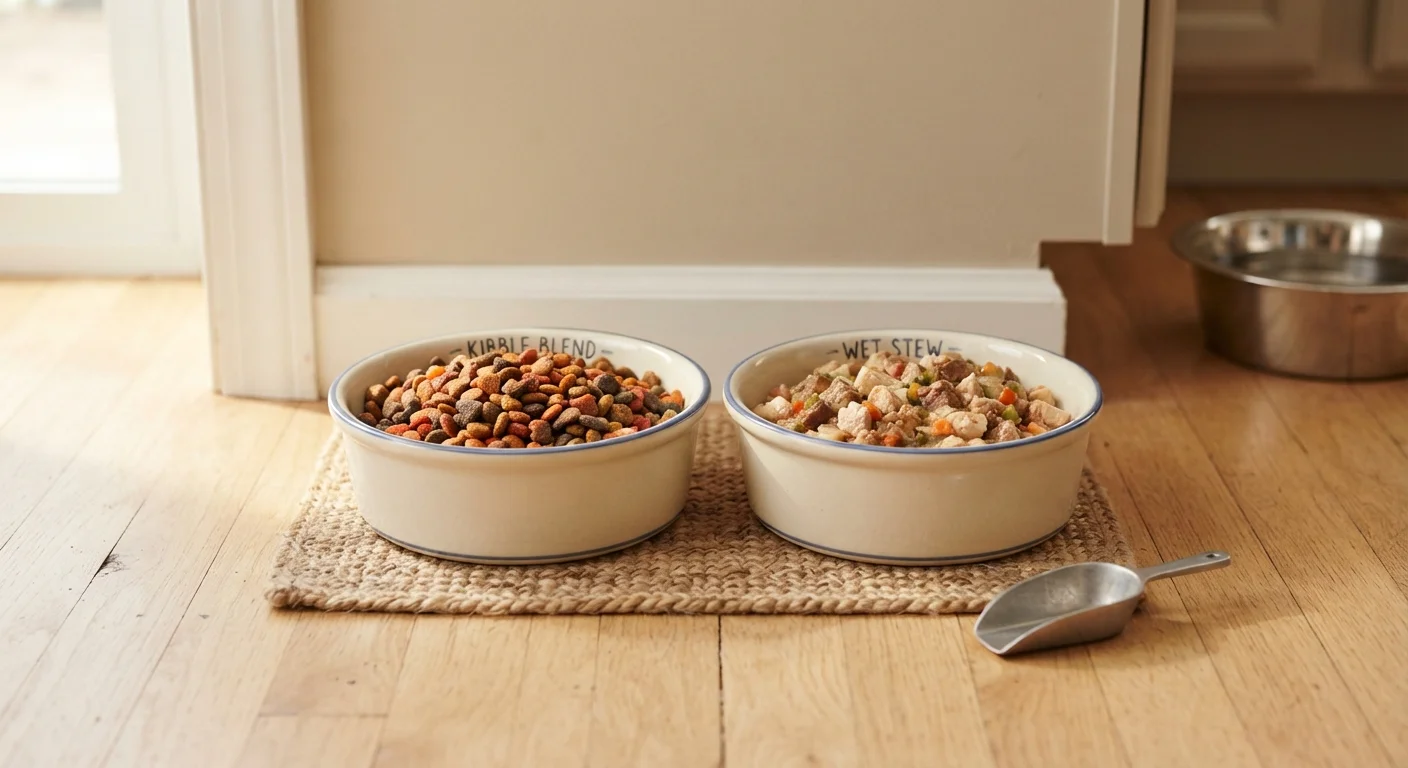
Photo credit: InsightsGrove.com | Discover Joy In Reading
In this article
Moisture, texture, cost per serving, and dental impact — a clear breakdown of how dry and wet pet food differ in practice.
Key Takeaways
- Wet food typically contains 70-80% moisture, while dry kibble contains only around 10%, affecting daily hydration intake.
- Dry kibble generally costs less per serving and has a longer shelf life once opened than wet food.
- Neither format reliably cleans teeth on its own; separate dental care is always recommended.
- Protein and fat levels vary significantly within each format - the label matters more than the texture.
- Some pets benefit from a combination of both formats, depending on health, age, and preference.
- Always consult a veterinarian before making significant changes to your pet's diet.
Moisture and Hydration: The Biggest Practical Difference
The most meaningful nutritional distinction between dry and wet food isn't protein or fat - it's water. Wet food typically contains 70-80% moisture, while dry kibble sits at roughly 8-12%. For cats especially, who evolved as desert animals with a low natural thirst drive, this gap matters. A cat eating exclusively dry kibble may chronically consume less water than optimal, which some veterinarians associate with a higher risk of urinary tract issues and kidney stress over time.
Dogs are generally better at compensating by drinking more from their bowl, but pets with kidney disease, diabetes, or urinary crystals often benefit from the moisture boost wet food provides. If your pet drinks very little despite having access to fresh water, wet food - or a combination approach - is worth discussing with your vet.
| Criterion | Dry Kibble | Wet Food |
|---|---|---|
| Moisture content | ~8-12% | ~70-80% |
| Cost per serving | Generally lower | Generally higher |
| Shelf life (opened) | Weeks (sealed bag) | 24-48 hours (refrigerated) |
| Palatability | Moderate | High (stronger aroma) |
| Dental benefit | Minimal (standard kibble) | None |
| Caloric density | Higher per gram | Lower per gram |
| Ease of portioning | Very easy | Moderate |
| Suitable for senior pets | Depends on formulation | Often preferred |
Cost, Convenience, and Shelf Life
On a per-serving basis, dry kibble is almost always more affordable than wet food. A calorie delivered via kibble typically costs a fraction of the equivalent from a canned or pouch format. For budget-conscious owners managing monthly pet expenses, this difference adds up quickly - particularly in multi-pet households.
Kibble also wins on convenience: an open bag stays fresh for several weeks when sealed properly, requires no refrigeration, and is easy to measure. Wet food, once opened, must be refrigerated and used within 24-48 hours, making portion control slightly more involved and waste more of a concern.
70-80%
Moisture content in typical wet pet food
Compared to roughly 10% in dry kibble, wet food significantly boosts daily fluid intake for pets who don't drink enough water independently.
~3-4x
Rough cost premium of wet vs. dry per calorie
While formulations vary widely, wet food generally costs considerably more per calorie delivered than dry kibble, based on typical retail price comparisons.
70%+
Cats and dogs with dental disease by age 3
According to the American Veterinary Medical Association, periodontal disease is among the most common health issues in companion animals, regardless of food type.
That said, cost-per-serving is only part of the picture. If a less palatable dry food goes uneaten, it's not saving money. And for pets with specific health conditions - such as lower urinary tract disease - the added hydration from wet food may reduce future veterinary costs. For a deeper dive into interpreting what you're actually paying for nutritionally, see how to read a pet food label.
Dental Health: What the Evidence Actually Says
A widespread belief holds that crunching dry kibble scrapes plaque from teeth. The reality is more nuanced. Most kibble pieces shatter before making meaningful contact with the tooth surface, offering minimal mechanical cleaning. Some specially formulated dental diets - which use larger, fibrous kibble pieces designed to create friction - do have evidence supporting plaque and tartar reduction, but standard kibble does not reliably function as a dental tool.
Wet food doesn't clean teeth at all, and some argue its texture encourages more residue. However, the primary driver of dental disease in pets is a lack of active oral hygiene, not food texture alone. Regular tooth brushing, dental chews designed for efficacy, and periodic veterinary cleanings remain the gold standard. For a more thorough look at what really works, common pet dental care myths breaks down the evidence clearly.
Food Format Isn't a Substitute for Dental Care
Neither dry kibble nor wet food replaces active oral hygiene for pets. Veterinary dental guidelines consistently recommend tooth brushing as the most effective at-home prevention tool. If daily brushing isn't feasible, ask your vet about evidence-based alternatives such as dental chews or water additives that carry the Veterinary Oral Health Council (VOHC) seal. See brushing routines for your pet for related coat and hygiene care tips.
Nutrition Quality, Life Stage, and Special Needs
Neither dry nor wet food is inherently superior nutritionally. What matters is whether the food is nutritionally complete and balanced for your pet's species, life stage, and health status - something verified by looking for an AAFCO (Association of American Feed Control Officials) nutritional adequacy statement on the label.
Puppies and kittens have different caloric and nutrient needs than adult or senior pets. Senior animals often do well on wet food due to its softness (easier on sore teeth or gums) and higher moisture. Pets managing weight may benefit from wet food's lower caloric density by volume, which can help them feel fuller. If you're weighing other feeding philosophies entirely, homemade versus commercial pet food covers the broader landscape.
This article is for general informational purposes only and does not constitute veterinary or medical advice. Always consult a licensed veterinarian before making significant changes to your pet's diet, especially if your pet has a health condition.

Author
Pets & Care Editorial Team
Pets & Care Editorial Team is the collective byline for our editorial team and contributor network. Articles published under this byline or an editorial pen name are researched, written, and reviewed according to our editorial standards for clarity, consistency, and independence before publication.
View all articles →