
Reading a Pet Food Label Without Getting Lost in the Small Print
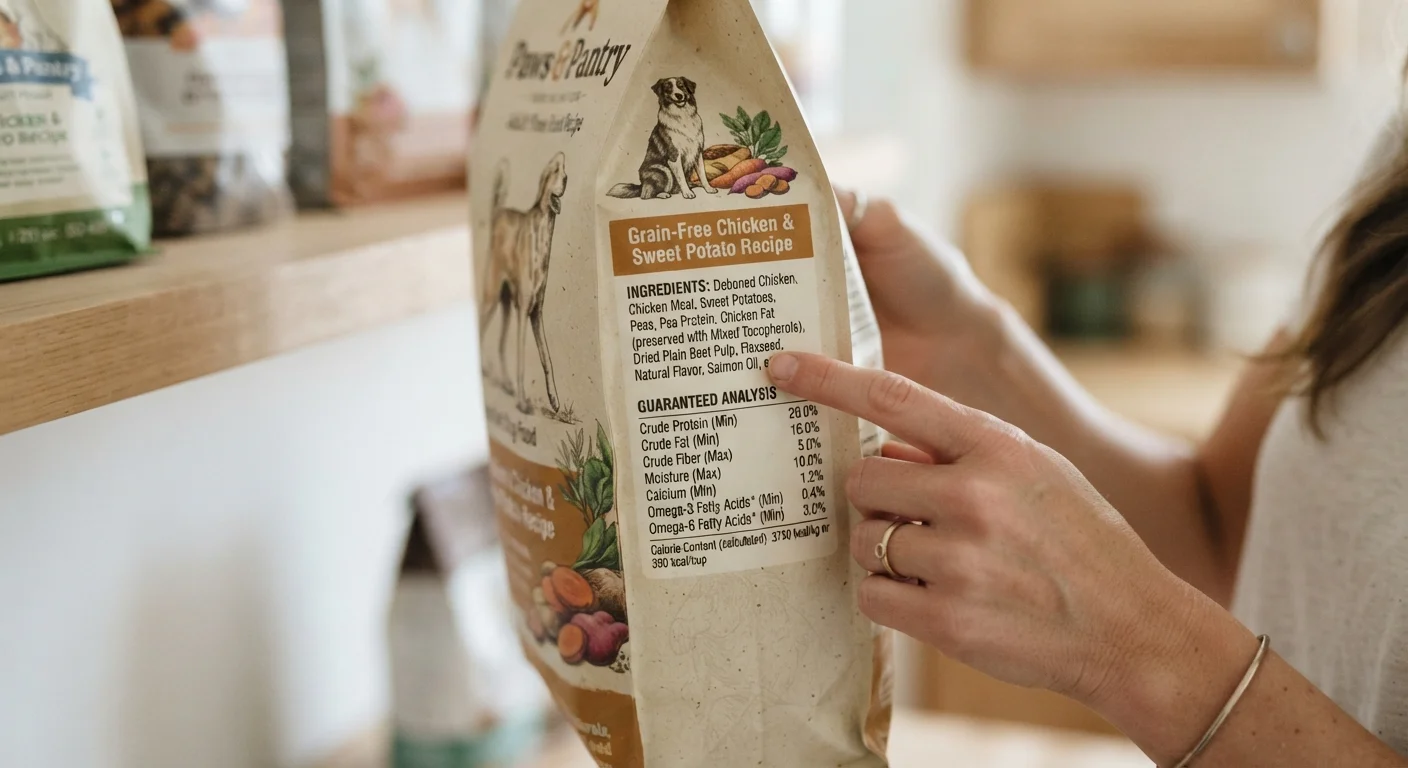
Photo credit: InsightsGrove.com | Discover Joy In Reading
In this article
Ingredient lists, guaranteed analysis, feeding guidelines — learn what pet food labels actually tell you and what to watch out for.
Key Takeaways
- Ingredients are listed by weight before processing, so moisture content can make meat appear higher than it actually is.
- The guaranteed analysis shows minimum or maximum nutrient percentages, not exact amounts.
- The AAFCO nutritional adequacy statement tells you whether a food is complete and balanced for a specific life stage.
- Feeding guidelines on labels are starting points, not precise prescriptions - your pet's needs may differ.
- Marketing terms like 'natural' or 'premium' have limited regulatory definition and should not guide purchasing decisions alone.
The Ingredient List: Order, Weight, and What It Means
Pet food ingredients are listed in descending order by weight before processing. This sounds straightforward, but water content complicates things. A fresh chicken breast is roughly 70% water, so when listed first, it may actually contribute less protein to the finished product than a lower-listed ingredient like chicken meal - which is a concentrated, dried form of the same meat.
This doesn't mean named meats at the top are misleading, but it does mean you should look at the first five to eight ingredients as a group, not fixate on number one alone. A food where multiple protein sources appear in the top ingredients is generally offering a more protein-dense product than one where a single meat leads a long list of starches and fillers.
Watch for ingredient splitting, where a single ingredient appears under multiple names to push it lower on the list. For example, 'corn flour,' 'corn gluten,' and 'ground corn' might each appear separately - collectively representing a much larger proportion of the food than any one entry suggests.
Check Ingredient Splitting Before Trusting the List
If you see multiple forms of the same ingredient listed separately - such as 'pea protein,' 'pea flour,' and 'peas' - add them together mentally. Combined, they may represent a much larger portion of the food than any single entry suggests. This practice, known as ingredient splitting, is legal but can obscure the true composition of a product.
For a closer look at how ingredient composition affects hunger and satiety, see our guide on why pets may still seem hungry after eating.
The Guaranteed Analysis: Numbers With Limits
The guaranteed analysis panel lists crude protein (minimum), crude fat (minimum), crude fiber (maximum), and moisture (maximum). These are regulatory guarantees, not precise measurements - the actual values in the bag could be higher or lower within legal tolerances.
One practical problem: comparing a wet food (which may be 78% moisture) against a dry kibble (around 10% moisture) using the as-fed percentages on the label is misleading. To make a fair comparison, both need to be converted to a dry-matter basis - meaning you remove the moisture and compare nutrients pound for pound. The calculation involves dividing the nutrient percentage by the dry-matter percentage (100 minus the moisture percentage), then multiplying by 100.
~70%
Moisture content in fresh raw meat ingredients
This is why named meats listed first by weight can be misleading when comparing protein contribution to the finished food.
2
Ways AAFCO nutritional claims can be substantiated
Manufacturers may use nutrient-profile formulation or actual animal feeding trials - both are legally valid, but feeding trials reflect real-world testing.
4
Guaranteed analysis nutrients always required on U.S. labels
Crude protein (min), crude fat (min), crude fiber (max), and moisture (max) are the four values AAFCO mandates appear on every pet food label.
This panel does not tell you about digestibility, amino acid profiles, or the actual source of protein - crude protein simply measures total nitrogen content, which can technically be inflated by poor-quality protein sources. It's a useful starting point, not a complete picture.
The AAFCO Statement: The Most Meaningful Line on the Label
Somewhere on the packaging, look for a statement that reads something like: " is formulated to meet the nutritional levels established by the AAFCO Dog (or Cat) Food Nutrient Profiles for ." This is arguably the most important line on the label.
It tells you two things: first, whether the food is complete and balanced (meaning it can serve as a sole diet) or only suitable as a treat or supplement. Second, it specifies the life stage - adult maintenance, growth (puppies or kittens), reproduction, or all life stages. Feeding a food formulated only for adult maintenance to a growing kitten or puppy, for example, may mean they're not getting adequate calcium, phosphorus, or calories for development.
There are two ways a manufacturer can make this claim: through formulation (meeting nutrient profiles on paper) or through feeding trials (actually testing the food on animals). Both are legally valid, but feeding trials represent a higher bar of real-world evidence.
Life Stage Labels Matter More Than You Might Think
An AAFCO statement for 'adult maintenance' does not cover the nutritional needs of growing puppies, kittens, or pregnant or nursing animals. Feeding a maintenance-only food to an animal in a high-demand life stage can leave nutritional gaps over time. When in doubt, look for 'all life stages' on the adequacy statement, or ask your veterinarian what's appropriate.
For cats specifically, the life-stage distinction is especially important. If you're feeding a kitten or a pregnant cat, always look for a food that lists 'growth and reproduction' or 'all life stages' on the AAFCO statement. Learn more about feline-specific needs in our guide on cat nutrition basics.
Feeding Guidelines and Marketing Language: Handle With Care
Feeding guidelines give a recommended daily amount by body weight. They are printed by the manufacturer and tend to be set somewhat generously - which benefits sales but doesn't always suit your pet's actual energy needs. Use them as a starting range, not a fixed prescription. A sedentary indoor cat will likely need less than the upper end of the suggested range; an active working dog may need more.
Marketing terms are another area where label literacy matters. Words like 'natural,' 'premium,' 'holistic,' and 'human-grade' have limited or no standardized regulatory definition in the U.S. pet food industry. They may indicate a quality philosophy, but they are not independently verified nutritional claims. The AAFCO statement and the ingredient list are far more reliable guides than front-of-pack language.
Budget-conscious owners comparing foods by price alone may overlook caloric density - a denser food fed in smaller amounts can sometimes cost less per meal than a cheaper, higher-volume option. For practical strategies on managing food costs without compromising nutrition, see our article on stretching your pet food budget. And if you're comparing wet and dry options, our breakdown of dry versus wet food covers cost-per-serving differences in detail.
This article is for general informational and educational purposes only and is not a substitute for veterinary advice. Always consult a qualified veterinarian for guidance tailored to your pet's individual health and nutritional needs.
Frequently Asked Questions

Author
Pets & Care Editorial Team
Pets & Care Editorial Team is the collective byline for our editorial team and contributor network. Articles published under this byline or an editorial pen name are researched, written, and reviewed according to our editorial standards for clarity, consistency, and independence before publication.
View all articles →