
Unit Pricing: The Shelf Label Detail That Changes How You Shop
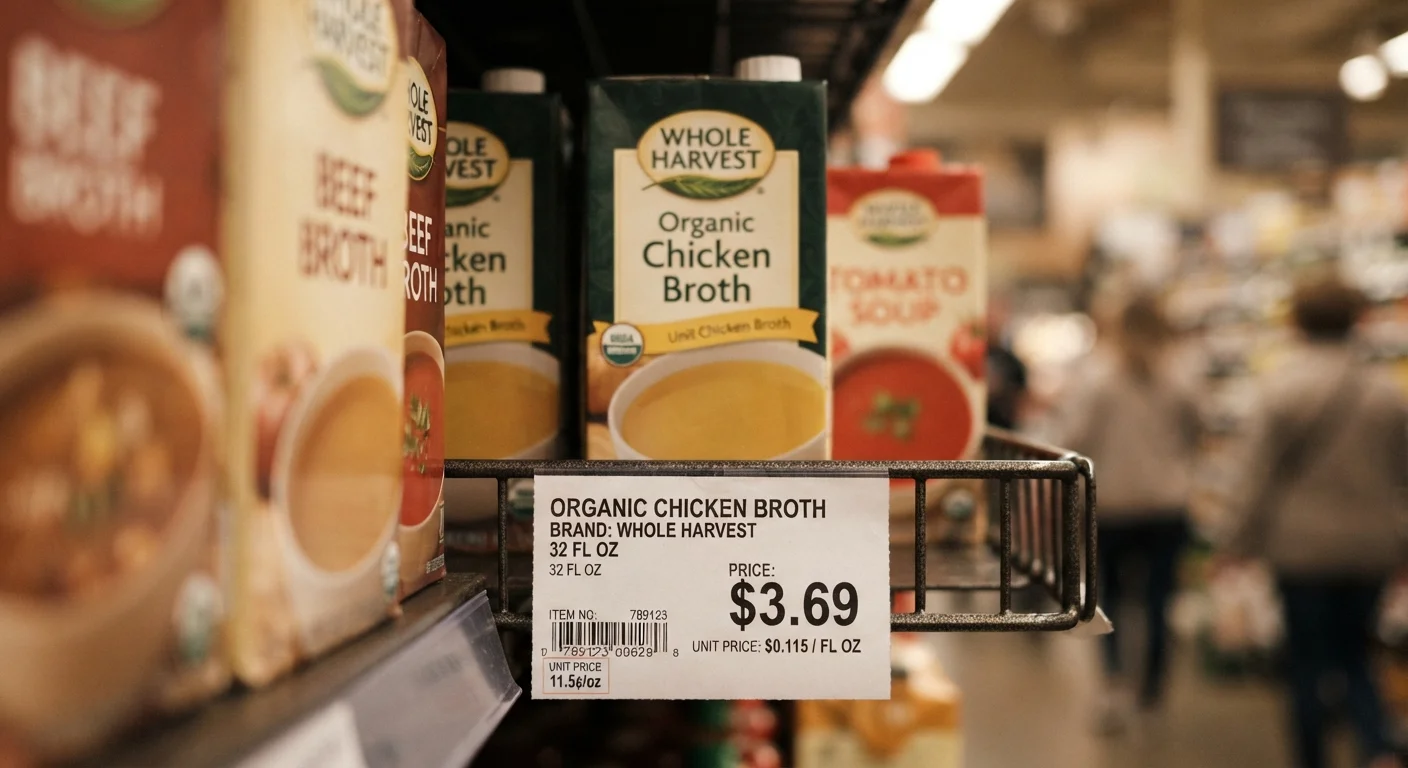
Photo credit: InsightsGrove.com | Discover Joy In Reading
In this article
Unit price labels reveal the true cost per gram, litre, or item. Here's how to read them and why they matter for everyday grocery decisions.
Key Takeaways
- Unit price is the cost per standard measure (oz, lb, liter) — not the sticker price.
- Bigger packages are not always cheaper per unit; always verify before assuming.
- Store brands often have lower unit prices than name brands for identical quantities.
- Unit pricing lets you compare products across different package sizes in seconds.
- Many states legally require unit pricing in grocery stores, but formats can differ.
What the Small Print on the Shelf Tag Actually Means
Most grocery shelf labels have two prices printed on them. The large number is the total price you pay at checkout. The small number — often tucked into a corner in a smaller font — is the unit price. It tells you what one standardized unit of that product costs: one ounce, one gram, one liter, or sometimes one count.
That small number is doing a lot of heavy lifting. Without it, comparing a 16-oz jar of pasta sauce to a 24-oz jar requires division in your head under fluorescent lights while someone waits behind you in the aisle. The unit price eliminates that friction entirely. If the 16-oz jar costs $0.18/oz and the 24-oz jar costs $0.14/oz, the decision is clear — and it took two seconds.
For a deeper look at the vocabulary behind smart shopping decisions, see the glossary of smart shopping terms that covers concepts like price anchoring and value framing alongside unit pricing.
Unit Pricing Regulations Vary by State
While many U.S. states require unit pricing for grocery stores above a certain size, the specific rules — which products must be labeled, what unit is used, and how prominently it must be displayed — differ by jurisdiction. If you don't see a unit price on a shelf label, you can always calculate it yourself using the package weight or volume printed on the product.
Why Bigger Isn't Always Cheaper
A common assumption is that buying in bulk automatically means a lower unit price. This is often true — but not always. Retailers sometimes price family-size or bulk packages at the same unit rate as smaller ones, or even higher, particularly for products with slow turnover or high storage costs.
Promotional pricing adds another wrinkle. A smaller package on sale this week can have a lower unit price than the bulk version sitting on the shelf at full price. Retailers are also aware that most shoppers don't bother checking unit prices, which gives them room to price larger formats less aggressively than you'd expect.
~30%
Potential unit price difference within same product category
Consumer research consistently finds unit price variation of 20–30% or more between different package sizes of identical grocery products, depending on the category and retailer.
35+
U.S. states with some form of unit pricing law
According to the National Conference of State Legislatures, the majority of U.S. states have enacted regulations requiring unit pricing disclosures in grocery retail settings, though requirements vary significantly by state.
The fix is straightforward: always check the unit price column before defaulting to the largest size. If the labels use different units — say, one shows price per ounce and another per pound — convert them before comparing. One pound equals 16 ounces, so multiply the per-ounce figure by 16 to compare directly. This kind of habit connects directly to everyday budgeting practices that add up over time.
How Retailers Sometimes Make Unit Pricing Harder to Use
Unit pricing is a consumer-protection tool, but its effectiveness depends on consistent presentation — and that consistency isn't always there. Some stores display unit price per ounce for one brand and per pound for a competitor on the same shelf. Others change the reference unit between product categories without warning.
Online grocery platforms can be inconsistent too. Unit prices may be buried in a product detail page rather than displayed in search results, making quick comparisons harder. These inconsistencies aren't accidental — they're part of the broader landscape of psychological pricing tactics retailers use to reduce how actively shoppers compare.
Standardize Before You Compare
Before drawing any conclusions from unit prices, confirm both labels use the same unit of measure. If one shows price per ounce and another shows price per pound, multiply the per-ounce figure by 16 to convert. Mismatched units are one of the most common sources of confusion at the shelf — and one of the easiest to fix.
When unit labels are missing or inconsistent, use your phone's calculator: divide the total price by the total weight or volume printed on the package. It takes under 10 seconds and cuts through any presentation tricks entirely.
Applying Unit Pricing Beyond the Cereal Aisle
Unit pricing isn't limited to pantry staples. The same logic applies to pet food (price per pound of kibble), cleaning products (price per fluid ounce of detergent), and personal care items (price per sheet of paper towels). Any product sold in varying quantities benefits from this comparison method.
If you shop for pet food, pairing unit pricing with label literacy — knowing what ingredients you're actually paying for — gives you a more complete picture of value. The guide to reading pet food labels covers what the ingredient list and guaranteed analysis sections actually mean, which affects whether a lower unit price represents genuine savings or a trade-off in quality.
Similarly, when choosing between food options on a budget, combining unit pricing with nutrition label reading helps you assess both cost and nutritional value — so you're not just buying the cheapest option but the one that makes sense for your household. And for tracking whether a price is genuinely competitive over time, price history tools add another layer of context that unit pricing alone can't provide.
Frequently Asked Questions

Author
Smart Spending Editorial Team
Smart Spending Editorial Team is the collective byline for our editorial team and contributor network. Articles published under this byline or an editorial pen name are researched, written, and reviewed according to our editorial standards for clarity, consistency, and independence before publication.
View all articles →