
Psychological Pricing Tactics Retailers Use - and How to Neutralise Them
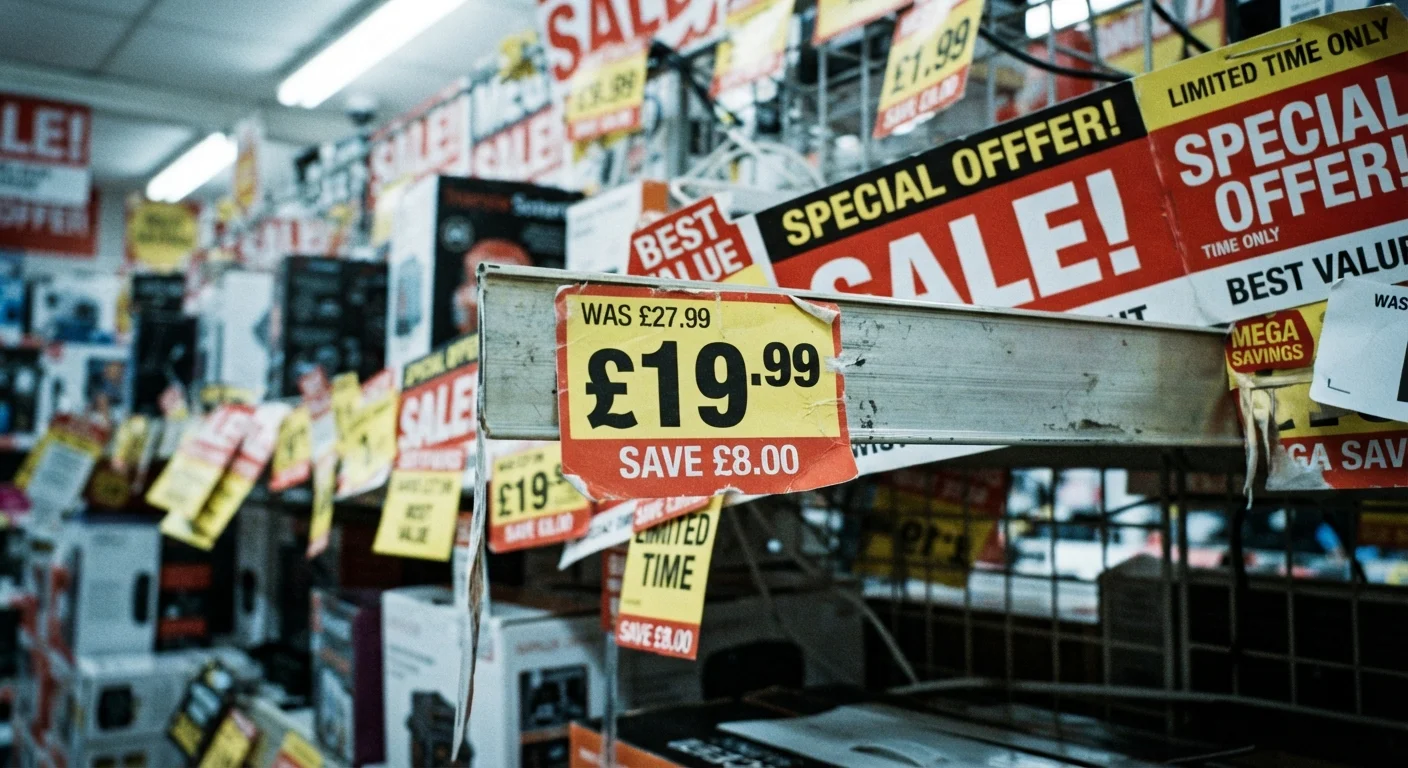
Photo credit: InsightsGrove.com | Discover Joy In Reading
In this article
Charm pricing, decoy offers, bundle framing: a curated breakdown of the mental nudges embedded in everyday retail pricing.
Key Takeaways
- Retailers use well-documented psychological techniques to make prices feel smaller or deals feel more urgent than they are.
- Charm pricing, decoy offers, and bundle framing each exploit specific cognitive shortcuts - recognizing them is the first defense.
- Practical countermeasures like unit pricing, pre-set budgets, and price history tools help you evaluate value independently.
- Awareness alone reduces the effect; combining knowledge with deliberate habits consistently produces better purchasing decisions.
Why Pricing Psychology Works on Almost Everyone
Retailers invest heavily in pricing strategy - not just to stay competitive, but to influence the decisions you make before you consciously weigh the numbers. These techniques are documented in behavioral economics research and deployed at scale across grocery stores, e-commerce platforms, and subscription services.
Importantly, knowing about a psychological pricing tactic doesn't fully immunize you against it. The effects operate partially below conscious awareness. That's why the goal isn't just recognition - it's building deliberate habits that override the automatic responses these tactics are designed to trigger. The tactics below are among the most widely used. Each one comes with a practical countermeasure you can apply immediately. For a broader look at how store environments compound these pricing signals, see how store layout influences purchasing behavior.
Charm Pricing (.99 and .95 endings)
Prices ending in .99 or .95 are perceived as meaningfully lower than the next whole number, even when the difference is a single cent. This effect, studied extensively in consumer behavior research, is sometimes called the "left-digit effect" - the brain anchors on the leftmost digit and underweights the rest.
Countermeasure: Round up mentally before comparing. If an item is priced at $29.99, think of it as $30. This simple habit closes the gap the retailer is exploiting and makes comparisons more accurate.
Mentally rounding up to the nearest dollar takes seconds and neutralizes the left-digit effect entirely.
Anchor Pricing and Artificial Reference Points
When a retailer displays a "was $80, now $49" label, the $80 functions as an anchor - a reference point that makes $49 feel like a strong deal, regardless of whether $80 was ever a price anyone actually paid. Anchors can be inflated, rarely-charged, or pulled from competitor pricing in misleading ways.
Countermeasure: Ignore the crossed-out price entirely. Ask: is $49 a price I would find reasonable if I'd never seen the original? Use price history tools or category research to set your own baseline. Why sale prices aren't always the deal they appear to be explores this in depth.
An anchor price is only meaningful if it reflects what the item genuinely sold for - verify before you react.
The Decoy Effect
When three options are presented - small, medium, and large - the middle or large option often looks disproportionately attractive because one option is designed to be clearly inferior. That inferior option is the decoy. It exists to make your "real" choice seem obvious, even if neither option would have been your first pick without the comparison.
Countermeasure: Evaluate each option in isolation against your actual need. Ask: if this were the only option, would it represent good value for what I actually use? Decoys work by distorting relative comparison; absolute evaluation bypasses that entirely.
Decoys are designed to make one option look obvious - evaluate each option against your own needs, not against each other.
Bundle Framing and Perceived Value Inflation
Bundles are priced to feel like a discount over buying each item separately - but that math only works if you'd actually want every item in the bundle. Retailers construct bundles specifically to include low-cost or low-demand items that inflate the perceived total value without significantly raising costs.
Countermeasure: Price out only the items you genuinely want or need. If the bundle price minus the items you wouldn't buy individually still saves money, it may be a genuine value. If it doesn't, you're paying for items you don't want in exchange for the feeling of a deal.
A bundle is only a deal on the items you actually want - price those individually before deciding.
Unit Price Obscuring and Package Size Manipulation
Retailers sometimes change package sizes - shrinking a product while keeping the price the same - without making the per-unit cost prominent. This is sometimes called "shrinkflation." Similarly, large multi-packs are priced to imply better value, but the per-unit math doesn't always support that assumption.
Countermeasure: Always compare on a per-unit basis - per ounce, per liter, per item. Shelf labels in most US grocery stores are required to display unit pricing, though placement and formatting vary. Unit pricing: the shelf label detail that changes how you shop explains how to read these labels effectively.
Package size is a variable retailers control - unit price is the only honest basis for comparison.
Scarcity and Urgency Signals
"Only 3 left in stock," countdown timers, and "offer ends tonight" language are designed to compress decision-making time. Urgency narrows focus onto the fear of missing out and away from the question of whether you need the item at all. These signals are sometimes accurate - and sometimes manufactured or continuously refreshed.
Countermeasure: Add the item to a cart or wishlist and revisit it after 24 hours. Genuine scarcity will still be present. Manufactured urgency often resets. If the decision can't wait a day, ask yourself whether that pressure is coming from the product's actual value or from the retailer's framing.
Genuine urgency is rare; most countdown timers are designed to shorten your thinking time, not reflect real scarcity.
Building a Pricing-Resistant Shopping Approach
No single habit defeats all pricing psychology, but a layered approach works well. Before any significant purchase, ask three questions: What would I pay for this if there were no stated discount? Does the price-per-unit actually make this a better value? Am I responding to the offer or to a genuine need?
Set Your Own Price Before You Shop
Before browsing any category or sale page, write down what you'd reasonably pay for the item based on your budget and past experience. This pre-commitment acts as a personal anchor that's harder for retailer pricing to override. Research in decision-making consistently shows that pre-set limits reduce susceptibility to in-the-moment pricing pressure.
These questions interrupt the automatic processing that retailers rely on. Combined with price history tools - which show whether a price is genuinely lower than usual - they give you an independent baseline instead of a retailer-constructed one. For a structured framework to evaluate any promotion before committing, the smarter shopper's approach to evaluating any promotion walks through the full methodology. And if you want to understand how reference prices are engineered in the first place, the anatomy of a fake sale covers the mechanics in detail.

Author
Savvy Shopping Editorial Team
Savvy Shopping Editorial Team is the collective byline for our editorial team and contributor network. Articles published under this byline or an editorial pen name are researched, written, and reviewed according to our editorial standards for clarity, consistency, and independence before publication.
View all articles →