
Small-Space Fitness: Exercising Effectively in a Studio Flat or Shared Room
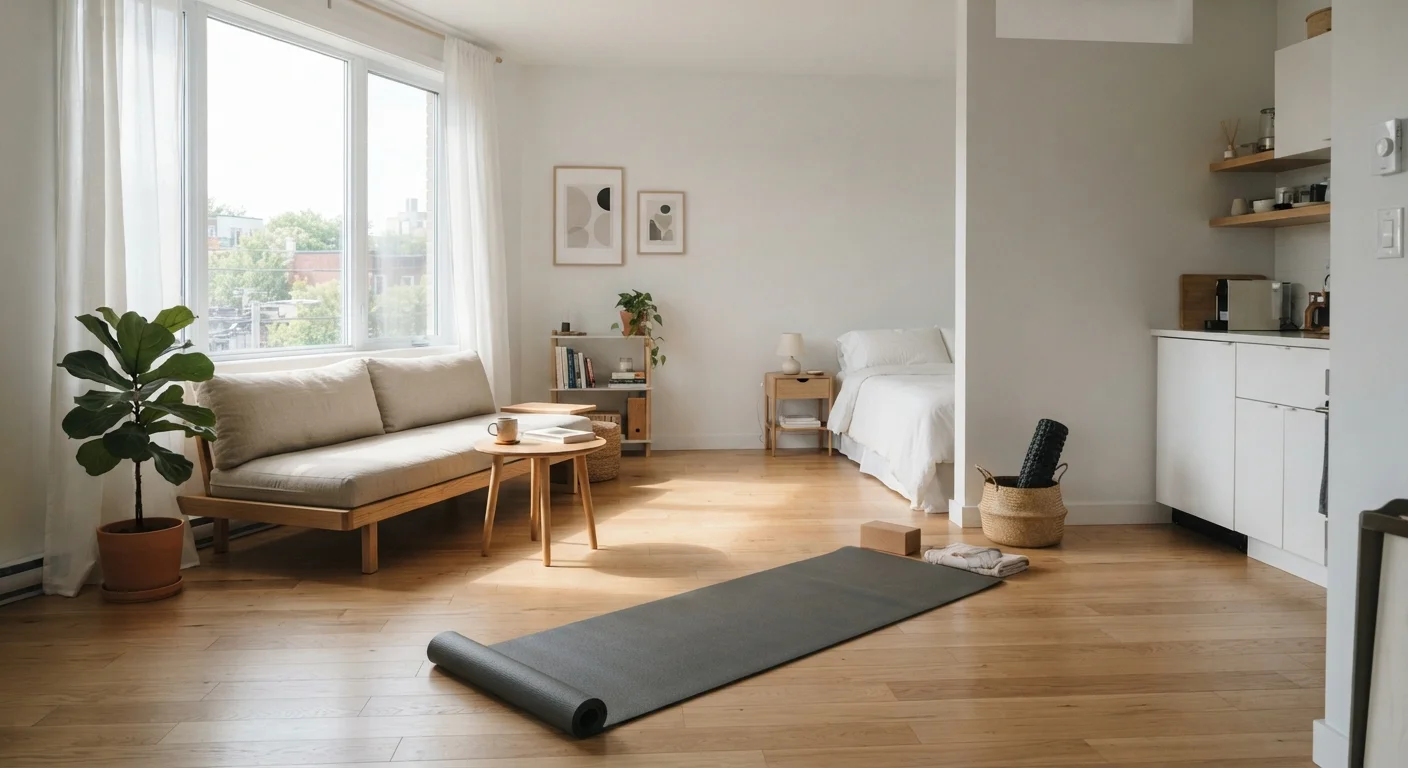
Photo credit: InsightsGrove.com | Discover Joy In Reading
In this article
Tight on floor space? These exercise approaches and layout tips let you train effectively without rearranging your entire home.
Key Takeaways
- A 6×4 foot floor area is enough space to complete a full-body bodyweight workout.
- Strategic furniture placement can free up temporary workout space without permanent rearrangement.
- Vertical movement patterns and low-impact substitutions expand what's possible in tight quarters.
- Consistent, shorter sessions in a small space outperform infrequent gym visits for many people.
- No equipment is required to build strength, mobility, and cardiovascular fitness at home.
Why Small-Space Training Works - and Who It's For
The assumption that effective exercise requires a dedicated room or gym subscription is largely a myth. Research consistently supports bodyweight training as a valid method for building muscular strength, endurance, and cardiovascular fitness - all outcomes that depend on exercise quality and consistency, not square footage. If you're new to home training generally, starting home fitness from scratch covers foundational principles worth reviewing before you begin.
Studio flats, shared houses, and compact rentals present a specific challenge: limited floor area, noise sensitivity, and often no private outdoor access. The steps below are designed specifically for these conditions - no assumptions about spare rooms, garages, or generous budgets. For a broader look at how home setups compare financially to gym memberships over time, the long-term numbers may inform your thinking.
Yoga or exercise mat
Defines your workout zone, cushions joints during floor work, and reduces noise impact on downstairs neighbours.
Resistance bands
Add progressive challenge to upper- and lower-body exercises without taking up meaningful storage space.
A sturdy chair or low table
Doubles as support for incline push-ups, step-ups, and tricep dips without purchasing additional equipment.
Furniture sliders or socks on a hard floor
Enable sliding core exercises like mountain climbers and hamstring curls with no equipment cost.
Setting Up and Staying Consistent in a Tight Space
The biggest barrier to home exercise in a small space isn't physical - it's logistical friction. If setup takes ten minutes, you'll skip sessions. The goal is a system where your workout zone is ready (or nearly ready) in under two minutes.
Clear Your Space Before Every Session
Tripping over furniture, bags, or cables mid-workout is a leading cause of home exercise injuries. Before you begin, do a 60-second sweep to remove obstacles from your intended movement area. Pay particular attention to low items like phone chargers, shoes, or pet toys that are easy to miss at floor level.
Audit your available floor space honestly
Measure the largest unobstructed area in your room - even a modest 6×4 foot patch is workable. Note which furniture can be temporarily slid aside versus what is fixed. Beds on casters, folding chairs, and lightweight side tables are all candidates for brief repositioning. Identify one "home base" zone that requires the least rearrangement and return to it consistently so setup time stays under two minutes.
Choose movement patterns that match your footprint
Not all exercises need equal space. Prioritise stationary patterns - push-ups, squats, lunges (stepping forward rather than backward reduces length needed), planks, glute bridges, and seated core work - over wide lateral movements. For cardio, running in place, low-impact step-touches, and controlled burpees (hands landing close to feet) keep you within a compact zone. Consult our comparison of home cardio options to match intensity goals with the space you have.
Exploit vertical space for exercise variety
Walls are a genuine training tool. Wall sits, wall push-ups (for beginners or warm-up), and shoulder taps against a wall build strength without floor spread. If your ceiling height allows, resistance band exercises anchored to a door frame - rows, pull-downs, chest presses - add upper-body range that pure floor work can't replicate. Thinking vertically applies as much to fitness as to storage.
Structure your sessions for small-space efficiency
Short, focused blocks work better than sprawling hour-long sessions when space is tight. A 20-30 minute circuit - alternating push-pull-lower body movements with brief rest - minimises repositioning and maintains workout intensity. Programme exercises in sequences that flow from standing to floor rather than jumping between positions repeatedly. For a framework to build on, a weekly bodyweight routine can be adapted to any room size.
Apply progressive overload to keep making progress
Space constraints don't limit progress - they just mean you progress differently. Increase difficulty by slowing repetitions (tempo training), reducing rest intervals, adding isometric holds, or transitioning to harder exercise variations (e.g. from standard push-ups to close-grip or decline push-ups). This principle - gradually increasing training demand - applies fully in a small space. Progressive overload without weights is well-documented and highly effective when applied consistently.
Manage noise and neighbour considerations
In a shared building, impact noise travels. Substitute high-impact moves (jumping jacks, box jumps) with low-impact equivalents: step jacks, slow-motion squat pulses, or quiet burpees with a step-back rather than a jump. Schedule higher-intensity sessions during daytime hours when neighbours are less likely to be disturbed. An exercise mat on hard floors significantly dampens noise transmission.
Use a Yoga Mat as Your Space Boundary
A standard yoga mat (roughly 68×24 inches) is a useful visual anchor for your workout zone. Most bodyweight exercises - planks, push-ups, lunges, sit-ups - can be completed entirely within that footprint. It also protects floors and reduces noise for neighbours below.
Once your routine is established, consider how zoning your studio apartment can create a semi-permanent fitness corner that doesn't require clearing space every time. Even a dedicated corner with a rolled mat and resistance band on a hook signals your brain that this is where movement happens - a small but meaningful habit cue.
For further ideas on living and organising well in compact homes, the Small Space Living hub covers practical strategies that complement a home fitness setup. And if budget is a concern, what's actually free in home fitness gives a realistic picture of where costs appear and where they don't.
Check Ceiling Height for Overhead Movements
Jumping jacks, overhead presses with resistance bands, and jump rope all require clearance above your head - typically at least 8 feet. If your ceiling is lower, or if light fixtures are in the way, substitute with non-jumping alternatives to avoid injury or damage.
This article is for general informational purposes only and is not a substitute for professional medical or fitness advice. If you have existing health conditions, injuries, or concerns about starting an exercise programme, consult a qualified healthcare professional before beginning.

Author
Health & Wellness Editorial Team
Health & Wellness Editorial Team is the collective byline for our editorial team and contributor network. Articles published under this byline or an editorial pen name are researched, written, and reviewed according to our editorial standards for clarity, consistency, and independence before publication.
View all articles →