
Starting Home Fitness From Scratch: What Beginners Need to Know
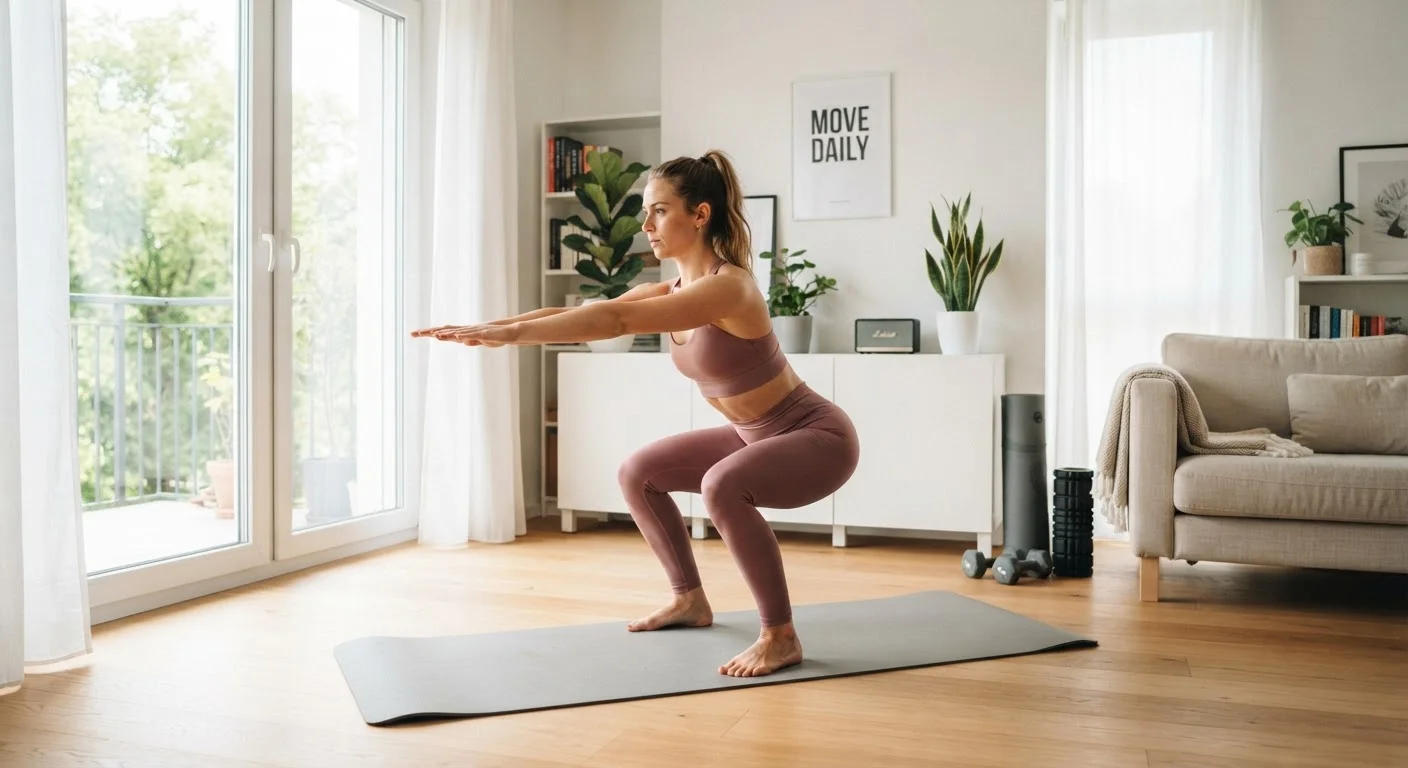
Photo credit: InsightsGrove.com | Discover Joy In Reading
In this article
A comprehensive introduction to exercising at home — covering how to start safely, what to focus on first, and how to build lasting habits.
Key Takeaways
- Effective home fitness requires no equipment - bodyweight movements build real, measurable strength and endurance.
- A consistent 20-30 minute routine three times per week is a realistic and evidence-supported starting point for beginners.
- Learning proper movement form before adding intensity is the single most important injury-prevention strategy.
- Free resources - from public workout videos to outdoor spaces - can eliminate the cost barrier entirely.
- Rest and recovery are not optional; they are when your body adapts and improves.
- Always consult a qualified healthcare professional before starting a new exercise program if you have existing health conditions.
Why Home Fitness Works (When Done Right)
The idea that effective exercise requires a gym membership, expensive equipment, or a personal trainer is a persistent myth - and one that keeps many beginners from getting started at all. Exercise science consistently supports the effectiveness of bodyweight training for improving cardiovascular fitness, muscular endurance, and overall health.
For budget-conscious adults, home fitness removes two of the biggest barriers: cost and commute. You can find genuinely free, high-quality workout guidance online - no subscription required. Our guide to home fitness on a zero budget breaks down what's actually free versus where hidden costs can appear.
The key phrase is done right. Home workouts succeed when they're structured, progressive, and safe - not when they're random bursts of activity followed by long gaps. Consistency and form matter far more than intensity at the start.
Start With Consistency, Not Intensity
One of the most well-supported findings in exercise adherence research is that beginners who start with manageable, enjoyable sessions are more likely to maintain their routine over time. Resist the urge to go all-out in the first week. A moderate effort you can repeat three times a week will produce far better long-term results than an exhausting session you can't recover from.
Setting Up Your Space and Managing Expectations
You don't need a dedicated home gym. A cleared area of floor large enough to lie down in - roughly six feet by four feet - is all that's physically required for most beginner bodyweight routines. Remove tripping hazards, ensure good ventilation, and wear supportive footwear if you're on a hard floor.
Managing expectations is equally important. Beginners often overestimate what they'll do in week one and underestimate what's possible in month three. Progress in fitness is real but gradual - visible changes in strength and endurance typically develop over several weeks of consistent training, not days.
Realistic Timelines Matter
Most beginners begin noticing meaningful improvements in endurance and movement quality within four to eight weeks of consistent training - though individual variation is significant and influenced by factors like sleep, nutrition, and starting fitness level. Expecting dramatic physical changes within days is a common source of early discouragement. Measuring progress by how a workout feels and how consistently you're showing up is often more motivating than appearance-based metrics alone.
Setting a simple written goal - not a vague aspiration like "get fit," but something specific like "complete three workouts this week" - is a strategy supported by behavioral research on habit formation. Small, achievable targets build the confidence that sustains longer-term change.
Core Movement Patterns Every Beginner Should Learn
Rather than thinking in terms of individual exercises, think in terms of fundamental movement patterns. These six categories cover the major muscle groups and form the backbone of virtually every effective beginner program:
- Squat pattern - bodyweight squats, wall sits, and glute bridges train the lower body and core.
- Hinge pattern - hip hinges and deadlift-style movements (performed without weight) protect the lower back while building posterior strength.
- Push pattern - push-ups in various hand positions develop chest, shoulder, and tricep strength.
- Pull pattern - rows using a sturdy table edge or a low bar address the often-neglected upper back.
- Carry and core stability - planks, dead bugs, and similar exercises build the trunk stability that supports all other movement.
- Locomotion - walking, jogging in place, jumping jacks, and similar activities elevate heart rate and support cardiovascular health.
Learning to perform each pattern with controlled, deliberate form - before adding speed or volume - is the most reliable way to reduce injury risk. If you're unsure about form, many certified fitness organizations publish free instructional content online.
Bodyweight training
Exercise that uses your own body's weight as resistance - such as push-ups or squats - requiring no external weights or machines.
Progressive overload
Gradually increasing the demand placed on your body over time - through more repetitions, slower tempo, or harder variations - so that fitness continues to improve.
Movement pattern
A category of motion (like a push, pull, or squat) that groups exercises by the muscles and joints they primarily train, rather than treating each exercise in isolation.
Cardiovascular fitness
The ability of your heart, lungs, and blood vessels to deliver oxygen to working muscles efficiently - improved through sustained aerobic activity like brisk walking or jogging.
Muscular endurance
How long your muscles can sustain repeated effort before fatiguing - distinct from maximum strength, and a key focus of many beginner programs.
Recovery
The rest period between training sessions during which your body repairs and adapts - an active part of any fitness program, not simply the absence of exercise.
Once you've built a consistent foundation, you can apply progressive challenge without any equipment. See our article on progressive overload without weights for structured strategies to keep making progress.
Building a Routine That Actually Sticks
The most effective workout program is the one you'll actually follow. For beginners, that typically means starting with shorter, more manageable sessions - around 20 to 30 minutes - rather than ambitious hour-long workouts that are hard to sustain.
Anchoring your workout to an existing habit (exercising right after waking up, or immediately after finishing work) is a well-documented approach to building behavioral consistency. Our companion piece on morning versus evening workouts reviews what the research says about timing - though the short answer is that consistency matters far more than the time of day.
Tracking your sessions - even in a basic notebook - creates a record of effort that reinforces motivation and makes it easier to notice genuine progress over time. High-intensity approaches like HIIT can be a useful tool later on; our complete guide to HIIT for home training explains how it works and who it suits.
CDC Physical Activity Guidelines for Americans
The U.S. Centers for Disease Control and Prevention publishes evidence-based physical activity recommendations for adults, including guidance on aerobic and muscle-strengthening activity. A reliable reference point for understanding how much exercise is generally recommended.
American Council on Exercise (ACE) Exercise Library
ACE provides a free, searchable library of exercise demonstrations and descriptions organized by muscle group and equipment - a useful tool for learning correct movement form at no cost.
Safety, Recovery, and When to Seek Professional Guidance
Rest is not the opposite of training - it's an essential part of it. Muscle tissue adapts and strengthens during recovery, not during the workout itself. Structuring at least one or two rest days per week into your program is not optional; it's how progress actually happens. For a deeper look at why, see our article on rest days in a home fitness routine.
Common beginner mistakes include doing too much too soon, skipping warm-ups, and ignoring early warning signs of overuse. A five-minute warm-up of light movement that raises your heart rate gradually - before every session - is a simple and effective way to prepare your body for effort.
Don't Ignore Pain or Discomfort
Sharp, joint-based, or unusual pain during exercise is a signal to stop - not push through. Beginners are particularly susceptible to overuse injuries when ramping up activity too quickly. If pain persists beyond a session, seek advice from a qualified healthcare or sports medicine professional before continuing. Exercising through injury almost always delays recovery.
This article provides general health and fitness information for educational purposes only and is not a substitute for personalized medical or professional exercise advice. If you have any existing health conditions, injuries, or concerns, consult a qualified healthcare professional before beginning a new exercise program.
Frequently Asked Questions

Author
Health & Wellness Editorial Team
Health & Wellness Editorial Team is the collective byline for our editorial team and contributor network. Articles published under this byline or an editorial pen name are researched, written, and reviewed according to our editorial standards for clarity, consistency, and independence before publication.
View all articles →