
Home Workouts vs Gym Memberships: What You Actually Get for Your Effort
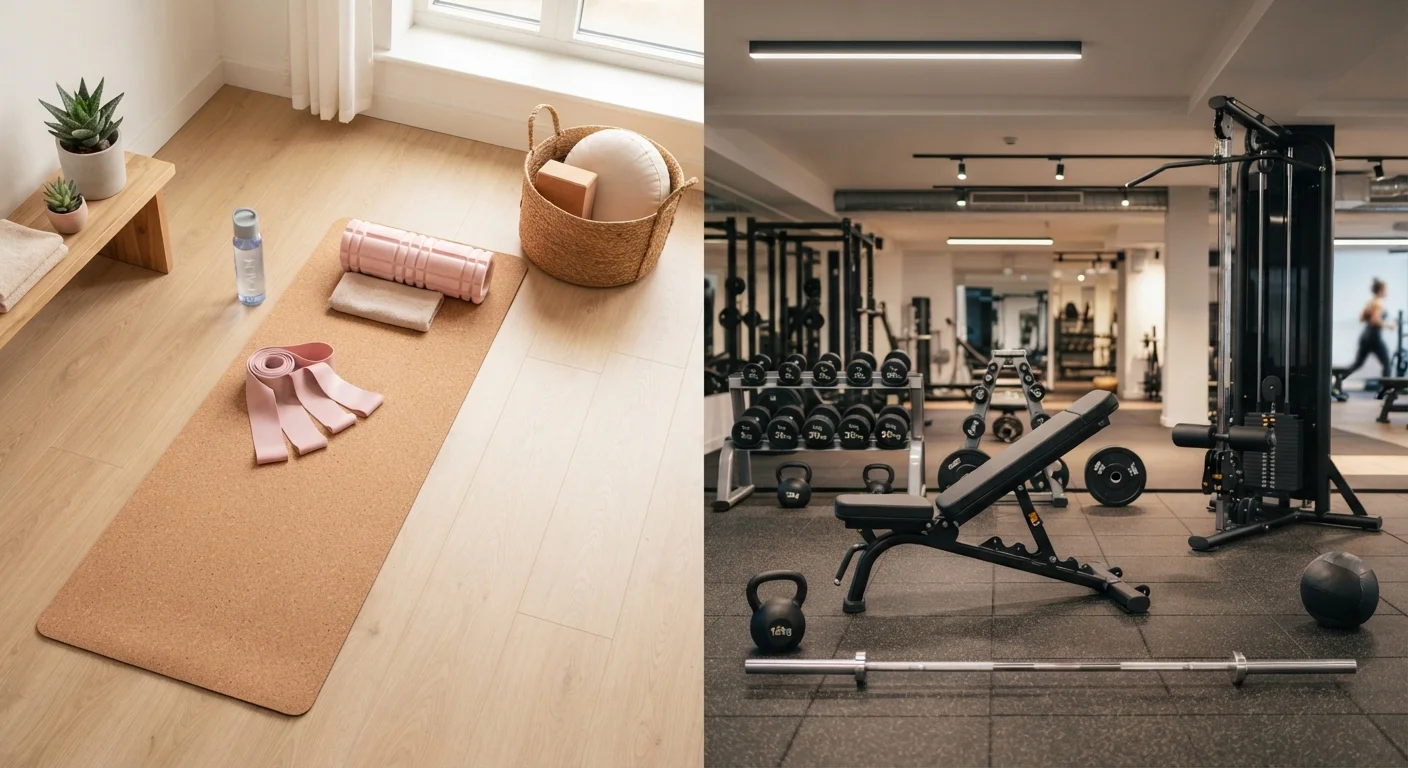
Photo credit: InsightsGrove.com | Discover Joy In Reading
In this article
A clear-eyed look at what home training and gym memberships each deliver in terms of results, convenience, cost, and long-term consistency.
Key Takeaways
- Home workouts can build real strength and cardiovascular fitness without any equipment, according to established exercise science.
- Gym memberships provide access to equipment and classes that are genuinely difficult to replicate at home without significant investment.
- Consistency - not location - is the strongest predictor of long-term fitness outcomes.
- The upfront and ongoing cost difference between the two approaches is substantial over time.
- Neither option is universally superior; the right choice depends on your goals, schedule, and budget.
What Each Option Actually Delivers
The question isn't which setting is objectively better - it's which one delivers results for you, reliably, over time. Let's be direct about what each actually offers.
Home workouts give you complete scheduling autonomy, zero commute, and the ability to exercise in whatever clothes or state you like. From a purely physiological standpoint, research consistently shows that bodyweight exercise - push-ups, squats, lunges, planks - produces meaningful improvements in muscular strength and endurance when performed with sufficient progressive challenge. The evidence does not require a gym setting to achieve general fitness. For a deeper look at the science, see how bodyweight training actually works.
Gym memberships provide access to resistance machines, free weights, cardio equipment, and often group classes that genuinely expand your training options. For goals like heavy compound lifting, advanced hypertrophy training, or supervised rehabilitation, that equipment access is meaningful - not marketing noise. Gyms also offer a social and structural context that many people find motivating in ways their living room simply cannot replicate.
| Criterion | Home Workouts | Gym Memberships |
|---|---|---|
| Ongoing monthly cost | Potentially $0 | Typically $20-$60/month |
| Equipment variety | Limited without investment | Extensive, included in membership |
| Scheduling flexibility | Complete - any time, any day | Subject to opening hours |
| Commute required | None | Yes - adds time and cost |
| Social / accountability factor | Self-directed only | Classes, staff, community available |
| Professional guidance access | Via apps or free videos | On-site trainers available |
| Effectiveness for general fitness | Fully adequate with consistency | Fully adequate with consistency |
| Setup barrier to start | Very low | Requires sign-up and travel |
Cost, Convenience, and Consistency
Cost is where the gap between these two approaches becomes most tangible for budget-conscious readers. A basic gym membership in the US typically runs between $20 and $60 per month depending on location and facility type. Over five years, that compounds significantly - and that's before accounting for travel costs or optional add-ons like personal training sessions. A thorough breakdown of one-, two-, and five-year comparisons is covered in our long-term cost analysis.
Home workouts, by contrast, can cost genuinely nothing if you rely on bodyweight movements and free video resources. Even adding resistance bands - a modest, one-time purchase - expands your options considerably. The reality of zero-budget home fitness is worth reading if you're trying to keep initial outlay minimal.
~$500+
Average annual US gym membership cost
Based on publicly reported industry figures for standard gym memberships across major US markets, excluding premium clubs.
73%
Gym members who report underusing their membership
Multiple fitness industry surveys have consistently found that a large proportion of members attend fewer than twice per month on average.
Equal
Strength gains: home vs gym training in controlled studies
A 2021 review in IJERPH found bodyweight-based home training produced comparable strength and fitness improvements to gym-based programs when intensity was matched.
Convenience intersects directly with consistency. Exercise psychology research suggests that reducing friction - cutting the commute, eliminating the need to pack a bag, removing the awkwardness of a busy gym floor - meaningfully increases how often people actually train. That said, some people find the act of leaving the house creates a helpful psychological separation between work and workout. Neither response is irrational; they reflect genuine individual differences in motivation style. For strategies on making home training stick long-term, evidence-informed habit strategies are worth exploring.
Gaps, Trade-Offs, and Common Misconceptions
Home workouts have real limitations that deserve honest acknowledgment. Progressive overload - the gradual increase in training demand that drives adaptation - is straightforward with free weights but requires more creativity at home. Bodyweight progressions (moving from standard push-ups to archer push-ups, for instance) can sustain progress, and resistance bands add variable load effectively, but there is a ceiling for some advanced strength goals without significant equipment investment. If you're weighing those options, resistance bands vs bodyweight training covers both approaches honestly.
Gyms, meanwhile, carry their own friction: membership contracts, peak-hour crowding, travel time, and the psychological barrier of returning after a break. These aren't trivial - they're among the most cited reasons people let memberships lapse unused.
Timing Matters Less Than You Think
A common concern is whether working out at home in the morning versus evening makes a significant difference to results. Current research suggests timing has a relatively minor effect on fitness outcomes compared to consistency and effort. If you're curious about what the evidence does say, morning vs evening workout research provides a balanced summary.
One persistent misconception is that home training is a lesser, temporary substitute for "real" gym training. The evidence doesn't support that framing. For most general fitness goals - cardiovascular health, functional strength, body composition, stress reduction - home-based exercise is fully capable of delivering results. What it lacks is primarily variety of equipment and, for some people, social motivation. Those are real factors, not invented ones, but they are not the same as a deficit in physiological effectiveness. For a direct examination of common myths, fitness myths that keep people stuck is worth your time.
This article is for general informational and educational purposes only and does not constitute medical or professional fitness advice. Consult a qualified healthcare professional before starting any new exercise program, particularly if you have existing health conditions or injury history.

Author
Health & Wellness Editorial Team
Health & Wellness Editorial Team is the collective byline for our editorial team and contributor network. Articles published under this byline or an editorial pen name are researched, written, and reviewed according to our editorial standards for clarity, consistency, and independence before publication.
View all articles →