
Fitness Myths That Keep People Stuck at Home (and What the Evidence Says)
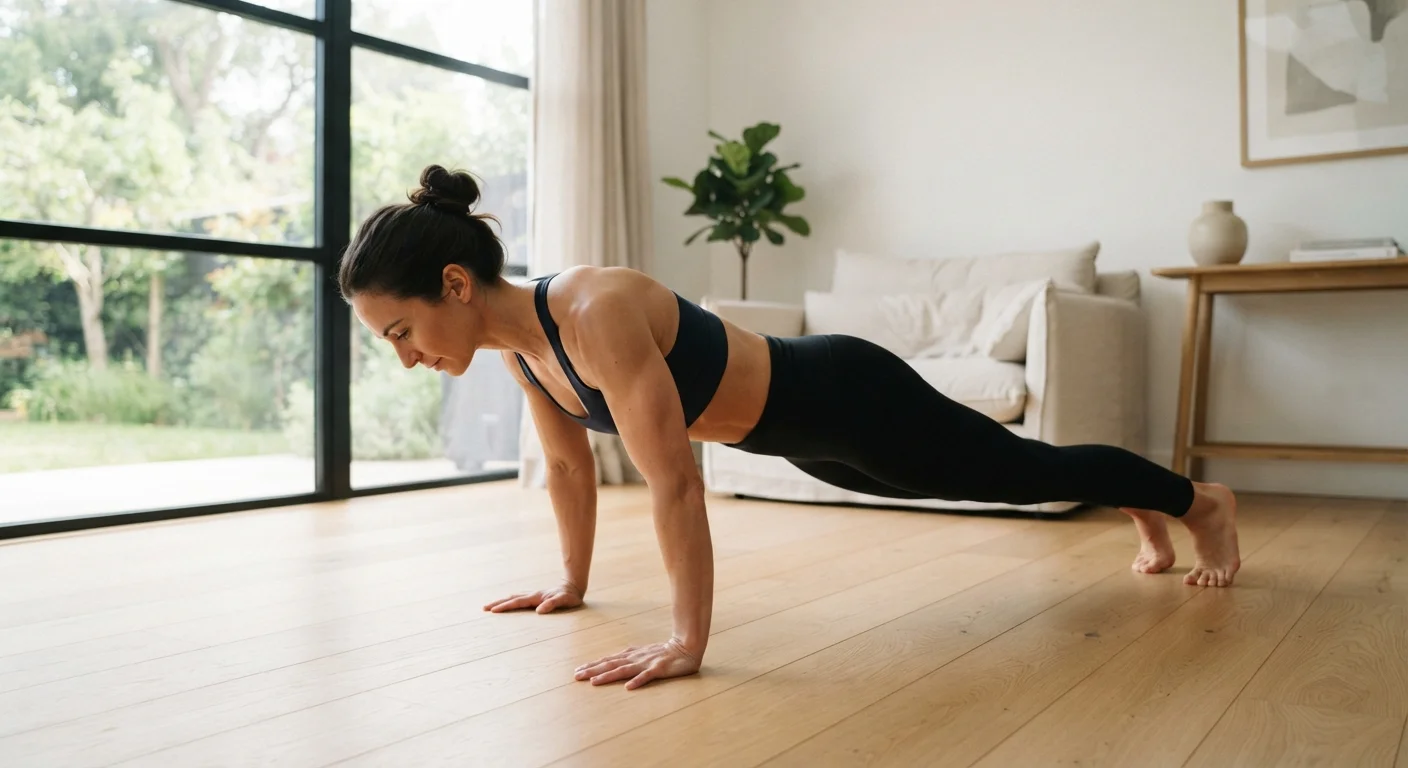
Photo credit: InsightsGrove.com | Discover Joy In Reading
In this article
From 'you need weights to build muscle' to 'cardio is the only way to lose fat' — separating home fitness fact from fiction.
Key Takeaways
- Bodyweight exercises can build genuine muscle strength without any gym equipment.
- Cardio is not the only - or even the most efficient - path to fat loss for most people.
- Short workouts done consistently deliver measurable fitness gains over time.
- Soreness after exercise is not a reliable indicator of an effective workout.
- Rest and recovery are active parts of a fitness plan, not signs of laziness.
Why Fitness Myths Are Especially Costly for Home Trainers
Misinformation about exercise doesn't just waste effort - for people training at home on tight budgets, it can lead to quitting altogether. If you believe you need a gym, expensive equipment, or long daily sessions to see results, the most rational response is to stop trying. That's the real damage these myths cause.
The good news: exercise science has clarified a lot in recent decades. What works for building strength, improving cardiovascular fitness, and supporting overall health is far more accessible than the fitness industry often implies. The evidence-based corrections below address the most persistent misconceptions that keep budget-conscious people on the sidelines.
If you're just beginning your home fitness journey, our beginner's guide to home fitness covers the foundational steps to start safely and build lasting habits.
The Myths - and What the Evidence Actually Shows
The following myth-and-fact pairs address common beliefs that research and exercise physiology directly contradict. Each one has practical implications for anyone training without a gym.
Myth
You need weights or gym machines to build real muscle.
Fact
Muscle growth is driven by mechanical tension and progressive overload - both of which bodyweight training can provide.
Research in exercise physiology consistently shows that muscles respond to load relative to their current capacity, not to the specific source of that load. A push-up that challenges your chest and triceps near their limit produces a similar hypertrophic stimulus to a bench press that does the same. The key variable is progressive overload - gradually increasing difficulty over time - which is entirely achievable with bodyweight methods. See how bodyweight training actually works for the underlying science.
Myth
Cardio is the only effective way to lose body fat.
Fact
Fat loss is primarily driven by an energy deficit, and resistance training contributes meaningfully by preserving and building metabolically active muscle tissue.
While aerobic exercise burns calories during the session, strength training - including bodyweight resistance work - supports fat loss by maintaining lean muscle mass, which influences resting metabolic rate. Research suggests that combining resistance and aerobic exercise may produce better body composition outcomes than either alone. Focusing exclusively on cardio at the expense of resistance training can result in loss of muscle alongside fat, which is generally not the desired outcome.
Myth
If you're not sore the next day, the workout didn't work.
Fact
Delayed onset muscle soreness (DOMS) reflects muscle damage and inflammation - not the quality or effectiveness of a workout.
DOMS is common when starting a new program or introducing unfamiliar movements, but it diminishes as the body adapts. Experienced, consistent exercisers often feel minimal soreness even during productive training cycles. Chasing soreness as a goal can encourage counterproductive behaviors like constantly switching routines, which actually undermines the progressive overload needed for results.
Myth
Short workouts - under 30 minutes - aren't worth doing.
Fact
Exercise duration is far less important than consistency and effort level. Well-structured short sessions produce measurable fitness improvements.
Studies on high-intensity interval training (HIIT) and abbreviated resistance sessions have shown cardiovascular and strength benefits from workouts as short as 10-20 minutes when effort is appropriately high. For budget-conscious people with limited time, this finding is significant: a 20-minute bodyweight circuit done consistently across weeks outperforms an occasional 90-minute session in terms of long-term adaptation and habit formation.
Myth
Rest days mean you're falling behind on your fitness goals.
Fact
Recovery is when the physiological adaptations from training - muscle repair, cardiovascular improvement - actually occur.
Training creates the stimulus; rest creates the adaptation. Overtraining without adequate recovery can increase injury risk, suppress immune function, and impair performance over time. For most people doing moderate home workouts, incorporating rest or lighter active recovery days (such as walking or stretching) is not a setback - it's an essential component of a sustainable training plan.
~73%
Adults who don't meet recommended activity guidelines
According to the U.S. Department of Health and Human Services Physical Activity Guidelines, roughly 73% of American adults do not meet both aerobic and muscle-strengthening recommendations.
10-20 min
Minimum effective session length in HIIT research
Multiple peer-reviewed studies have documented meaningful cardiovascular and metabolic improvements from structured HIIT sessions in the 10-20 minute range.
Understanding these corrections matters beyond motivation. It shapes how you structure your sessions and what you actually do during them. For a deeper look at staying effective over time, see why home workouts stop working after a few weeks and the specific adjustments that restore progress.
Putting the Evidence Into Practice
Debunking myths is only useful if it changes behavior. Here's what the corrected picture looks like in practice for home trainers:
- Replace the "no equipment = no results" belief with a progressive bodyweight plan. Progressive overload without weights - adjusting reps, tempo, leverage, and rest - keeps your body adapting without a single dumbbell.
- Stop chasing soreness as a proxy for effort. Focus instead on performance metrics: more reps, better form, shorter rest periods, harder variations.
- Treat rest days as part of the program, not gaps in it. Muscle repair and cardiovascular adaptation occur during recovery, not during the workout itself.
- Prioritize consistency over session length. Habits that support long-term consistency are more predictive of results than any single workout.
Fitness Progress Takes Time - Protect It
One of the most evidence-supported findings in exercise science is that consistency over weeks and months - not intensity in any single session - drives lasting results. Abandoning a home routine because early progress is slow, or because you believe it's inherently inferior to gym training, is the most common reason people stop seeing gains. Adjust your plan before you quit it.
For a realistic look at what home training can and can't deliver compared to a gym, home workouts vs. gym memberships lays out the honest comparison. And if cost is a core concern, home fitness on a zero budget identifies what's genuinely free and where hidden costs appear.
This article is for general informational and educational purposes only. It is not a substitute for professional medical advice, diagnosis, or treatment. Consult a qualified healthcare provider before beginning any new exercise program, particularly if you have an existing health condition or injury.

Author
Health & Wellness Editorial Team
Health & Wellness Editorial Team is the collective byline for our editorial team and contributor network. Articles published under this byline or an editorial pen name are researched, written, and reviewed according to our editorial standards for clarity, consistency, and independence before publication.
View all articles →