
The Trade-Offs of Ultra-Processed Convenience Foods When Money Is Tight
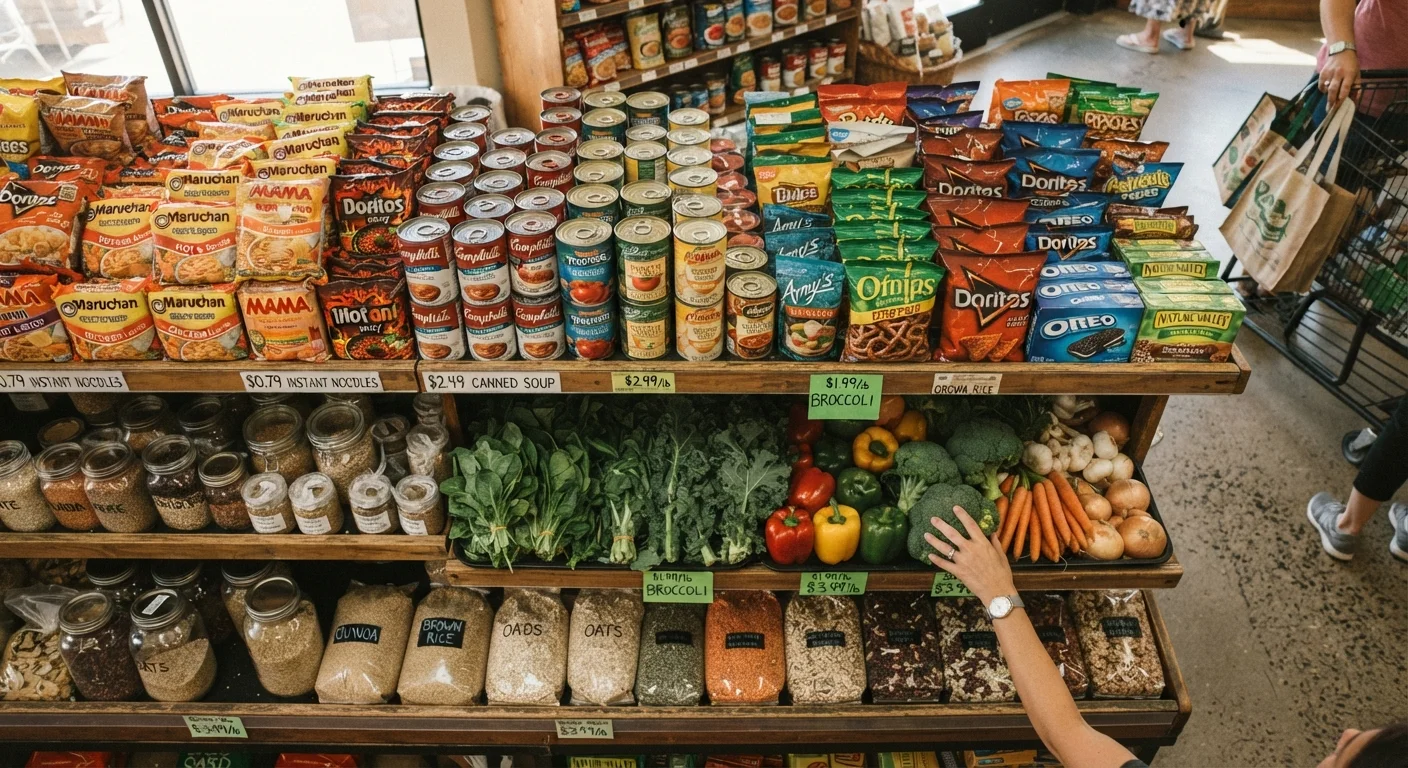
Photo credit: InsightsGrove.com | Discover Joy In Reading
In this article
Ultra-processed foods are cheap and filling — but there are nutritional trade-offs worth understanding. A balanced look at the real costs and benefits.
Key Takeaways
- Ultra-processed foods are calorie-dense and low-cost, making them appealing when money is limited.
- They are often high in sodium, added sugars, and refined carbohydrates while low in fiber and micronutrients.
- Relying heavily on them long-term may contribute to nutritional gaps that affect health.
- Strategic mixing of ultra-processed staples with affordable whole foods can improve the overall diet quality.
- Understanding food labels helps you identify which processed options are nutritionally less harmful.
Low cost per calorie stretches tight budgets
Ultra-processed foods consistently rank among the cheapest sources of calories per dollar, which is a tangible benefit when income is limited and energy needs must be met.
Long shelf life reduces food waste
Packaged convenience foods can last months or even years, giving budget shoppers the flexibility to stock up without worrying about spoilage - a practical advantage over fresh produce.
Minimal preparation time and equipment required
For people working multiple jobs, living without a full kitchen, or managing fatigue, ultra-processed meals offer genuine time savings that shouldn't be dismissed.
Predictable portion sizes support basic calorie tracking
Pre-packaged formats with printed nutrition labels can actually support basic awareness of calorie and macronutrient intake, unlike many home-cooked meals without tracking.
High in sodium, sugar, and refined carbohydrates
Most ultra-processed products are formulated with high levels of added sodium and sugars to enhance palatability and shelf life, contributing to intakes that frequently exceed established dietary reference ranges.
Low in fiber, vitamins, and key minerals
Refining and processing strips away much of the fiber and micronutrient content of whole ingredients, meaning meals built primarily from these foods tend to underdeliver on nutritional completeness.
May undermine satiety and promote overconsumption
Research suggests ultra-processed foods are engineered for high palatability in ways that may reduce natural fullness signals, potentially leading to higher overall calorie consumption than whole-food equivalents.
Associated with poorer diet quality in large population studies
Multiple cohort studies have found that higher ultra-processed food consumption is correlated with lower overall diet quality scores, though researchers note that correlation does not establish direct causation in individual cases.
Crowding out effect on nutrient-dense affordable foods
When ultra-processed options dominate meals, affordable whole foods like legumes, oats, and frozen vegetables tend to disappear from the diet - compounding nutritional gaps over time.
What 'Ultra-Processed' Actually Means
The term ultra-processed food refers to the NOVA classification system's fourth and broadest category - products industrially formulated from substances extracted or derived from foods, plus additives like emulsifiers, colorants, flavor enhancers, and preservatives. Think instant noodles, packaged snack cakes, flavored chips, ready-made frozen meals, and shelf-stable soups.
This is distinct from simply "processed" foods - canned beans, frozen vegetables, and plain yogurt are processed but not ultra-processed. That distinction matters a lot for budget eaters, because some of the most nutritious affordable foods are technically processed. See our guide to why cheap food isn't always bad for you for a fuller breakdown.
NOVA Classification: A Quick Clarification
The NOVA system, developed by researchers at the University of São Paulo, classifies foods by the degree and purpose of processing - not by individual ingredients or nutrient profiles. Group 4 (ultra-processed) is defined by industrial formulation and the presence of additives not typically used in home cooking. Many nutritionists use it as a research and policy tool rather than a strict individual dietary prescription. It's a useful lens, but context and overall diet patterns matter more than any single food label.
The Real Advantages When Money Is Tight
It's important to acknowledge that ultra-processed foods solve genuine problems for people living on limited incomes. Dismissing them without recognizing their practical value misses the reality many young adults face.
Low cost per calorie stretches tight budgets
Ultra-processed foods consistently rank among the cheapest sources of calories per dollar, which is a tangible benefit when income is limited and energy needs must be met.
Long shelf life reduces food waste
Packaged convenience foods can last months or even years, giving budget shoppers the flexibility to stock up without worrying about spoilage - a practical advantage over fresh produce.
Minimal preparation time and equipment required
For people working multiple jobs, living without a full kitchen, or managing fatigue, ultra-processed meals offer genuine time savings that shouldn't be dismissed.
Predictable portion sizes support basic calorie tracking
Pre-packaged formats with printed nutrition labels can actually support basic awareness of calorie and macronutrient intake, unlike many home-cooked meals without tracking.
For a deeper look at how to build a nutritionally sound diet within a tight budget, the core principles of budget nutrition article lays out a realistic framework.
The Nutritional Trade-Offs Worth Knowing
While ultra-processed foods deliver on convenience and cost, the nutritional profile of most products in this category involves meaningful trade-offs. Research consistently links high ultra-processed food consumption with lower intakes of fiber, vitamins, and minerals - not because the foods are inherently toxic, but because they displace more nutrient-dense options.
High in sodium, sugar, and refined carbohydrates
Most ultra-processed products are formulated with high levels of added sodium and sugars to enhance palatability and shelf life, contributing to intakes that frequently exceed established dietary reference ranges.
Low in fiber, vitamins, and key minerals
Refining and processing strips away much of the fiber and micronutrient content of whole ingredients, meaning meals built primarily from these foods tend to underdeliver on nutritional completeness.
May undermine satiety and promote overconsumption
Research suggests ultra-processed foods are engineered for high palatability in ways that may reduce natural fullness signals, potentially leading to higher overall calorie consumption than whole-food equivalents.
Associated with poorer diet quality in large population studies
Multiple cohort studies have found that higher ultra-processed food consumption is correlated with lower overall diet quality scores, though researchers note that correlation does not establish direct causation in individual cases.
Crowding out effect on nutrient-dense affordable foods
When ultra-processed options dominate meals, affordable whole foods like legumes, oats, and frozen vegetables tend to disappear from the diet - compounding nutritional gaps over time.
~57%
Share of US calories from ultra-processed foods
Research published in BMJ Open estimated that ultra-processed foods account for roughly 57% of total daily caloric intake among US adults.
~90%
Percentage of added sugar intake from ultra-processed foods
A study in the journal Nutrients found that ultra-processed foods contributed nearly 90% of all added sugar consumed by US adults in the analyzed dietary data.
Nutritional gaps from frequent ultra-processed food reliance are covered in detail in our article on micronutrients you might be missing when cutting food costs.
A Practical Middle Path for Budget Eaters
The most realistic strategy isn't eliminating ultra-processed foods - it's using them strategically while anchoring meals around a handful of highly nutritious, low-cost whole-food staples.
Eggs, dried or canned legumes, frozen vegetables, oats, and canned fish consistently deliver strong nutritional value at low cost. Our guide to affordable foods with an outsized nutritional punch highlights exactly these options.
When choosing ultra-processed products, reading the label pays off: shorter ingredient lists, lower sodium counts, and added fiber or protein content can make certain options significantly less nutritionally disruptive than others. For a direct comparison of one commonly misunderstood category, the fresh vs. frozen vegetables breakdown illustrates how processing doesn't automatically mean nutritionally inferior.
Common patterns that backfire on a budget diet can help you course-correct if you find your meals skewing too heavily toward convenience options.
This article is for general informational and educational purposes only and does not constitute medical or dietary advice. Consult a registered dietitian or qualified healthcare professional for guidance tailored to your individual health needs.

Author
Health & Wellness Editorial Team
Health & Wellness Editorial Team is the collective byline for our editorial team and contributor network. Articles published under this byline or an editorial pen name are researched, written, and reviewed according to our editorial standards for clarity, consistency, and independence before publication.
View all articles →