
Tyre Pressure, Tread Depth, and Rotation: The Trio That Determines Tyre Life
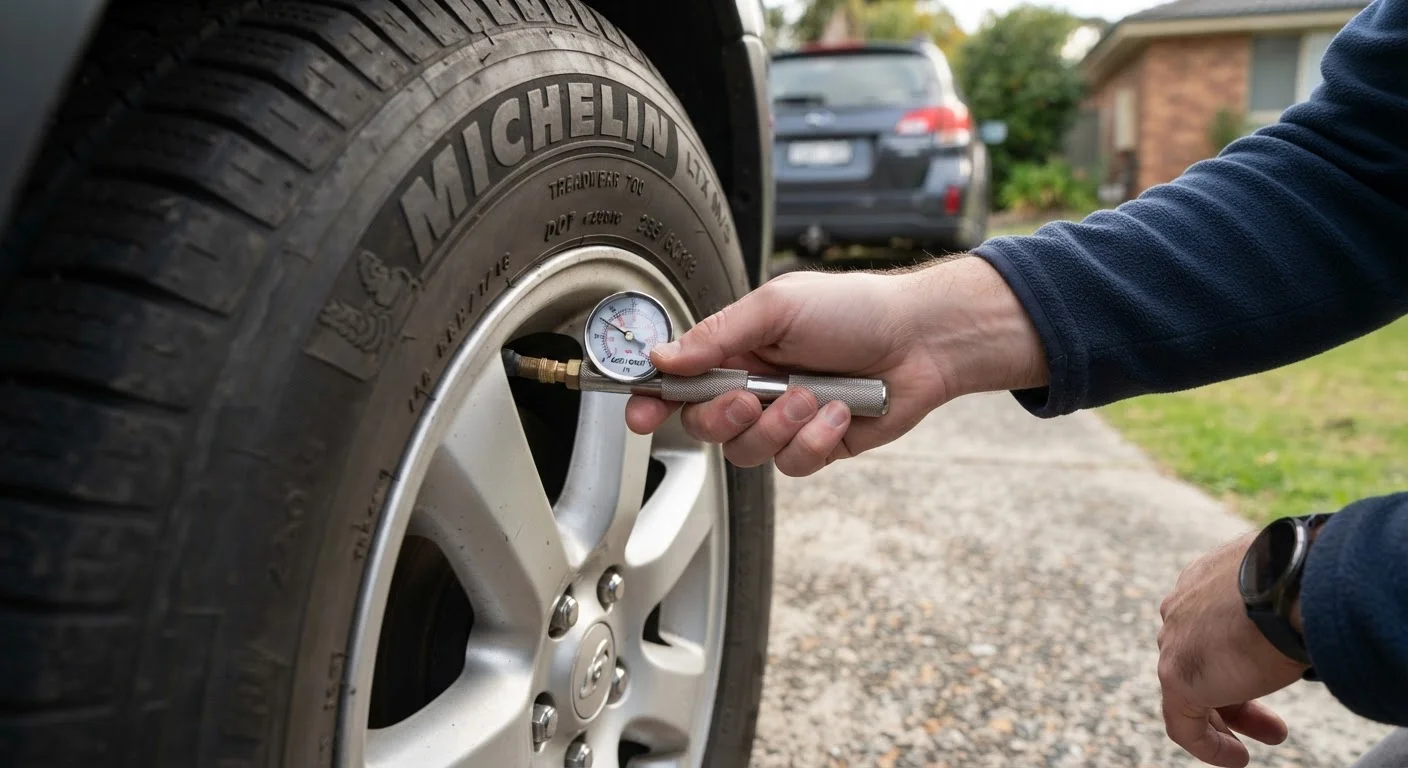
Photo credit: InsightsGrove.com | Discover Joy In Reading
In this article
Learn how tyre pressure, tread depth checks, and regular rotation work together to extend tyre life and keep your car safe on the road.
Key Takeaways
- Correct tyre pressure reduces uneven wear, improves fuel economy, and lowers blowout risk.
- Tread depth below 2/32 inch is illegal in most US states and significantly increases stopping distances.
- Rotating tyres every 5,000-7,500 miles helps all four wear at the same rate, extending their usable life.
- All three practices together can add tens of thousands of miles to a set of tyres.
- Most checks cost nothing and can be done at home in minutes with basic tools.
Why These Three Habits Work as a System
Tyres are one of the most expensive consumable parts on any car, and yet most drivers replace them far earlier than necessary - not because the rubber wears out, but because uneven or accelerated wear forces the issue. Tyre pressure, tread depth monitoring, and regular rotation are not three separate chores; they form an interconnected system. Neglecting one undermines the other two. Under-inflated tyres wear faster on their outer edges, making rotation less effective and making tread depth harder to assess evenly.
For budget-conscious drivers, the math is straightforward: a set of tyres might cost $400-$800 or more. Extending their life by even 20% through consistent maintenance represents real savings. And beyond the wallet, worn or poorly maintained tyres affect braking, handling, and wet-road safety - factors that matter on every trip. See which maintenance habits deliver the biggest savings over a car's lifetime.
Best Practices for Tyre Pressure
Check tyre pressure monthly using a quality gauge, not just by looking at the tyre.
Tyres can be significantly under-inflated without appearing flat to the naked eye. Under-inflation causes heat build-up, edge wear, and reduced fuel efficiency. Monthly checks catch pressure loss before it causes damage.
Always inflate to the vehicle manufacturer's recommended PSI, found on the door jamb sticker - not the maximum figure printed on the tyre sidewall.
The sidewall figure is the tyre's maximum rated pressure, not the optimal operating pressure for your specific vehicle. Over-inflation causes centre tread wear and reduces the tyre's contact patch, affecting grip.
Check pressure when tyres are cold - before driving more than a mile - for an accurate reading.
Driving heats the air inside a tyre, raising pressure by several PSI. A hot-tyre reading will understate true cold pressure, leading to over-inflation adjustments.
Inspect tread depth at least monthly, and more frequently during high-mileage periods.
Tread depth affects wet braking distances dramatically. Catching wear early gives you time to budget for replacement rather than facing an emergency expense.
Schedule tyre rotations at consistent intervals aligned with your oil change schedule.
Pairing rotation with oil changes makes the interval easy to remember and means you won't let it slip. Consistent rotation prevents one or two tyres from wearing out before the others, which forces partial-set replacement.
Temperature swings have a direct effect on tyre pressure - roughly 1 PSI is lost for every 10°F drop in ambient temperature. This is why seasonal tyre checks matter, particularly heading into winter. Under-inflated tyres also increase rolling resistance, which quietly drains your fuel budget - a connection explored in detail in our guide on driving habits that burn your fuel budget.
Reading Tread Depth and Knowing When to Act
Tread depth is measured in 32nds of an inch. New tyres typically start at 10/32" to 11/32". The legal minimum in most US states is 2/32", but many safety experts recommend replacing tyres at 4/32" - especially in wet or mixed conditions - because stopping distances increase substantially as tread approaches the legal limit.
43%
Increase in wet stopping distance at 4/32" vs. new tread
Research from the Tire Rack testing program has indicated that worn tyres at 4/32" can require substantially longer stopping distances on wet roads compared to new tyres.
1 PSI
Pressure lost per 10°F temperature drop
The US Department of Energy notes that tyre pressure changes roughly 1 PSI for every 10-degree Fahrenheit change in ambient temperature.
The simplest check is the penny test: insert a penny into a tread groove with Lincoln's head pointing down. If you can see the top of his head, tread is at or below 2/32" and replacement is overdue. A quarter gives you the 4/32" warning threshold. For drivers who spend time on wet roads or want more precision, an inexpensive tread depth gauge (typically under $10) gives an exact reading in seconds. Make it part of your monthly pressure check so neither task gets skipped.
Directional vs. Non-Directional Tyres
Some tyres are directional - they have a tread pattern designed to rotate in one specific direction and cannot be swapped side to side. Check your tyre sidewall for an arrow or the word 'Rotation' to identify them. Directional tyres can only be rotated front-to-back on the same side of the vehicle. If you're unsure, a tyre shop or your owner's manual can clarify which type you have before you rotate.
Rotation Patterns and How Often to Rotate
Front tyres steer and, on most front-wheel-drive vehicles, also drive - so they wear faster than rears. Rotation moves each tyre to a different position so wear spreads evenly across all four, maximising the life of the full set. Most manufacturers recommend rotating every 5,000-7,500 miles, which for many drivers aligns with an oil change interval - a convenient pairing.
The correct rotation pattern depends on your drivetrain and whether you have directional or non-directional tyres. A common pattern for front-wheel-drive vehicles moves the front tyres straight back and crosses the rear tyres to the front. Always check your owner's manual or ask a qualified mechanic if you're unsure - an incorrect pattern can accelerate rather than reduce wear. Drivers who log low annual mileage should rotate by time (every six months) rather than miles alone. See our guide on tyre care for low-mileage vehicles for more context.

Author
Car Ownership Editorial Team
Car Ownership Editorial Team is the collective byline for our editorial team and contributor network. Articles published under this byline or an editorial pen name are researched, written, and reviewed according to our editorial standards for clarity, consistency, and independence before publication.
View all articles →