
Reading Your Car Service Schedule Without Getting Lost
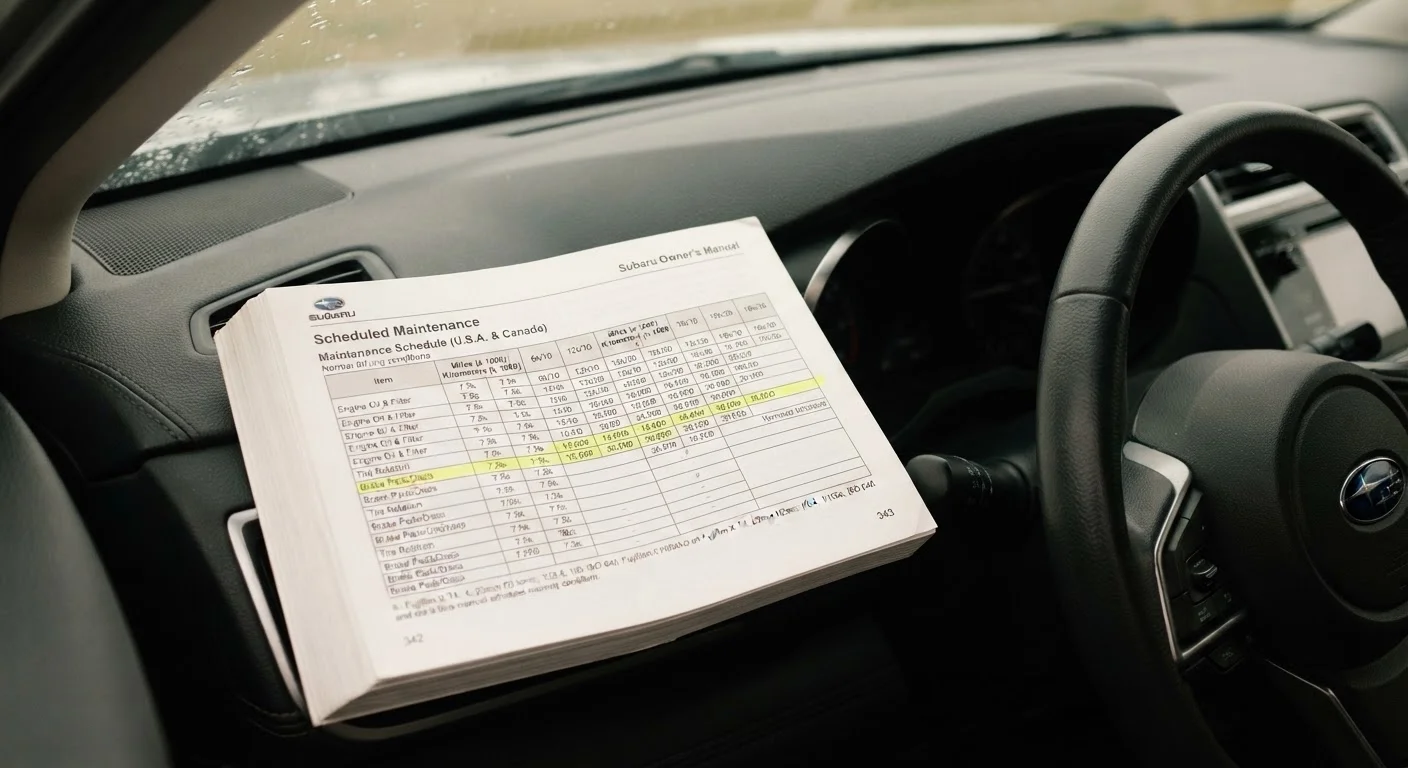
Photo credit: InsightsGrove.com | Discover Joy In Reading
In this article
Service intervals, fluid types, and kilometre milestones explained clearly — so you know what's actually due and what can wait.
What a Service Schedule Actually Is
A service schedule is a manufacturer-defined list of maintenance tasks tied to specific mileage or time intervals - whichever comes first. It tells you when to change the oil, inspect the brakes, replace the air filter, and address dozens of other items before they become expensive problems.
Every vehicle has one. It lives in the owner's manual (usually near the back), and it's the most reliable source of maintenance guidance for your specific car - more reliable than generalized advice from any shop or website, including this one. For a deeper look at what each interval actually involves, see Your Car's Maintenance Schedule, Explained.
Schedules are typically organized in one of two ways: a simple mileage-based table (e.g., every 5,000, 10,000, or 15,000 miles) or a more detailed grid that lists each item alongside its specific interval. Some modern vehicles also use an onboard maintenance reminder system that calculates service needs based on driving patterns - but even then, the manual's schedule remains the authoritative reference.
Decoding the Key Columns and Terms
Service schedules use shorthand that can trip up first-time readers. Here's how to interpret the most common elements:
- "Inspect" - A technician checks the item for wear or damage. No automatic replacement; action depends on condition found.
- "Replace" - The part or fluid is swapped out regardless of apparent condition. These are time- or mileage-triggered, not symptom-triggered.
- "Rotate" - Tyres are moved to different wheel positions to equalize wear. Typically every 5,000-7,500 miles.
- "Flush" - Old fluid is fully expelled and replaced, not just topped up. Common for coolant, brake fluid, and transmission fluid.
You may also see two columns labeled Normal and Severe driving conditions. Severe doesn't mean racing - it means frequent short trips under 5 miles, lots of stop-and-go traffic, extreme temperatures, or towing. Many urban drivers actually qualify as severe-condition drivers without realizing it, which means shorter intervals apply to them.
Service interval
The mileage or time period after which a specific maintenance task is due, whichever milestone is reached first.
Severe driving conditions
Operating patterns - such as frequent short trips, heavy traffic, towing, or temperature extremes - that accelerate wear and shorten recommended service intervals.
Fluid flush
A service procedure that fully removes old fluid from a system (such as the cooling or brake system) and replaces it with fresh fluid, rather than simply topping up the existing supply.
Timing belt
A rubber belt that synchronizes the engine's camshaft and crankshaft rotation. If it fails, severe engine damage often results. Not all engines use a belt - some use a metal chain.
Maintenance reminder system
An onboard computer feature in some modern vehicles that monitors driving patterns and alerts the driver when service is due, rather than relying solely on fixed mileage intervals.
For guidance on checking fluids yourself between scheduled services, the Checking Your Own Fluid Levels Without a Mechanic article walks through each reservoir step by step.
Which Items Are Worth Prioritizing
Not every line in a service schedule carries equal weight. Some tasks, if skipped, cause slow-burn damage. Others, if delayed briefly, pose minimal risk. General guidance from automotive engineers and mechanics points to a consistent short list of high-priority items:
~40%
Engine wear occurring at startup on degraded oil
Automotive engineers note that a significant proportion of engine wear is linked to inadequate lubrication, often from oil that is overdue for a change.
2 years
Maximum interval for brake fluid replacement
Many vehicle manufacturers specify brake fluid replacement every two years regardless of mileage, due to moisture absorption degrading performance.
$3,000+
Estimated cost of timing belt failure repair
Industry repair estimates suggest interference engine failures caused by a snapped timing belt can exceed several thousand dollars in parts and labor.
- Engine oil and filter - The single most impactful routine task. Degraded oil accelerates engine wear. See Oil Change Intervals: What the Numbers in Your Manual Really Mean for how to read your specific interval correctly.
- Coolant (antifreeze) - Prevents overheating in summer and freeze damage in winter. Neglecting this can lead to a cracked engine block - one of the most expensive failures possible.
- Brake fluid - Absorbs moisture over time, which lowers its boiling point and can cause brake fade. Most manufacturers recommend replacement every 2 years regardless of mileage.
- Timing belt or chain - If your vehicle has a timing belt (check the manual - not all do), replacement is non-negotiable. A snapped belt can destroy the engine entirely.
- Air filter - Inexpensive to replace and easy to inspect. A clogged filter reduces fuel efficiency.
Items like cabin air filters, wiper blades, and light bulbs matter for comfort and safety but rarely cause mechanical damage if delayed slightly. Knowing the difference helps you prioritize when budgets are tight. Routine upkeep like these items is covered in detail in Tyre Pressure, Oil Changes, and Other Maintenance Tasks That Pay for Themselves.
For a full breakdown of what's covered at each service level, What a Full Car Service Actually Covers explains the difference between interim, full, and major services.
Two Schedules, One Car
Some manufacturers publish separate schedules for normal and severe driving conditions in the same manual. Urban commuters who take many short, stop-and-go trips may technically fall under the severe schedule - worth checking before assuming the longer interval applies to you.
This article is for general informational purposes only. Always consult a qualified mechanic for advice specific to your vehicle's condition and history.

Author
Car Ownership Editorial Team
Car Ownership Editorial Team is the collective byline for our editorial team and contributor network. Articles published under this byline or an editorial pen name are researched, written, and reviewed according to our editorial standards for clarity, consistency, and independence before publication.
View all articles →