
Oil Change Intervals: What the Numbers in Your Manual Really Mean
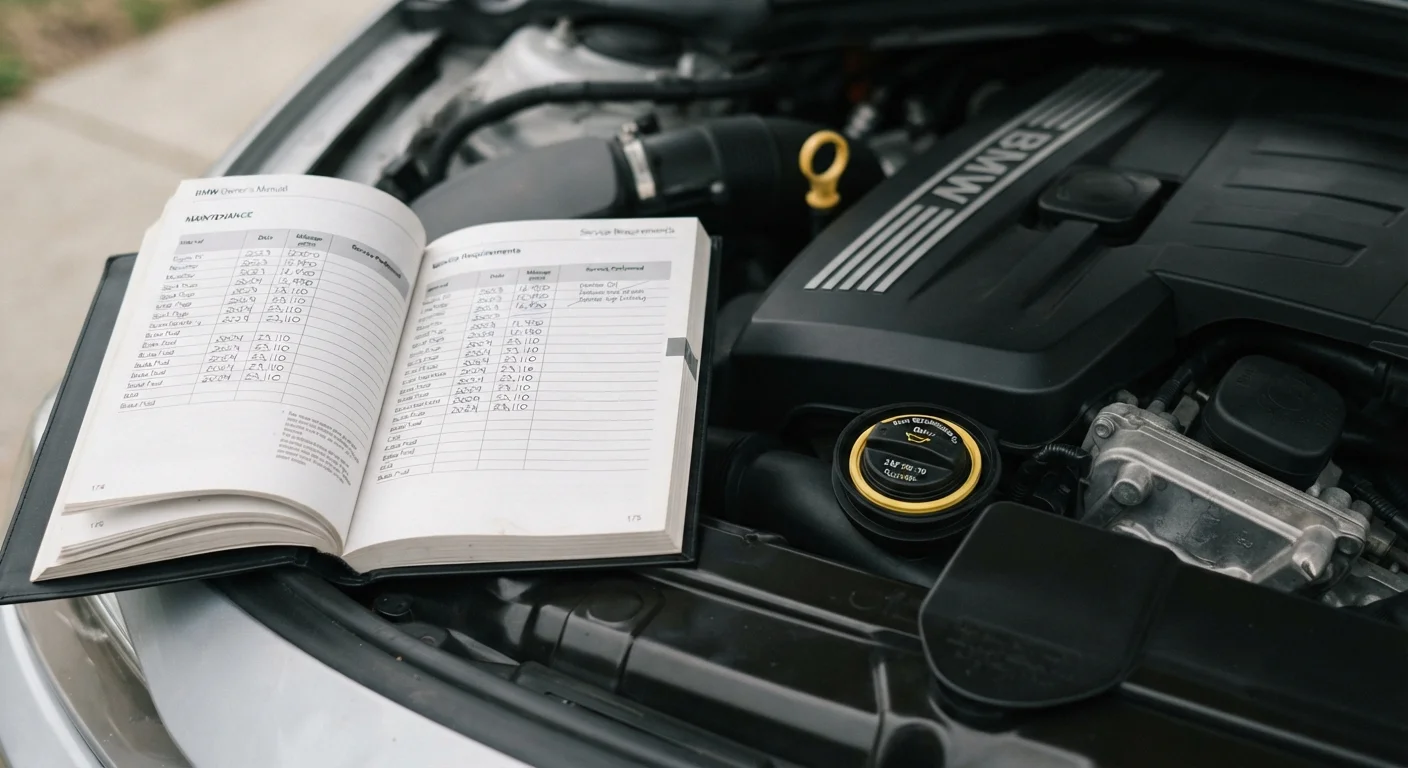
Photo credit: InsightsGrove.com | Discover Joy In Reading
In this article
Mileage-based vs. time-based oil changes, synthetic vs. conventional oil—here's how to decode your owner's manual and choose the right interval.
Key Takeaways
- Your owner's manual contains the manufacturer-specified interval - that's the most reliable number for your engine.
- The old '3,000-mile rule' is outdated for most modern vehicles using full synthetic oil.
- Many manufacturers now specify intervals between 5,000 and 10,000 miles, with some full-synthetic recommendations reaching 15,000 miles.
- Time-based intervals (typically every 6-12 months) apply even if you drive low mileage.
- Severe driving conditions - frequent short trips, extreme temps, towing - can cut your interval in half.
- Oil life monitoring systems estimate degradation in real time, but they complement rather than replace your manual's guidance.
Why the Numbers in Your Manual Differ From What You've Heard
Walk into almost any quick-lube shop and you'll still see the '3,000-mile' recommendation plastered on the wall. That number was a reasonable rule of thumb for older engines running conventional motor oil. It no longer reflects how most modern vehicles are engineered.
Automakers spend significant resources testing their engines and specifying oil grades and change intervals in the owner's manual. Those specifications are the most accurate guide for your particular engine - not generic industry conventions or shop stickers. As a starting point, your car's full maintenance schedule puts oil changes in context alongside every other service interval your vehicle needs.
Most current manufacturer recommendations fall between 5,000 and 10,000 miles for vehicles using full synthetic oil, with some European manufacturers specifying up to 15,000 miles under normal conditions. Vehicles still using conventional oil typically see 3,000-5,000-mile intervals. The key variable is the oil type your engine was designed around - and that's specified in your manual, not on a windshield sticker.
5,000-10,000 mi
Typical synthetic oil change interval for modern vehicles
Manufacturer specifications across major automakers commonly fall in this range for full synthetic oil under normal driving conditions.
12 months
Maximum time between oil changes regardless of mileage
Most manufacturers recommend an annual oil change as the minimum even for low-mileage drivers, due to time-based oil degradation.
~50%
Shorter interval for severe driving conditions
Manufacturer severe-duty schedules typically cut the normal oil change interval roughly in half to account for accelerated oil degradation.
Mileage vs. Time: Two Intervals, Both Matter
Your owner's manual typically gives you two thresholds: a mileage figure and a time period - commonly phrased as something like "every 7,500 miles or 12 months, whichever comes first." Both numbers exist for a reason, and the "whichever comes first" language is intentional.
Mileage captures engine wear and oil contamination from combustion. Time captures a different form of degradation: moisture absorption, oxidation, and additive breakdown that happen even when the car sits idle. If you drive fewer than 5,000 miles a year, you'll hit the time threshold before the mileage one - and the annual change is still necessary.
Use Both Thresholds Together
Whichever number you hit first - mileage or time - triggers the oil change. Don't treat the mileage figure as the only one that matters. A car that sits in a driveway for 14 months still needs fresh oil, regardless of how few miles it covered.
Short-trip driving is one of the most commonly overlooked stress factors. When an engine doesn't fully warm up, moisture from combustion doesn't fully evaporate from the oil, accelerating acid buildup. If most of your driving is under 5 miles per trip, your oil is working harder than the mileage alone suggests.
Severe vs. Normal Conditions: The Two Schedules in Your Manual
Many owner's manuals include two maintenance schedules side by side: one for normal conditions and one for severe conditions. The severe schedule typically calls for oil changes at roughly half the normal interval.
Severe conditions usually include: frequent short trips under 5 miles, sustained stop-and-go traffic, towing or hauling near the vehicle's rated capacity, extreme temperature environments (both hot and cold), and extended idling. If any of these describe a significant portion of your driving, use the severe schedule - not because it's overly cautious, but because that's the condition your engine is actually operating under.
For a deeper look at how oil type affects both engine wear and appropriate intervals, see our comparison of synthetic vs. conventional motor oil.
Oil Life Monitors: Useful Tool, Not a Replacement for Your Manual
Many vehicles manufactured in the last decade include an oil life monitoring system (OLMS) - a dashboard readout, often expressed as a percentage, that estimates how much usable life remains in your current oil. These systems use algorithms tracking factors like engine temperature cycles, RPM patterns, and trip length to model oil degradation.
They're a genuinely useful real-time signal, particularly for drivers whose conditions vary significantly. But they estimate - they don't measure oil chemistry directly. Treat your OLMS reading as a prompt to check in rather than a definitive instruction. Cross-reference it with the mileage and time thresholds in your manual, and when in doubt, lean toward the more conservative number.
Oil Life Monitor Limitations
Oil life monitoring systems are algorithm-based estimates, not direct oil quality measurements. They can't detect contamination from a coolant leak or unusually harsh conditions the algorithm wasn't calibrated for. If you notice unusual engine noise, burning smell, or the oil looks very dark on the dipstick, consult a qualified mechanic - don't wait for the monitor to flag it.
Staying on top of oil changes is one of the highest-return maintenance habits available to any car owner. For a broader look at how routine upkeep prevents expensive repairs, maintenance tasks that pay for themselves outlines where your maintenance dollars have the biggest impact.
Frequently Asked Questions

Author
Car Ownership Editorial Team
Car Ownership Editorial Team is the collective byline for our editorial team and contributor network. Articles published under this byline or an editorial pen name are researched, written, and reviewed according to our editorial standards for clarity, consistency, and independence before publication.
View all articles →