
Synthetic Oil vs. Conventional Oil: What Changes at the Engine Level
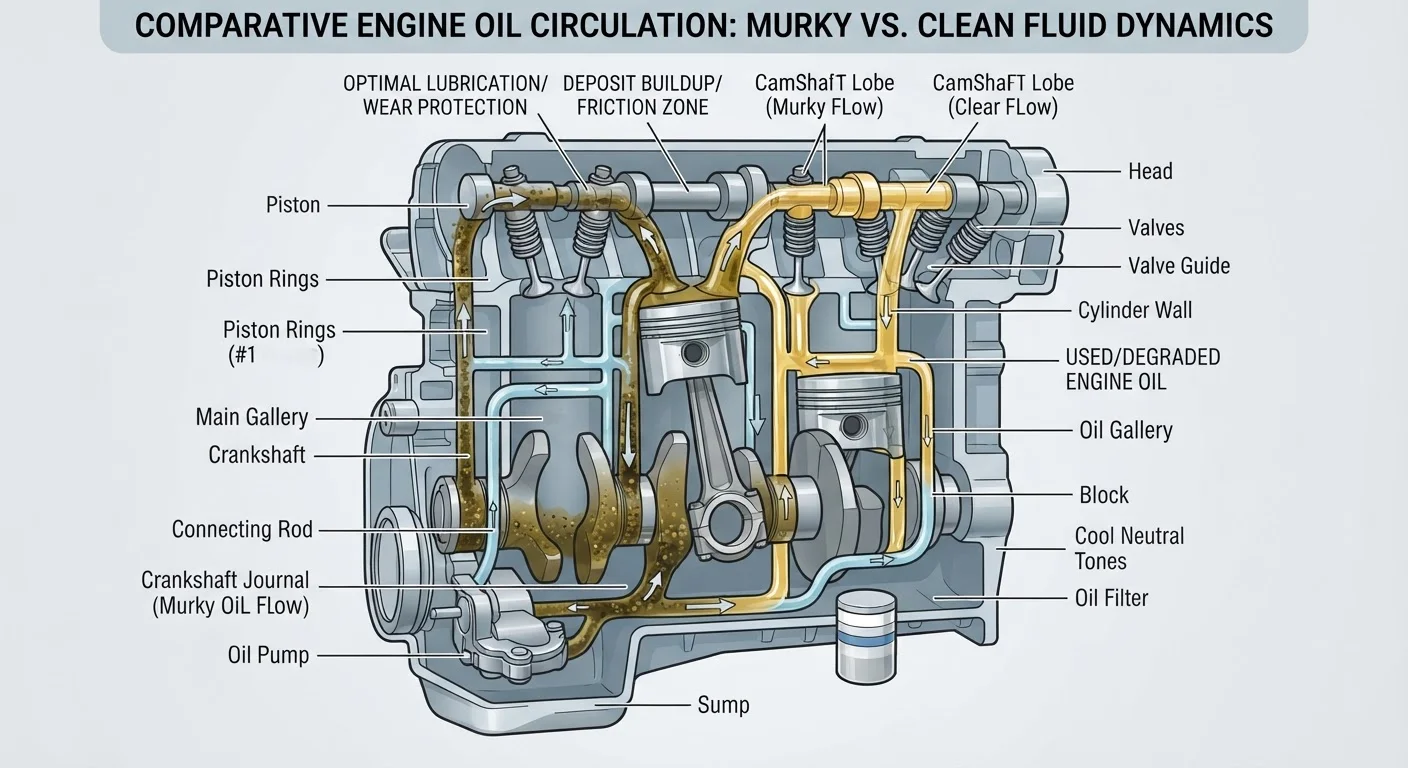
Photo credit: InsightsGrove.com | Discover Joy In Reading
In this article
A clear-eyed look at how synthetic and conventional motor oils differ in formulation, performance in extreme temperatures, and long-term engine wear.
Key Takeaways
- Synthetic oil is chemically engineered, giving it more uniform molecular structure and greater temperature stability than conventional oil.
- Conventional oil degrades faster because it retains naturally occurring impurities from crude petroleum.
- Synthetic oil generally allows longer change intervals, but your owner's manual is the authoritative source for your specific engine.
- Neither oil type protects an engine that is severely overdue for a change - interval discipline matters regardless of oil type.
- Switching from conventional to synthetic is generally safe, but high-mileage engines may need a high-mileage formula instead.
How Each Oil Is Made - and Why That Matters
Motor oil's core job is to lubricate moving metal parts, reduce friction, carry heat away from the engine, and suspend contaminants until the next oil change. What separates synthetic from conventional oil is how each is produced - and that production difference has direct consequences at the engine level.
Conventional oil is refined from crude petroleum. The refining process removes many harmful compounds, but some impurities and irregularly shaped molecules inevitably remain. Those inconsistencies affect how the oil behaves when temperatures shift.
Synthetic oil is either built from scratch using chemical processes (fully synthetic) or starts as a conventional base and is then heavily modified (synthetic blend). Either way, the resulting molecules are more uniform in size and shape. That uniformity is what gives synthetics their performance edge - not marketing, but molecular structure.
For a broader look at how fuel and fluid choices affect long-term ownership costs, see our fuel cost comparison guide.
| Criterion | Synthetic Oil | Conventional Oil |
|---|---|---|
| Base material | Engineered chemical compounds | Refined crude petroleum |
| Molecular uniformity | High - consistent molecule size | Lower - natural impurities remain |
| Cold-start flow | Flows faster at low temps | Thickens more in the cold |
| High-temp stability | Resists breakdown longer | Degrades faster under heat |
| Typical change interval | 7,500-10,000+ miles (varies by vehicle) | 3,000-5,000 miles (varies by vehicle) |
| Cost per change | Generally higher | Generally lower |
| Sludge resistance | Higher | Lower |
| Compatibility with older engines | Check seals; use high-mileage formula if needed | Well-suited to older engine tolerances |
Temperature Performance and Engine Wear
Oil viscosity - its resistance to flow - changes with temperature. This is where the molecular differences between synthetic and conventional oil become practically important.
At cold start, oil must flow quickly to protect metal surfaces before the engine reaches operating temperature. Conventional oil thickens more at low temperatures, meaning there's a brief period where metal-on-metal contact is higher. Synthetic oil flows faster at startup, reducing that critical wear window.
At high operating temperatures, conventional oil breaks down more quickly because those naturally occurring impurities accelerate oxidation and sludge formation. Synthetic oil resists thermal degradation longer, which is why it can support extended change intervals in many modern engines - though you should always defer to the intervals specified in your owner's manual. See what your oil change interval numbers actually mean for help decoding those specs.
~22%
Friction reduction at cold start
Studies cited by the American Petroleum Institute suggest synthetic oils can reduce engine friction by roughly 22% during cold-start conditions compared to conventional oils.
2-3×
Longer oxidation resistance
Independent lubrication research indicates that fully synthetic base stocks can resist oxidative breakdown two to three times longer than mineral-based conventional oils under equivalent conditions.
It's worth noting that even the best synthetic oil does not make an engine invincible. Contaminated, depleted oil - regardless of type - causes accelerated wear. The maintenance tasks that pay for themselves piece covers why interval discipline is more important than oil grade alone.
Cost, Change Intervals, and the Real Trade-Off
Synthetic oil typically costs more per quart than conventional oil. The practical question is whether that higher per-change cost is offset by longer intervals and reduced engine wear over time.
Many manufacturers of modern vehicles - particularly those with turbocharged engines - specify full synthetic oil and intervals of 7,500 to 10,000 miles or more. If your manual calls for synthetic, using conventional oil to save money at the pump is not a sound trade-off: it may void warranty coverage and accelerate wear.
For vehicles where conventional oil is manufacturer-approved, shorter intervals (often 3,000-5,000 miles) are generally recommended - and that frequency can close the cost gap considerably. The calculus changes depending on your driving pattern, climate, and engine age.
If you're considering whether longer intervals are appropriate for your situation, the case for and against extended oil change intervals breaks down the trade-offs in detail.
Don't Switch Without Checking Your Manual
Switching from conventional to synthetic mid-life is generally safe for most engines, but it isn't universally appropriate. High-mileage engines with aging gaskets or seals may experience minor leaks when switching to a full synthetic, because synthetics flow more readily through small gaps. A high-mileage synthetic blend is often a better bridge for vehicles with over 75,000 miles. Always confirm what your owner's manual specifies before changing oil type.
This article is for general informational purposes only and does not constitute professional mechanical advice. Always consult your vehicle's owner's manual and a qualified mechanic for guidance specific to your engine and driving conditions.

Author
Car Ownership Editorial Team
Car Ownership Editorial Team is the collective byline for our editorial team and contributor network. Articles published under this byline or an editorial pen name are researched, written, and reviewed according to our editorial standards for clarity, consistency, and independence before publication.
View all articles →