
Mexico City vs. Lisbon: A Tale of Two Affordable Capital Cities
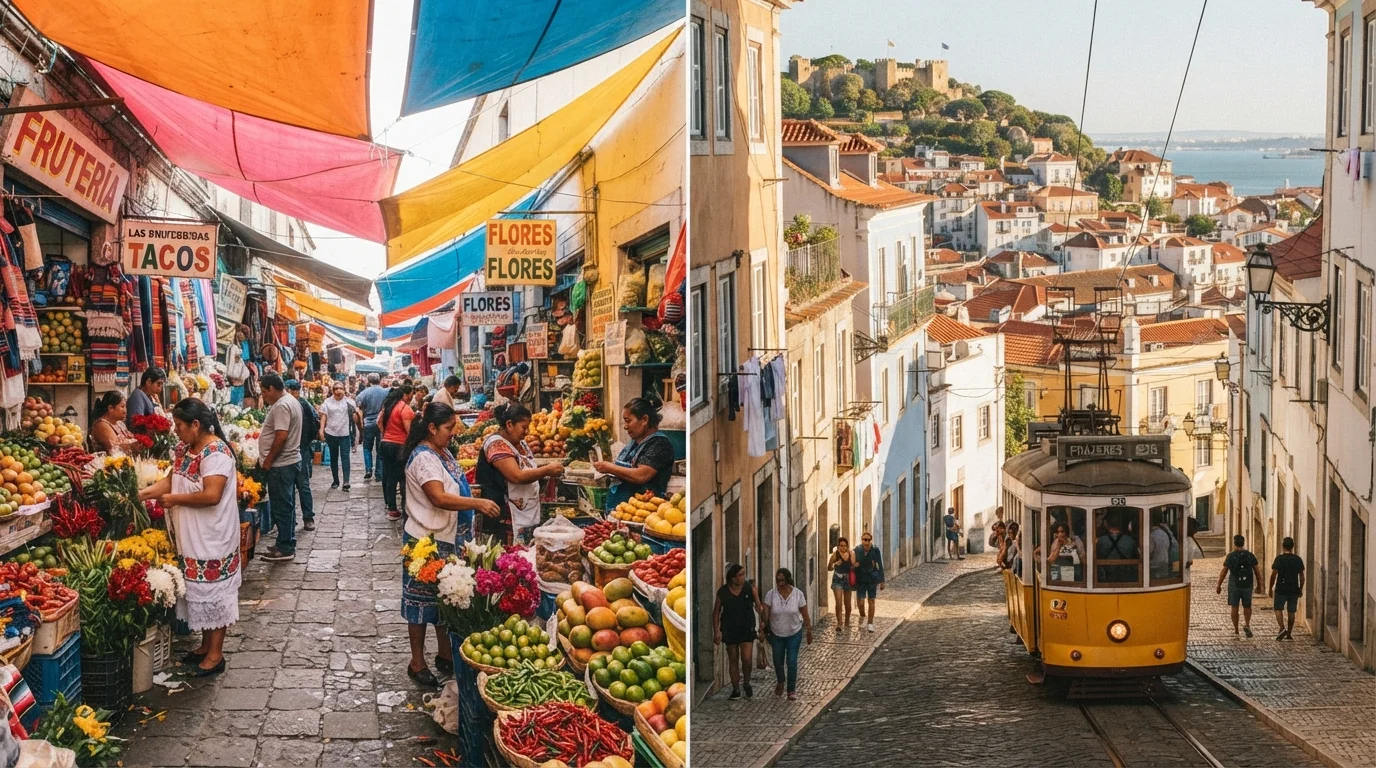
Photo credit: InsightsGrove.com | Discover Joy In Reading
In this article
Both cities are beloved by budget travelers, but they offer very different experiences. Here's how they stack up on cost, culture, food, and ease of navigation.
Key Takeaways
- Mexico City generally offers lower day-to-day costs than Lisbon, particularly for food and accommodation.
- Lisbon is significantly more expensive to reach from the US but remains one of Europe's most affordable capitals.
- Both cities have reliable, low-cost public transit systems that make car-free travel genuinely practical.
- Food in both cities is a budget highlight — street tacos and market lunches in CDMX rival Lisbon's petiscos and prato do dia deals.
- Safety awareness and neighborhood research matter in both destinations, though challenges differ by city.
- Your choice between the two often comes down to flight costs and whether you want a Latin American or European cultural experience.
The Cost of Daily Life: How Each City Compares
On the ground, Mexico City (CDMX) is cheaper across nearly every category. Budget travelers can realistically get by on $35–$50 USD per day covering a private room in a mid-range guesthouse, three meals, local transport, and museum entry — many of which are free or heavily subsidized. Lisbon is a step up: a comparable daily budget typically runs $70–$100 USD, reflecting Western European pricing on accommodation and dining, even at the affordable end.
That said, both cities offer genuine value relative to their global peers. Lisbon undercuts cities like Paris, Amsterdam, and Barcelona significantly. For context on how these costs sit within the broader international picture, see our comparison of domestic vs. international budget travel.
| Criterion | Mexico City | Lisbon |
|---|---|---|
| Estimated daily budget (mid-range) | ~$35–$50 USD | ~$70–$100 USD |
| Typical street meal cost | Under $4 USD | €10–€13 set lunch |
| Airfare from US (general range) | Lower; frequent direct flights | Higher; transatlantic crossing |
| Visa requirement for US citizens | None (up to 180 days) | None (Schengen, 90/180 days) |
| Public transit cost | Very low (few pesos/ride) | Moderate; day passes available |
| City size & walkability | Large; neighborhood-dependent | Compact; hilly but walkable |
| English proficiency among locals | Variable; Spanish helpful | High in tourist areas |
| Free museum access | Many free on Sundays | Select museums free; varies |
Getting There: Airfare and Entry Requirements
This is where Mexico City wins decisively for most US travelers. Direct flights from cities like Dallas, Houston, Los Angeles, and New York are frequent and competitive in price. US citizens don't need a visa — entry is granted on arrival for tourism stays up to 180 days, with a tourist fee typically included in airfare.
Lisbon requires a transatlantic crossing, adding both cost and flight time. US citizens can enter Portugal under the Schengen Agreement for up to 90 days within any 180-day period, but always verify current entry rules through official government sources before booking. Airfare from the US East Coast is more accessible than from the West Coast, where flight times and prices increase further.
180 days
Visa-free stay for US citizens in Mexico
US passport holders are granted tourist entry to Mexico for up to 180 days, one of the longest visa-free allowances for any destination.
90 days
Schengen visa-free period for US citizens
US citizens can visit Portugal and other Schengen-area countries for up to 90 days within any 180-day period without a visa.
Top 5
Lisbon's rank among Europe's most affordable capitals
Cost-of-living indices from sources including Numbeo have consistently placed Lisbon among the least expensive Western European capital cities for travelers.
Food: Street Markets vs. Tascas
Both cities are exceptional for eating affordably without sacrificing quality. In Mexico City, the market-stall and street-food economy is deeply embedded — mercados like Mercado de Jamaica and Mercado de Medellín serve full meals for under $4 USD. Tacos, tamales, tlayudas, and pozole are daily staples, not tourist novelties.
Lisbon's equivalent is the prato do dia (dish of the day) — a set lunch offered by neighborhood tascas (traditional Portuguese taverns) that typically includes a main, bread, and sometimes wine or a drink for around €10–€13. Petiscos (Portuguese tapas) let you graze affordably in the evening. For a deeper look at eating strategically in both city types, the guide on eating well on a travel budget covers market-to-table tactics that apply directly.
Getting Around: Transit, Walkability, and Navigation
Mexico City's metro system is one of the most extensive in the world and fares are very low by global standards — a single ride costs a few pesos. The network covers most major neighborhoods, and ride-share apps fill in the gaps affordably. The city is large and sprawling, so understanding which colonias (neighborhoods) to base yourself in — Condesa, Roma Norte, Coyoacán — matters for minimizing transit time.
Lisbon is smaller and more walkable in its historic center, though the hills (the city's famous miradouros or viewpoints require real climbing). Trams, buses, and the metro are well-integrated, and a rechargeable transit card keeps costs manageable. Day passes are available and reasonable for visitors covering multiple neighborhoods. Both cities reward travelers willing to walk and explore on foot.
A Note on Accommodation Pricing Volatility
Both cities have seen accommodation costs rise in recent years, partly driven by short-term rental platforms and increased tourism. Prices can vary significantly by season and neighborhood. Booking a private room in a locally run guesthouse or hostel — rather than a centrally located hotel — tends to yield better value in both cities. Always compare multiple booking platforms and check cancellation policies before committing.
Culture, Safety, and Practical Considerations
Mexico City has undergone significant cultural and culinary investment and hosts world-class institutions — the Museo Nacional de Antropología, the Palacio de Bellas Artes, and numerous free public art installations. Many museums offer free entry on Sundays. Safety is a genuine and context-dependent concern: specific neighborhoods are very tourist-friendly while others warrant more caution. Researching current neighborhood-level conditions through traveler forums and official US government travel advisories is recommended before arrival.
Lisbon is generally considered lower-risk for tourists, though pickpocketing in crowded tram lines and tourist areas is a common issue travelers should prepare for. Portugal ranks consistently among Europe's safer countries for visitors. The city's fado music tradition, Moorish-influenced architecture, and proximity to beaches like Cascais give it a rich, layered cultural draw that extends well beyond the capital itself.
For travelers weighing these cities against other affordable options, our roundup of Southeast Asia vs. Central America provides useful regional context. And if Mexico City sparks interest in the broader region, Latin America's affordable inland cities offers several comparable destinations worth exploring.
Travel conditions, entry requirements, and safety situations can change. Always verify visa rules, health requirements, and travel advisories through official government sources — such as travel.state.gov for US citizens — before booking or departing.

Author
Travel Smarter Editorial Team
Travel Smarter Editorial Team is the collective byline for our editorial team and contributor network. Articles published under this byline or an editorial pen name are researched, written, and reviewed according to our editorial standards for clarity, consistency, and independence before publication.
View all articles →