
Store Brands vs. Name Brands: What the Research Actually Shows
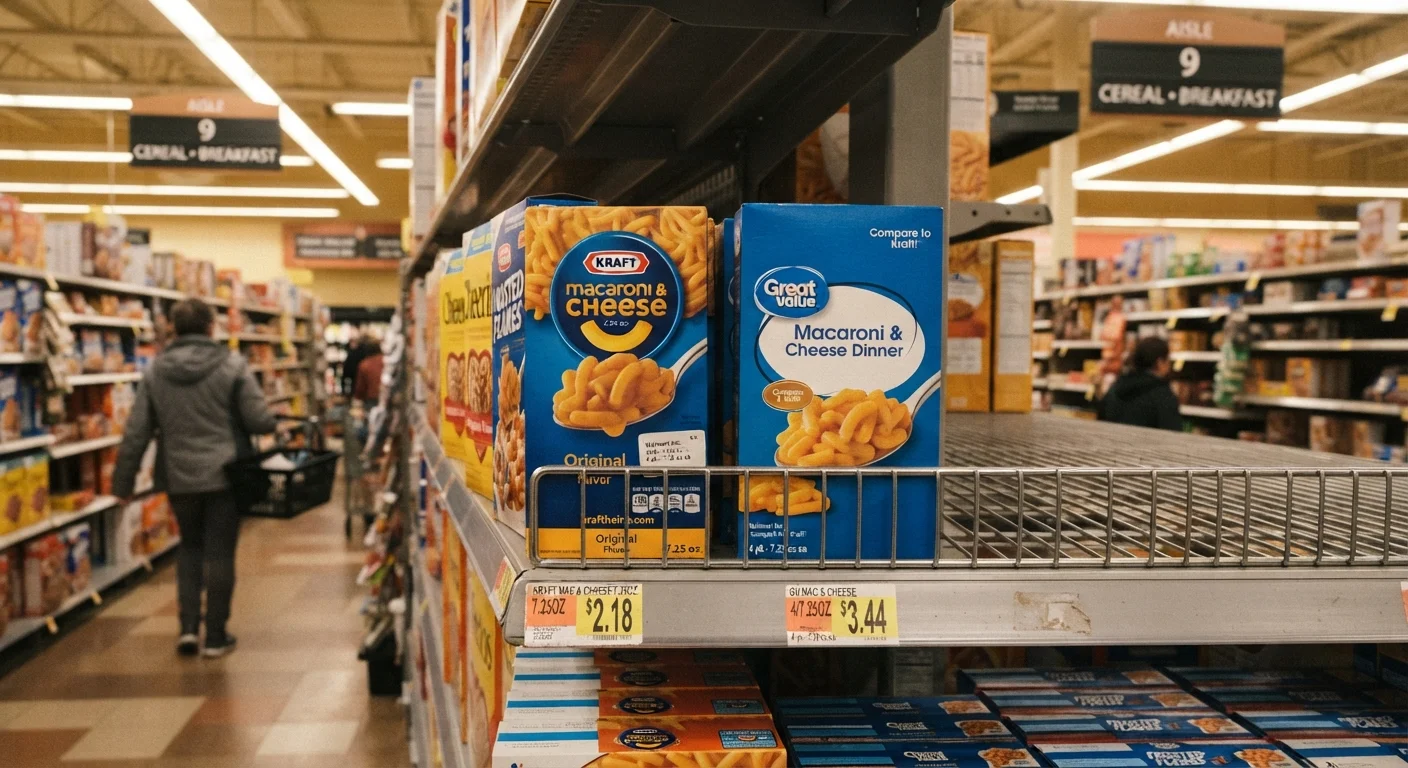
Photo credit: InsightsGrove.com | Discover Joy In Reading
In this article
Comparing own-label and branded products across quality, ingredients, and price. What consumer research reveals about the real differences.
Key Takeaways
- Store brands typically cost 20–30% less than name brands for comparable products.
- Independent testing frequently finds little to no quality difference in staple food categories.
- Ingredient lists and nutritional panels often reveal near-identical formulations.
- Name brands invest heavily in marketing, which is reflected in their price premium.
- Category matters: store brands outperform expectations in some areas, underperform in others.
- Reading labels — not logos — is the most reliable way to compare products.
What the Price Gap Actually Reflects
Store brands — also called private-label or own-label products — are manufactured for and sold exclusively by a specific retailer. National name brands manufacture and market their products independently, then sell through multiple retail channels. The average price difference between the two is substantial: consumer research organizations have repeatedly documented store brand savings of 20–30% compared to equivalent name brand products across grocery categories.
That gap does not automatically reflect a quality difference. A significant portion of the name brand premium funds advertising, packaging, celebrity endorsements, and national distribution infrastructure — none of which changes what's inside the package. Retailers, by contrast, spend far less on marketing own-label products and can pass that saving to the shopper.
| Criterion | Store Brands | Name Brands |
|---|---|---|
| Average price difference | 20–30% lower | 20–30% higher |
| Marketing spend in price | Minimal | Significant |
| Ingredient similarity (staples) | Often near-identical | Often near-identical |
| Formulation consistency | Varies by retailer | Nationally consistent |
| Availability | Retailer-specific | Multi-retailer |
| Independent test performance | Comparable in most staple categories | Comparable in most staple categories |
| Proprietary formulations | Rare | Common in specialty categories |
Understanding this cost structure is the starting point. The next question — whether the products inside are meaningfully different — requires looking at the evidence category by category.
What Independent Research Reveals
Consumer advocacy organizations and academic researchers have tested store brands against name brands across food, personal care, and household products for decades. The consistent finding in packaged food categories: nutritional profiles and ingredient lists are frequently near-identical. For more detail on what label panels actually reveal, see our companion piece on nutritional differences between own-brand and named food products.
~25%
Typical store brand price savings
Consumer research organizations consistently document store brand savings of roughly 20–30% versus name brand equivalents across grocery categories.
~80%
US shoppers who buy store brands
FMI (Food Industry Association) data indicates the vast majority of American households purchase store brand products on a regular basis.
1 in 5
Grocery dollars spent on store brands
Store brands account for approximately 20% of total grocery unit sales in the US, according to industry tracking data from the Private Label Manufacturers Association.
Importantly, independent testing tells a different story from manufacturer claims. Brand marketing emphasizes proprietary benefits that independent labs often cannot verify. For a clear framework on weighing those two sources, independent testing versus manufacturer claims is worth reading before drawing conclusions.
Results are not uniform across every category. Store brands have historically rated lower in some taste-preference studies — a subjective measure — and in specialized non-food categories where proprietary technology is involved. The key is knowing which category type you are dealing with before assuming parity or inferiority.
Where Store Brands Win — and Where They Don't
Store brands perform strongly in commodity-like categories where the underlying product has little room for meaningful differentiation: flour, sugar, salt, canned tomatoes, basic over-the-counter medications with identical active ingredients (such as generic ibuprofen), and household cleaning staples. In these areas, the ingredient or active compound is regulated or standardized, leaving little room for a name brand to justify its premium on substance alone.
Name brands retain a genuine edge in categories where formulation complexity matters. Laundry detergents with specific enzyme blends, skincare products with patented actives, and specialty food items with unique processing techniques can offer real differences — though not always ones that are worth the price premium for every shopper. The honest answer is: it depends on the category and your specific needs.
Generic Medications: A Special Case
For over-the-counter medications, the active ingredient and dosage are regulated and must match the name brand equivalent exactly to carry the same indication. A store brand ibuprofen and a name brand ibuprofen with identical active ingredient concentrations are required to meet the same standards. The price difference in this category is almost never a quality signal. Always read labels and consult a healthcare professional for any medication decisions.
Before spending time researching any specific product, it helps to define your evaluation criteria first. Our guide on building your own evaluation criteria before shopping walks through a practical framework for doing exactly that — so marketing language doesn't make the decision for you.
How to Make the Call for Your Own Basket
The most actionable approach is to stop treating the store brand versus name brand decision as all-or-nothing. A practical method: compare ingredient lists and, for foods, nutritional panels side by side. If the first five ingredients are identical and the active compounds match, the lower-priced product warrants a trial. If the ingredient lists diverge significantly, investigate why before assuming the difference is meaningful.
Also consider where you are buying. Channel affects price in ways that aren't always obvious — our comparison of online versus in-store shopping covers how purchase location can shift the cost calculus beyond just brand choice. And before trusting any product comparison — including this one — know what questions to ask to filter editorial content from disguised advertising.
Finally, use available resources. Third-party testing publications, retailer transparency reports, and ingredient databases give you data that marketing copy cannot. Shopping by label rather than logo is the single most reliable habit for building a basket that is both cost-effective and genuinely suited to your needs.
This article provides general consumer education and does not constitute personalized financial or health advice. For decisions involving medications or medical products, consult a qualified healthcare professional.

Author
Smart Spending Editorial Team
Smart Spending Editorial Team is the collective byline for our editorial team and contributor network. Articles published under this byline or an editorial pen name are researched, written, and reviewed according to our editorial standards for clarity, consistency, and independence before publication.
View all articles →