
Independent Testing vs. Manufacturer Claims: Who Should You Believe?
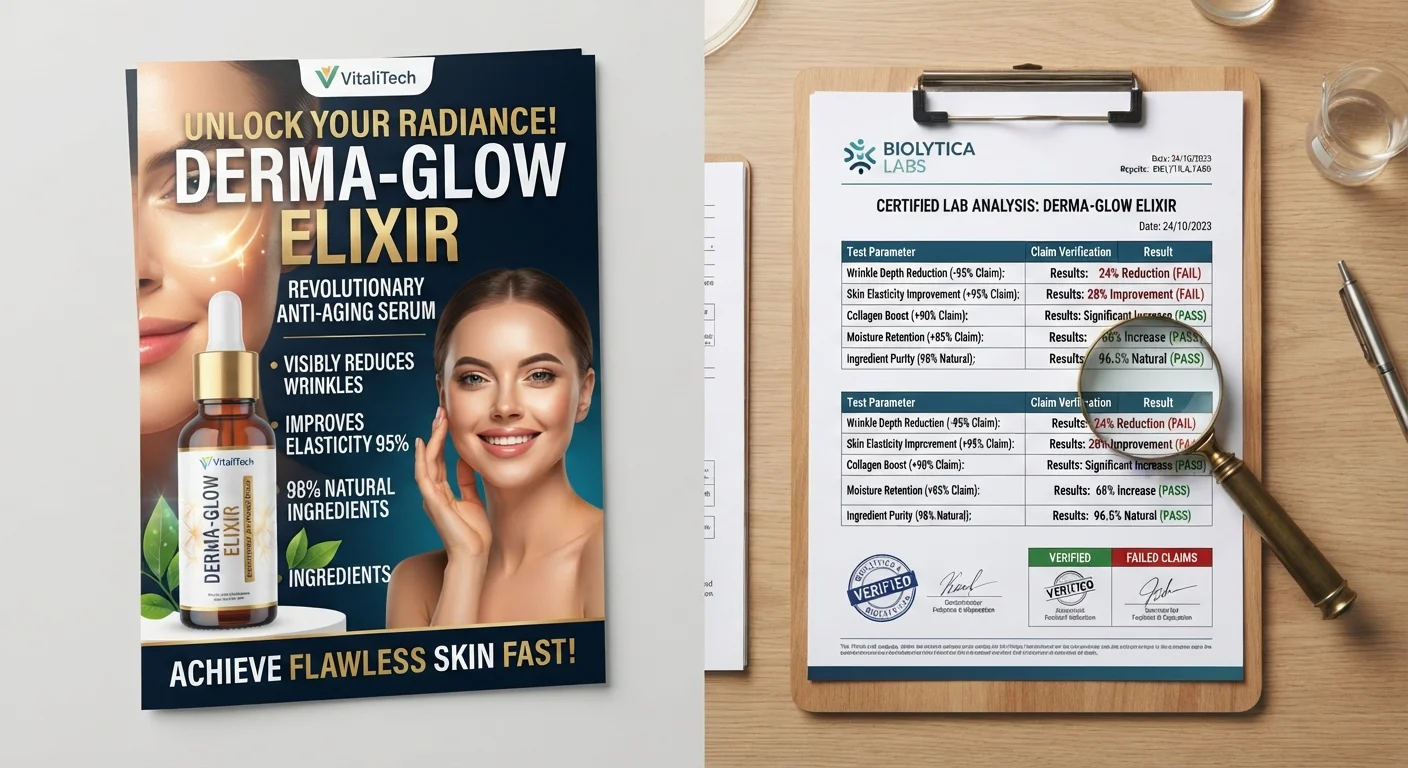
Photo credit: InsightsGrove.com | Discover Joy In Reading
In this article
Brand claims and third-party lab results often tell different stories. Understand why the gap exists and how to weigh both sources.
Key Takeaways
- Manufacturer claims are marketing tools; they reflect best-case conditions, not typical use.
- Independent testing uses standardized protocols that allow apples-to-apples comparisons across products.
- The gap between claimed and tested performance is normal - understanding why it exists is the key skill.
- Neither source is complete on its own; credible research uses both together.
- Always check who funded an independent test before treating its findings as neutral.
Why the Gap Between Claims and Test Results Exists
When a battery maker says their product lasts 48 hours, they almost certainly tested it under controlled, low-drain conditions that don't reflect how most people actually use it. When a vacuum manufacturer quotes suction power in air watts, they may be measuring at the motor - not at the floor head. This isn't necessarily deception; it's the structural incentive of marketing. Companies use the methodology that produces the number they want to publish.
Independent testers, by contrast, aim to use repeatable, standardized protocols so that results are comparable across competing products and reflect conditions closer to real-world use. Organizations like ASTM International, IEC, and ANSI publish testing standards that define exactly how measurements should be taken. When a lab follows those standards, the results carry a consistency that no manufacturer self-report can match.
The gap between the two figures isn't a scandal - it's a predictable outcome of different incentives. Learning to expect the gap, and to estimate its typical size in a given category, is a foundational product-research skill. See our breakdown of what specs actually tell you for a deeper look at how to read numbers critically.
| Criterion | Manufacturer Claims | Independent Testing |
|---|---|---|
| Primary purpose | Market the product | Measure real-world performance |
| Testing conditions | Optimized / best-case | Standardized / repeatable |
| Comparability across brands | Low - each brand sets its own methodology | High - shared protocols enable fair comparison |
| Transparency of methodology | Rarely disclosed in full | Often published; varies by organization |
| Funding bias risk | Always present | Present when industry-funded; lower when independent |
| Coverage of product categories | Universal - every product has claims | Uneven - some categories well tested, others sparse |
| Safety and durability insight | Minimal - rarely self-reported honestly | Strong when long-term or stress testing is included |
How to Evaluate Both Sources Without Getting Burned
Treating manufacturer claims as useless is a mistake. Companies invest heavily in knowing their own products, and the claims often contain meaningful signal about design priorities - a brand emphasizing noise levels is telling you that matters to them, which is useful context. The problem arises when claims are taken at face value as performance guarantees rather than as positioning statements.
~30%
Typical battery life performance gap
Consumer electronics testing by organizations like Which? and Wirecutter has consistently shown that real-world battery life runs roughly 25-35% shorter than manufacturer-quoted figures across smartphone and laptop categories.
3 key questions
To vet any independent test
Who funded it, what protocol was used, and were the test conditions disclosed? Answering all three separates credible third-party data from disguised marketing.
Independent tests solve specific problems: they remove cherry-picked conditions, introduce competitors, and often catch durability and safety issues that marketing copy never surfaces. But they aren't automatically trustworthy either. The critical question is always who funded the test and whether the protocol was publicly disclosed. Industry-funded studies conducted by labs with a commercial relationship to the manufacturer deserve the same skepticism as the marketing claims themselves. Our guide on what to ask before trusting a product comparison covers how to apply this filter quickly.
A practical workflow: start with manufacturer specs to build a baseline understanding of what the product claims to do, then look for independent tests that used recognized standards. Where the two diverge significantly - say, a claimed 20-hour battery life tests at 11 hours under moderate use - ask whether the gap is explainable by methodology or whether it suggests the claim is misleading. For guidance on where to find credible third-party sources, our source guide for independent shoppers maps the landscape clearly. And when independent test data is scarce, proxy signals like warranty length and return policy generosity can fill some of the gap - a point explored in our piece on how warranties signal product confidence.
Certification Marks Are Not the Same as Independent Testing
A product displaying a certification mark (such as Energy Star, UL Listed, or NSF Certified) has met a minimum threshold set by that standards body - but those thresholds vary widely in rigor. Certification confirms a product cleared a specific bar; it doesn't tell you how far above or below competing products it performed. Treat certifications as a floor check, not a full performance review. For a broader view of how to assess product credibility before buying, see our guide to trustworthy product reviews.

Author
Savvy Shopping Editorial Team
Savvy Shopping Editorial Team is the collective byline for our editorial team and contributor network. Articles published under this byline or an editorial pen name are researched, written, and reviewed according to our editorial standards for clarity, consistency, and independence before publication.
View all articles →