
Why 'Was £199, Now £99' Rarely Means What You Think
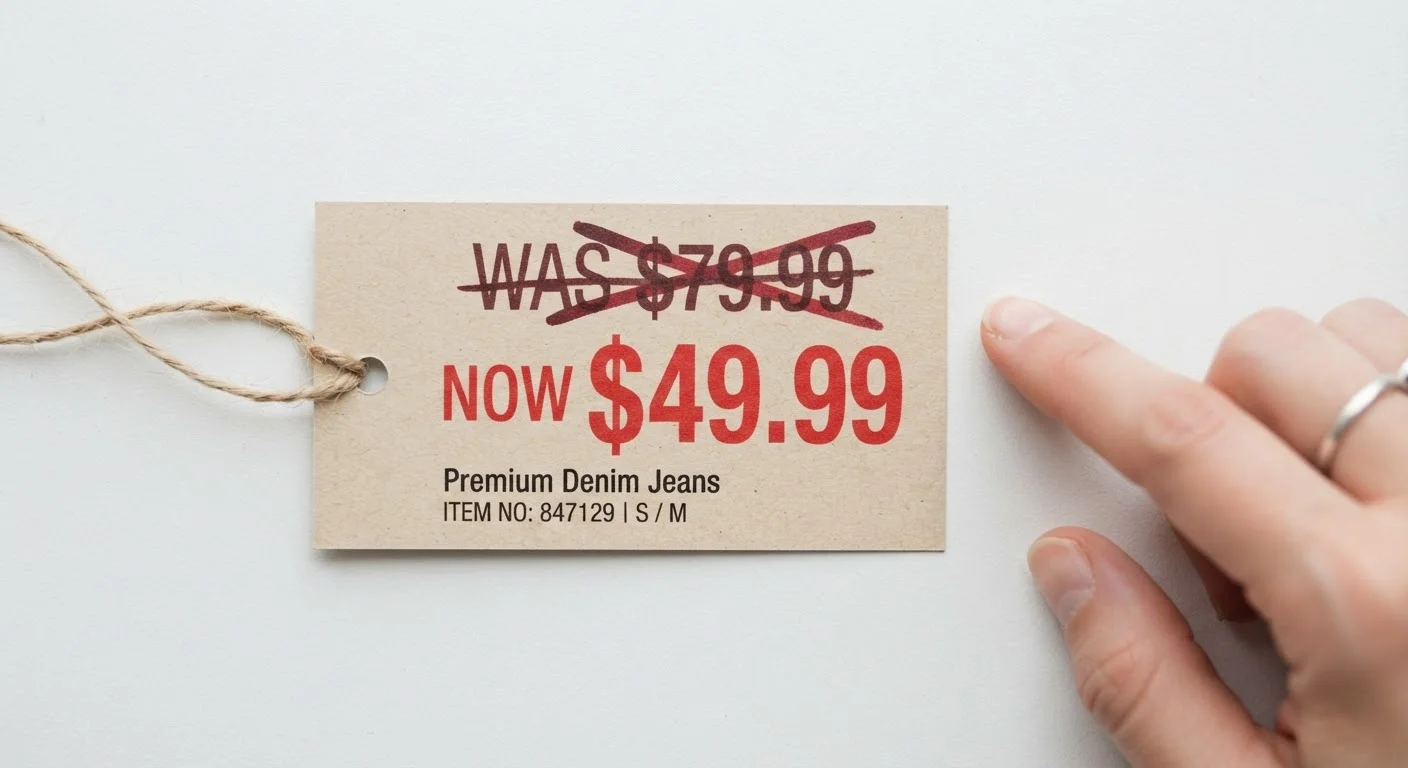
Photo credit: InsightsGrove.com | Discover Joy In Reading
In this article
The 'was/now' price format is ubiquitous — and frequently misleading. Here's the psychology and regulation behind it.
Key Takeaways
- The 'was' price must meet legal standards, but enforcement is patchy and definitions vary.
- Retailers sometimes inflate reference prices before a sale to make discounts look larger.
- Psychological anchoring makes even meaningless price comparisons feel like genuine savings.
- Price-tracking tools let you verify whether a 'sale' price is actually lower than normal.
The 'Was/Now' Format and Why It Feels So Convincing
Walk through any shopping mall or scroll an online retailer and you'll see it everywhere: Was $199, Now $99. The format is designed to do one thing - make you feel like you're winning. The crossed-out number signals loss avoided; the bold red figure signals gain secured. That emotional combination is deliberate, and it works on most of us regardless of how savvy we think we are.
The mechanism behind it is called price anchoring. When you see a high reference price first, it sets an unconscious benchmark. Everything evaluated against it looks cheaper by comparison - even if that benchmark is essentially fictitious. Retailers have known this for decades; academic research in behavioral economics consistently confirms that anchoring shapes purchasing decisions in ways that bypass rational analysis.
This doesn't make all 'was/now' tags dishonest. Genuine markdowns exist. But the format is also one of the most commonly misused tools in retail pricing, and understanding the difference requires knowing what the 'was' price is actually supposed to mean - and how easy it is to game. See also how markdowns and manufactured urgency are used together to amplify the effect.
Common Myths - and What's Actually True
Let's go through the most widespread misconceptions shoppers hold about discounted pricing.
Myth
The 'was' price is the price most people actually paid.
Fact
In many cases, the 'was' price reflects only a brief period at a higher price - sometimes as short as a single day.
Consumer protection rules in the US and many other markets require that a reference price reflect a genuine prior selling price, but the definitions of 'genuine' and 'prior' leave significant room for interpretation. A retailer that lists an item at an elevated price for a short qualifying window before marking it down can technically comply with basic rules while still creating a misleading impression. The Federal Trade Commission's guidance on deceptive pricing acknowledges this gap without fully closing it.
Myth
A 50% discount always means you're saving half the item's real value.
Fact
The percentage only means something if the original price was a genuine, market-representative figure - which it often is not.
Percentage discounts are calculated against the reference price, not against the item's actual market value or production cost. If a retailer sets a reference price significantly above what the product typically sells for elsewhere, the resulting discount percentage becomes mathematically inflated. You could see a '50% off' item that is priced identically to what competitors charge at full price. The number feels significant; the saving may be negligible. This is one of several shopping beliefs that don't hold up under scrutiny.
Myth
Crossed-out prices are tightly regulated and must reflect what consumers actually paid.
Fact
Regulation exists but is inconsistently enforced, and definitions of a 'legitimate' reference price vary considerably.
In the US, the FTC has published guidance indicating that a former price used in a comparison should be the actual price at which the item was offered for a reasonably substantial period. However, 'reasonably substantial' is not precisely defined in statute, and enforcement actions against individual retailers for misleading reference prices are relatively rare compared to the prevalence of the practice. The burden of verification effectively falls on the consumer rather than the regulator.
Myth
Online retailers are more transparent about pricing than physical stores.
Fact
Online retail can actually make reference-price manipulation easier, since prices can be changed instantly and history is rarely shown by default.
Physical shelf labels take time and labor to change. Online prices can be updated in seconds, meaning a reference price can be set, captured for compliance purposes, and then removed - all before most shoppers notice. Without third-party price-tracking, consumers have no baseline against which to evaluate the 'was' figure presented to them. This is precisely why independent price-history tools have become a meaningful part of informed online shopping.
Myth
If a sale is time-limited, that urgency is a reliable signal of genuine value.
Fact
Artificial urgency is a separate tactic layered on top of price anchoring - the deadline and the discount are both often manufactured.
Countdown timers and 'ends tonight' messaging activate a psychological response called loss aversion - the discomfort of potentially missing out. This is entirely independent of whether the discount is genuine. Retailers can run a cosmetic sale with a hard deadline and then relaunch the identical 'sale' the following week. Urgency framing should be treated as a reason to slow down and verify, not to act faster.
What the Numbers Actually Tell You
87%
Shoppers influenced by a reference price
Research published in the Journal of Consumer Research found the large majority of shoppers adjust their perceived value of an item based on a displayed original price, even when told the original price may be arbitrary.
~30 days
Typical qualifying window for a reference price
Industry practice in many US retail sectors treats 30 days as a sufficient prior-sale period to justify a 'was' price, though this standard is not legally mandated in most states.
2-3×
Common markup before a promotional markdown
Consumer advocates and investigative retail analysts have documented cases where goods are marked up by a factor of two to three times their normal selling price before a timed sale event, according to reporting by consumer journalism outlets.
Even when a price cut is real, the discount percentage can mask a poor deal. A 50% reduction on an item that was overpriced to begin with may leave you paying more than you would elsewhere at full price. Comparing the 'now' price against independent market data - not against the retailer's own reference price - is the only reliable signal of value.
Free browser extensions and dedicated price-history sites track how a product's price has moved over time. If the 'was' price only appeared for a few days before the 'sale' started, that's a red flag. If the item has sold at or near the 'now' price for months, the 'sale' is largely cosmetic. Other common miscalculations - like ignoring shipping costs - can turn apparent deals into disappointments.
Seasonal 'Sales' Are Often Pre-Inflated
Major retail events - including back-to-school, Black Friday, and end-of-season clearances - are periods when reference-price inflation is most commonly documented. Items may be relisted at artificially elevated prices weeks before the event so the headline discount appears larger. If you're planning to buy around a major sale period, tracking the item's price for four to six weeks beforehand gives you a meaningful baseline.
How to Verify a Discount Before You Buy
A few practical habits shift the balance back toward the consumer:
- Check price history. Tools that log historical prices for online retailers let you see whether the 'was' figure was ever a realistic selling price or just a brief artificial high.
- Search the 'now' price independently. If the current 'sale' price is widely available elsewhere at full price, it's not a deal - it's the market price.
- Note how long the 'sale' has run. A sale that restarts every two weeks or has no defined end date is effectively the regular price.
- Read the fine print on reference prices. Some retailers specify what the 'was' price represents. Others do not. Vague labeling is itself informative.
Understanding the full anatomy of inflated reference pricing is covered in depth in our guide to how retailers construct fake sales. For a broader look at the mental nudges embedded in everyday retail, see psychological pricing tactics retailers use.
This article is for general informational purposes only. It does not constitute legal or financial advice. Pricing regulations vary by jurisdiction; consult official consumer protection resources or a qualified professional for guidance specific to your situation.

Author
Savvy Shopping Editorial Team
Savvy Shopping Editorial Team is the collective byline for our editorial team and contributor network. Articles published under this byline or an editorial pen name are researched, written, and reviewed according to our editorial standards for clarity, consistency, and independence before publication.
View all articles →