
Why Sale Prices Aren't Always the Deal They Appear to Be
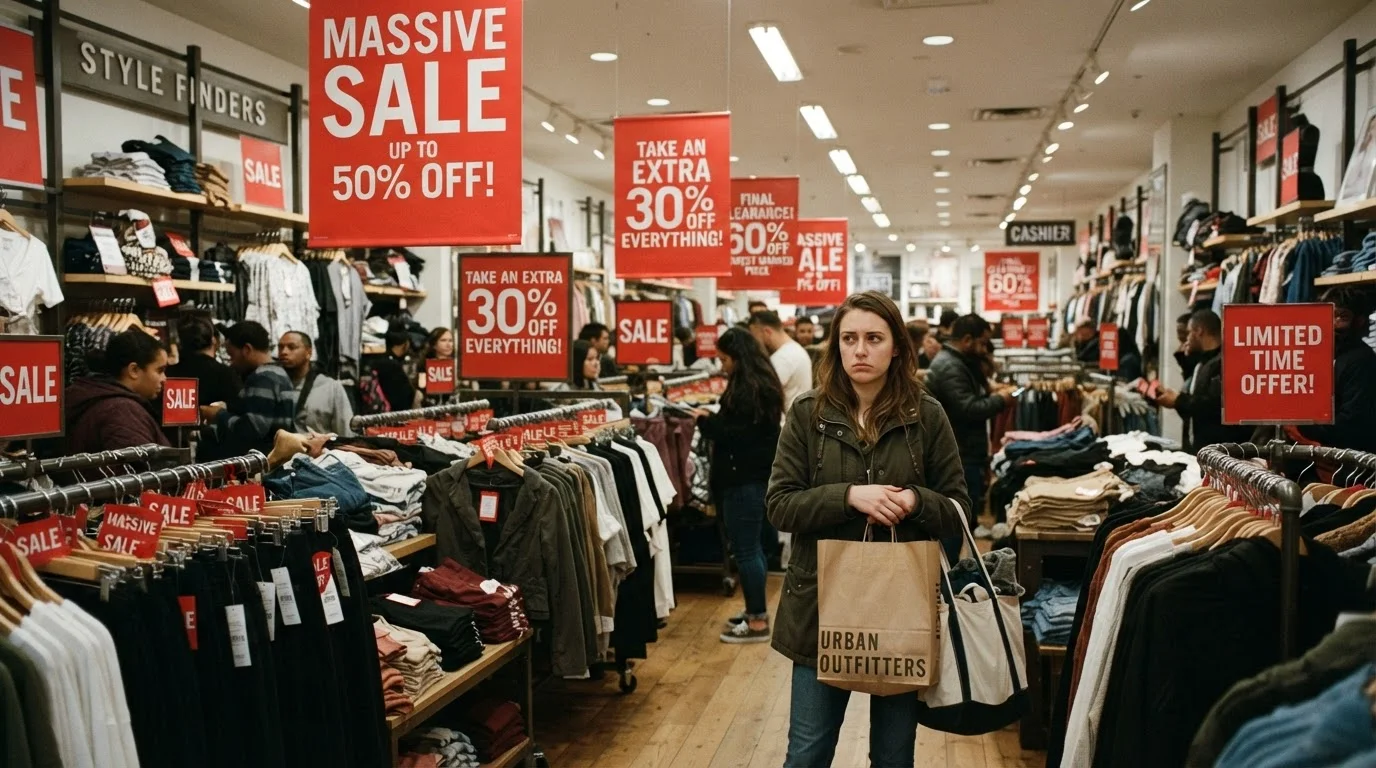
Photo credit: InsightsGrove.com | Discover Joy In Reading
In this article
Markdowns, anchor pricing, and manufactured urgency can make a mediocre deal look unmissable. Here's how to tell the difference.
Key Takeaways
- Retailers often inflate 'original' prices to make discounts appear larger than they actually are.
- Urgency tactics like countdown timers and low-stock warnings are frequently manufactured, not real.
- The percentage off a price only matters if that original price was genuine and competitive.
- Tracking a product's price history over time is the most reliable way to verify a real deal.
- Hidden costs — shipping, restocking fees, required accessories — can erase apparent savings entirely.
How Sale Pricing Psychology Works Against You
Retailers are not required to make discounting straightforward — and most don't. The mechanics of a sale are designed by pricing teams whose job is to maximize revenue, not to help you find genuine value. Understanding a few key tactics makes it much harder to be nudged into an unnecessary purchase.
The most common mechanism is the reference price: a "was" or "original" figure displayed alongside the current price. Your brain immediately interprets the gap as your gain. But as retailers inflate original prices explains, that reference point is often set strategically rather than reflecting a price the item genuinely held for any meaningful period. Psychological pricing tactics go even deeper — charm pricing, decoy offers, and bundle framing all operate through the same cognitive shortcuts.
Myth
If something is marked 40% off, I'm saving 40% compared to what I'd normally pay.
Fact
You're saving 40% off the listed reference price — which may have been set artificially high specifically to make the discount look impressive.
This tactic is called anchor pricing: retailers set a conspicuously high "original" price so that any markdown appears generous. Research in consumer psychology consistently shows that shoppers anchor heavily to the first number they see, treating the discount as the baseline for value judgment. The actual market price of the item — what comparable sellers charge without a "sale" — may be close to or even below the so-called sale price. Before treating a percentage as meaningful, check what the item costs at other retailers right now. See the glossary of deal-finding terms for a plain-language breakdown of anchor pricing and related tactics.
Myth
Major sale events like holiday weekends always deliver the deepest discounts of the year.
Fact
High-profile sale periods often feature selective or modest discounts, with some items priced higher than they were in the weeks prior.
Price tracking services have repeatedly documented items whose prices were quietly raised in the weeks before a major sale, only to be "discounted" back to their normal level. The perception of an event drives purchases even when the underlying value is flat. Certain product categories do see genuine markdowns during specific events — but it varies significantly by category and retailer. Sale season reality checks can help you distinguish which events have historically delivered real savings in the categories you care about.
Myth
A countdown timer means I'll miss the deal if I don't act now.
Fact
Many countdown timers reset automatically or the promotion extends indefinitely — the urgency is often a design choice, not a factual constraint.
Manufactured urgency is one of the most effective and widely used retail tactics online. Timers, low-stock indicators, and "X people viewing this now" messages are designed to trigger loss aversion — the cognitive bias that makes potential losses feel more painful than equivalent gains feel good. Before rushing a purchase, open the same product page in an incognito browser or check it again the next day. If the timer resets or the deal persists, the urgency was artificial. For a fuller breakdown of how these mechanics work, see countdown timers and low-stock warnings explained.
Myth
Buying during a sale always saves money compared to waiting.
Fact
Buying an item you don't yet need — even at a genuine discount — can cost more overall than buying it at full price only when you need it.
This is the sunk cost of premature purchasing: storage, potential spoilage or obsolescence, tied-up cash, and the behavioral tendency to impulse-buy adjacent items once you're already "saving money." A real deal on something you would have bought anyway, at approximately the right time, is genuinely valuable. A real deal on something speculative is a cost disguised as a saving. Value for money is more personal than it looks — context shapes whether any price is actually good for your situation.
Myth
The sale price shown is the total cost I'll pay.
Fact
Shipping, handling, required accessories, restocking fees, and membership costs can significantly increase what you actually spend.
A product listed at a steep discount may require a paid membership to access that price, or ship via a slow free tier while expedited delivery costs extra. Return policies are equally important: a free return policy turns a bad purchase into a zero-cost lesson; a 15% restocking fee on a $200 item costs $30 just to undo a mistake. Always calculate the total delivered cost — including any conditions on returns — before comparing prices. Common ways shoppers misjudge a discount's true value covers the full range of hidden costs worth factoring in.
The solution isn't cynicism about every sale — it's a simple verification habit. Before committing, check a price-tracking tool to see the item's price history, calculate the true delivered cost, and ask whether you'd buy it at this price if there were no "sale" banner attached.
What Legitimate Savings Actually Look Like
A genuine deal has a few consistent characteristics: the item has held a higher price for a sustained, ordinary period; the current price is at or below what competing retailers charge without a promotion; and no manufactured urgency or hidden conditions change the effective cost.
"Sale Price" Has No Legal Definition
In the US, there is no federal law that strictly defines what qualifies as a legitimate "original" or "regular" price before a markdown. The FTC provides guidelines, but enforcement is inconsistent. This means a retailer can, in some cases, list a price as "was $100" even if the item rarely or never sold at that price. Always verify price history independently before trusting a markdown.
Price history is your most reliable signal. Free browser tools can show you a product's price over the past 90 or 180 days with minimal effort. If the "original" price appears only briefly before the current promotion — or never at all — that reference number carries very little weight.
It's also worth separating discount depth from actual value. A 50% markdown on a product that was overpriced to begin with may deliver less real-world value than a 10% markdown on something that was already competitively priced. Finding genuine discounts without getting burned offers a practical framework for building these verification habits into your regular shopping routine.
~33%
Items priced higher before major sale events
Consumer advocacy research and price-tracking analyses have found roughly one in three items on major sale days carries a higher price than it did in the preceding 30 days.
2–3x
Likelihood of unplanned purchase under urgency cues
Studies in retail consumer behavior suggest urgency design elements such as countdown timers significantly increase unplanned purchase rates compared to static pricing displays.
Reading promotional fine print matters too. Exclusions, minimum spend thresholds, and expiry conditions are the mechanisms that most commonly eliminate an apparent saving before you realize it. Reading the small print on deals walks through the specific clauses worth checking every time.
This article is for informational and educational purposes only. It does not constitute financial or legal advice. Pricing practices vary by retailer and jurisdiction — verify claims and conditions directly with sellers and relevant consumer protection authorities.

Author
Smart Spending Editorial Team
Smart Spending Editorial Team is the collective byline for our editorial team and contributor network. Articles published under this byline or an editorial pen name are researched, written, and reviewed according to our editorial standards for clarity, consistency, and independence before publication.
View all articles →