
Renting vs. Owning a Small Space: How Your Tenure Changes Every Design Decision
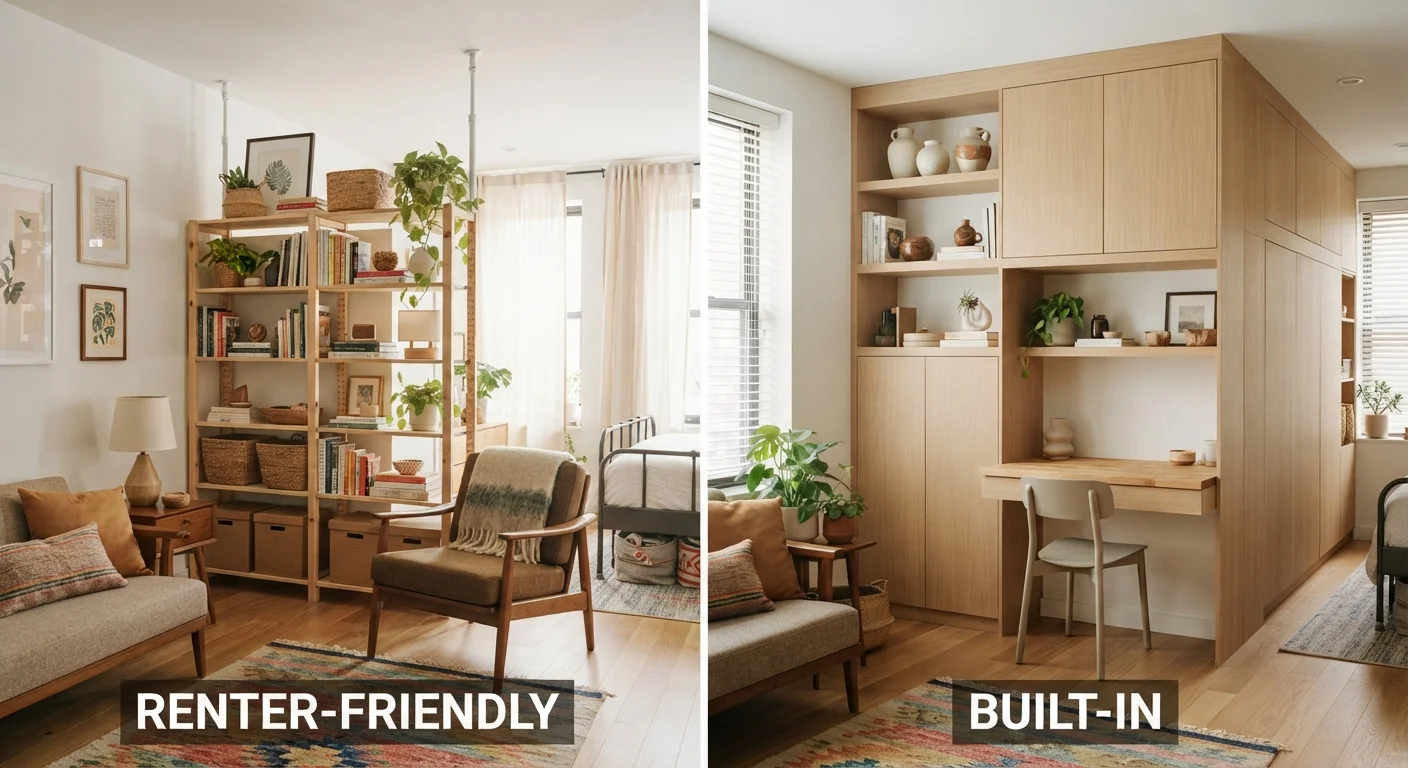
Photo credit: InsightsGrove.com | Discover Joy In Reading
In this article
Renters can't patch walls or install built-ins. Owners face different constraints. This comparison maps out what each group can realistically do.
Key Takeaways
- Renters must prioritize reversible, damage-free solutions to protect their security deposit.
- Owners can invest in permanent modifications like built-ins, but upfront costs are higher.
- Both groups can meaningfully improve a small space - the strategies just diverge significantly.
- Knowing your tenure status before planning any upgrade saves wasted money and effort.
- Some solutions - like freestanding furniture and lighting - work equally well for both groups.
Why Tenure Is the First Question to Answer
Before picking a storage system or planning a layout overhaul, you need to answer one question: do you own this space, or are you leasing it? The answer rewires nearly every practical decision that follows. Renters face legal restrictions most owners don't - drilling into walls, installing permanent fixtures, or altering plumbing are typically off-limits without written landlord approval. Owners face a different set of constraints: every modification costs money and may or may not add resale value.
For a broader foundation before diving into specifics, see the complete small-space living guide that covers the core principles applicable to any tenure type. Once you're oriented, a room-by-room audit can help you identify where your space is losing the most ground before you spend a dollar.
What Renters Can and Cannot Realistically Do
Renters operate within a defined legal boundary. Most standard leases prohibit permanent alterations - patching and repainting walls without permission, installing built-in shelving, or replacing hardware are all common restrictions. Violating them can mean losing part or all of your security deposit. That said, the renter-friendly toolkit is substantial when used correctly.
Always Check Your Lease First
Before purchasing any adhesive product, temporary wallpaper, or freestanding unit taller than ceiling height, re-read your lease's alteration clause. Some leases restrict even removable modifications or require written approval for any change beyond basic furniture placement. Getting clarity upfront takes 10 minutes and can prevent a costly dispute at move-out.
Reversible strategies that work:
- Adhesive hanging systems - Command-style strips and picture rails rated for heavier loads can mount shelves, mirrors, and artwork without drilling.
- Freestanding storage - Modular shelving units, wardrobe systems, and rolling carts add function and move with you.
- Furniture-as-architecture - A tall bookcase or room divider can define zones in an open-plan studio without touching a wall.
- Temporary wallpaper and peel-and-stick tiles - Many products are now designed for easy removal, though always test adhesion on an inconspicuous spot first.
What renters genuinely cannot do without landlord sign-off: structural changes, electrical work, and plumbing modifications. For clarity on which repairs and upgrades fall in your lane versus your landlord's, the guide to rental repairs you can legally do yourself draws that line clearly. For practical upgrade ideas that won't risk your deposit, low-cost renter-safe improvements covers what's actually worth doing.
What Owners Can Do - and What It Actually Costs
Ownership unlocks a wider design toolkit, but it comes with tradeoffs. Built-in cabinetry, wall-mounted beds, structural shelving, and custom closet systems are all on the table - but each carries a cost and a commitment. A built-in window seat with storage, for example, can transform a dead corner into a functional asset, but it requires carpentry skills or contractor fees, and it stays with the property when you sell.
| Criterion | Renting | Owning | |
|---|---|---|---|
| Wall modifications | Restricted; adhesive solutions only | Permitted; drilling and built-ins allowed | |
| Structural changes | Not permitted without approval | Allowed with permits where required | |
| Upfront design cost | Lower; freestanding and removable | Higher; permanent installs cost more | |
| Portability of improvements | High; most pieces move with you | Low; built-ins stay with property | |
| Design flexibility | Reconfigure anytime | Changes require effort and cost | |
| Long-term value add | None to the property | Potential resale or livability gain |
Owners should also think carefully about which modifications genuinely add livability versus those that only add expense. Reconfiguring kitchen storage, adding a murphy bed, or installing proper task lighting are generally high-return moves in small spaces. Cosmetic changes that don't address function - accent walls, decorative built-ins - often don't justify the cost in tight square footage. For context on the broader financial picture of ownership, the real cost comparison between renting and owning covers what most articles miss on both sides of the ledger.
Note: Any work involving electrical systems, load-bearing walls, or plumbing should be handled by a licensed professional. Permits may be required depending on your municipality - always verify local code requirements before starting structural modifications.
Strategies That Work for Both Tenure Types
Some approaches sidestep the renter/owner divide entirely. These are worth prioritizing regardless of your lease status:
~36%
US households that rent their home
According to the U.S. Census Bureau's American Community Survey, roughly 36% of US households are renters, making renter-focused design strategies widely relevant.
500-700 sq ft
Typical US studio apartment size range
Industry data from residential real estate sources consistently places the average US studio apartment between 500 and 700 square feet, where every design decision carries significant weight.
- Multifunctional furniture - Sofa beds, extendable dining tables, ottomans with storage, and nesting side tables add capacity without permanent commitment.
- Vertical thinking - Ceiling-height freestanding shelving maximizes unused vertical space in any unit.
- Lighting as a space modifier - Strategic layering of floor lamps, task lighting, and mirrors can make a small room feel meaningfully larger without any structural change.
- Editing over adding - In limited square footage, removing items almost always produces more improvement than adding storage products. See why more storage bins often make clutter worse for a closer look at this counterintuitive reality.
Budget-conscious approaches across both categories are also covered in the Budget Home Fixes hub, which covers affordable DIY repairs and upgrades applicable to renters and owners alike.

Author
Home & Living Editorial Team
Home & Living Editorial Team is the collective byline for our editorial team and contributor network. Articles published under this byline or an editorial pen name are researched, written, and reviewed according to our editorial standards for clarity, consistency, and independence before publication.
View all articles →