
Small Space Living: Everything You Need to Know Before You Start
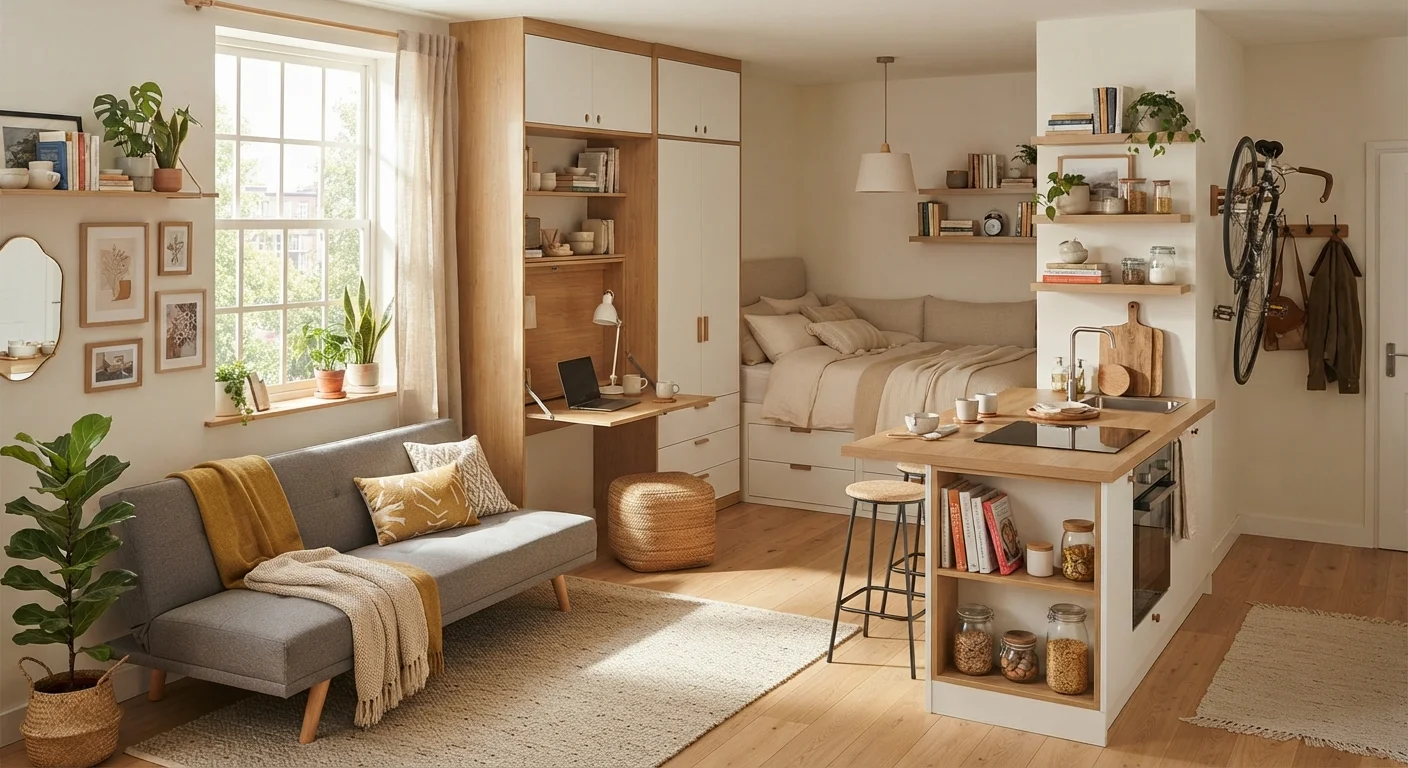
Photo credit: InsightsGrove.com | Discover Joy In Reading
In this article
From studio apartments to tiny houses, this end-to-end guide covers every principle of comfortable, functional small-space living.
Key Takeaways
- A room-by-room audit before any changes saves money and prevents poor decisions.
- Multifunctional furniture is the highest-return investment in a small home.
- Vertical wall space is consistently underused and offers free storage capacity.
- Light colors and mirrors can meaningfully increase perceived room size.
- Sustainable decluttering habits matter as much as physical layout changes.
Why Small-Space Principles Matter
Whether you're renting a studio, downsizing, or moving into a tiny house, limited square footage demands a different mindset than a conventional home. The core challenge isn't a lack of space - it's a lack of intentional design. Most people try to squeeze a large-home lifestyle into a small floor plan without adjusting their approach, and the result is clutter, frustration, and wasted money on storage products that don't solve the root problem.
Small-space living principles are practical frameworks, not aesthetic trends. They're about matching what you own to what your space can genuinely support, and making every surface, corner, and cubic foot earn its place. This guide covers each principle end to end, so you can approach your space with a clear plan rather than trial and error.
37%
U.S. renters living in apartments under 1,000 sq ft
According to U.S. Census Bureau housing survey data, a significant share of American renters occupy compact units requiring intentional space management.
2x
Clutter impact multiplier in small vs. large homes
Interior design research consistently finds that visual clutter has a proportionally greater negative effect on perceived comfort in smaller spaces.
30%
Perceived size increase from strategic mirror placement
Studies in environmental psychology suggest mirrors opposite windows can meaningfully expand the perceived dimensions of a room.
Audit Your Space Before Anything Else
The single most common mistake is jumping straight to buying organizers or rearranging furniture without first understanding what the space actually needs. A structured audit tells you which areas are genuinely dysfunctional, which items are consuming space without justification, and where you have untapped potential.
Walk through each room and answer three questions: What is stored here that is used less than once a month? What furniture footprint can't be justified by daily use? Where does clutter consistently reappear? The answers will surface your real problems - often different from what you assume.
Our room-by-room audit checklist provides a structured framework for identifying exactly what's stealing space and what changes will have the biggest measurable impact before you spend a dollar.
Start With a 30-Minute Timed Sweep
Set a timer for 30 minutes and move through your home with a single box. Anything that doesn't have a clear, justified home goes in the box. At the end, categorize: donate, store elsewhere, or discard. This quick pass often surfaces 20-30% of the friction before you've changed a single piece of furniture.
Furniture That Works Harder
In a small home, furniture that serves a single purpose is a liability. A sofa that only seats people, a coffee table that only holds drinks, a bed frame with no storage underneath - each represents a missed opportunity.
Prioritize pieces that serve two or more functions: a storage ottoman replaces both a coffee table and a linen closet drawer; a daybed functions as both a sofa and a guest bed; a fold-down wall desk disappears entirely when not in use. The goal is to reduce the number of furniture items while increasing their combined utility.
Before buying any new furniture, tape its footprint on the floor with painter's tape and live with it for a day. You'll quickly discover whether the scale actually works for how you move through the room.
Scale errors are one of the most expensive mistakes in small-space furnishing. Visualizing the footprint in context prevents costly returns and impractical layouts.
Choose furniture with legs over pieces that sit flush to the floor. Exposed floor underneath a sofa or bed visually extends the room and makes cleaning far easier.
Visual continuity of the floor plane is a well-established technique in interior design for making compact rooms feel more open and less segmented.
When evaluating a furniture piece, apply a simple test: if it were removed tomorrow, would you need to replace its function with two or more separate items? If yes, it's likely already earning its footprint. If it serves only one purpose, consider whether a dual-function alternative exists at a comparable or lower cost - often consistent with smart shopping habits that stretch your budget further.
Storage: Vertical, Hidden, and Overlooked
The most underused dimension in most small homes is height. Wall space above eye level, the area above door frames, and the dead zone near ceilings are all functional storage territory that most renters and homeowners ignore entirely. Floating shelves, tall narrow bookcases, and cabinet stackers can convert these zones into usable storage without consuming any floor space.
Hidden storage - inside ottomans, beneath bed frames, behind mirrors with built-in shelving, and within stair risers where applicable - is equally valuable because it keeps surfaces clear while maintaining capacity. A visually uncluttered space reads as larger than it measures.
For a detailed map of every overlooked storage zone in a typical apartment, see our guide on clever storage spots that often go unnoticed.
Don't Anchor Heavy Shelves Without Wall Studs
Floating shelves loaded with books or pantry items must be anchored into wall studs or use appropriate hollow-wall anchors rated for the expected weight. Improper installation is a leading cause of shelf collapses and wall damage. If you're renting, check your lease terms before drilling and consult your landlord about permitted modifications.
Light, Color, and Visual Tricks
Physical square footage is fixed, but perceived spaciousness is adjustable. Light paint colors - particularly whites, warm creams, and soft grays - reflect more light and reduce visual boundary cues, making walls feel farther apart. Dark colors can work in small spaces when used intentionally on a single accent wall, but they require strong natural or artificial light to avoid creating a closed-in effect.
Mirrors placed opposite or adjacent to windows amplify natural light and create depth. Keeping window treatments minimal - or replacing heavy curtains with sheer panels mounted close to the ceiling - draws the eye upward and allows more daylight in. Consistent flooring throughout an open-plan layout (rather than different surfaces per zone) reduces visual breaks and creates a sense of continuous, larger space.
“Light is the single greatest tool for shaping how a room feels. Before you move anything or buy anything, optimize how daylight moves through the space.”
— Sarah Susanka, Architect and author of 'The Not So Big House'
Habit Shifts That Make the Biggest Difference
Layout and furniture account for half the equation. The other half is behavioral. In a small home, clutter accumulates faster and its impact is more severe than in a larger space. One effective practice is a consistent one-in-one-out rule: when something new enters the home, something existing leaves. This prevents gradual accumulation that erodes the gains made by smart layout choices.
Seasonal storage - rotating items in and out based on the time of year - keeps only what's currently relevant in active circulation. Clothing, recreational gear, and décor are all good candidates. If you have outdoor space, even a small balcony or patio, consider how low-maintenance plants can extend your livable footprint without adding interior clutter - a concept explored further in our garden on a budget resources.
The most durable small-space strategy is one that requires the least daily willpower to maintain. Design systems that reset easily, store items at the point of use, and give every object a fixed home - and your space will stay functional without constant effort.

Author
Home & Living Editorial Team
Home & Living Editorial Team is the collective byline for our editorial team and contributor network. Articles published under this byline or an editorial pen name are researched, written, and reviewed according to our editorial standards for clarity, consistency, and independence before publication.
View all articles →