
Before You Rearrange: A Room-by-Room Audit for Small Homes
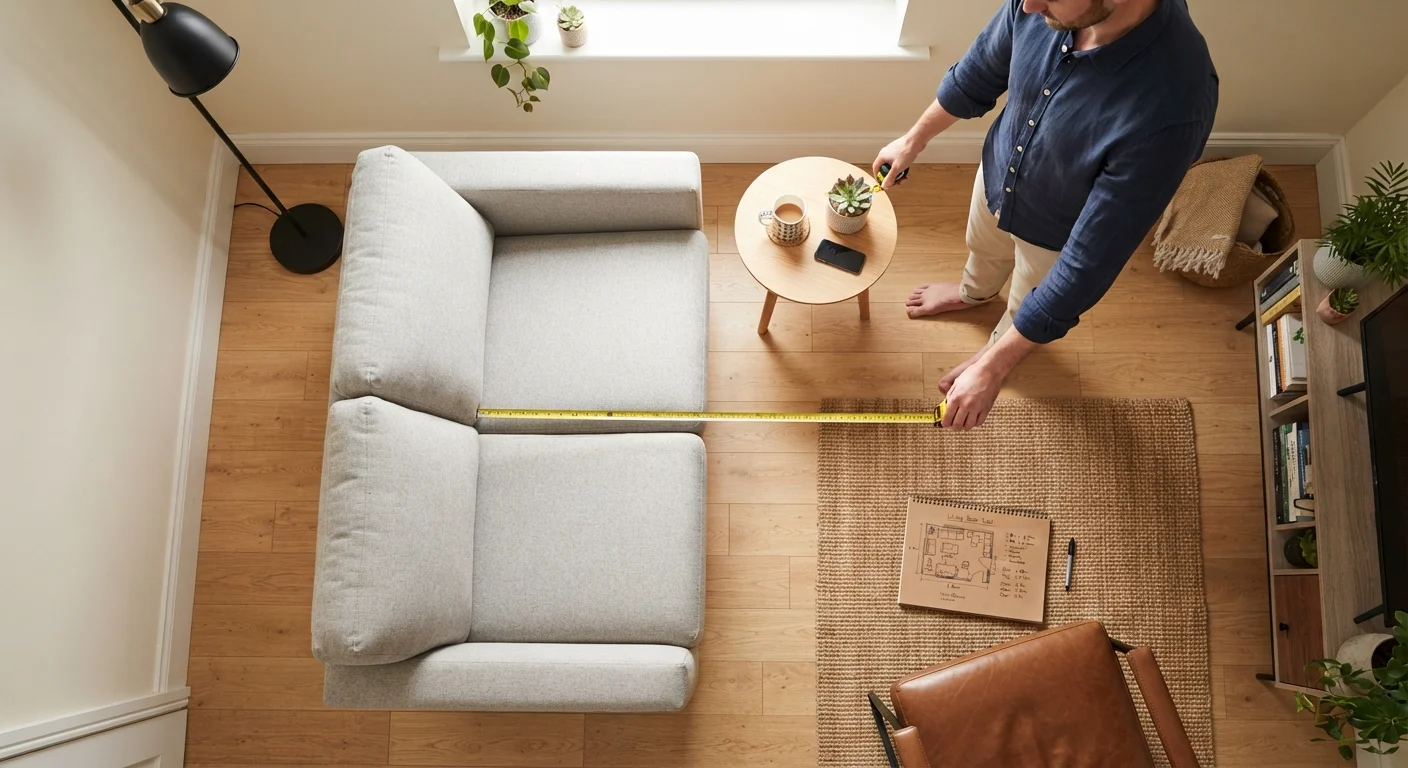
Photo credit: InsightsGrove.com | Discover Joy In Reading
In this article
Use this checklist to identify what's stealing space, what's earning its keep, and what changes will have the biggest impact room by room.
Key Takeaways
- Most small-home problems come from furniture that's oversized, under-used, or poorly placed - not from a lack of space.
- Auditing before rearranging prevents wasted effort and avoids creating new bottlenecks.
- Traffic flow, light, and storage overlap are the three factors most commonly overlooked in compact rooms.
- A simple audit reveals which rooms have the most room to gain - so you can prioritize changes that matter.
- Decluttering and reorganizing are different steps; knowing which one you need first saves significant time.
Why Audit Before You Move Anything
Rearranging furniture without a prior audit is like editing a document without reading it first. You might shift things around for hours only to end up with the same problems in different locations. A structured audit forces you to identify the actual constraints - not just the symptoms - before lifting a single couch cushion.
This checklist works room by room because each space in a small home has its own function, traffic pattern, and storage demands. What fixes a bedroom often breaks a living room. The goal here isn't to decorate; it's to diagnose.
Before you start, it helps to understand the difference between the two most commonly confused steps. Decluttering and organising solve different problems - and if you try to do them in the wrong order, neither one sticks. Read through this checklist with a notepad. Mark what applies. Then act on findings in order of impact.
Tape measure
Measure room dimensions and furniture footprints accurately before deciding on changes.
Notepad or note-taking app
Record findings room by room and track flagged issues for prioritization.
Graph paper or free floor-plan app
Sketch room layouts to scale so you can test furniture arrangements without physical lifting.
Painter's tape
Mark proposed furniture footprints on the floor to visualize new layouts before moving anything.
The Room-by-Room Checklist
Work through each room separately. Don't combine rooms or skip the ones that feel fine - often the spaces we overlook are quietly eating usable square footage. Pay special attention to how rooms connect: a hallway that's too tight or a door that swings into a main circulation path affects every room it touches.
Whole-Home Baseline
Living Room
Bedroom
Kitchen
Bathroom and Entryway
Shared or Multi-Use Spaces
Measure Furniture, Not Just Rooms
One of the most common small-home mistakes is auditing the room without measuring what's already in it. Before concluding that a room is too small, measure each major piece of furniture and calculate its share of the total floor area. Many compact spaces are workable - they're simply holding furniture sized for larger rooms. A sofa that's 12 inches shallower, for example, can transform a tight living room without any other changes.
Once you've completed the audit, look at your notes as a whole. Rooms with the most flagged items are your highest-leverage targets. Changes there - even modest ones - tend to produce the most noticeable improvement in day-to-day comfort. Thinking vertically is one of the most underused strategies in compact homes; walls and ceiling height offer storage and visual lift that floor-level rearranging alone can't achieve.
Turning Audit Findings Into Action
An audit is only useful if it produces a ranked list of changes, not a vague sense of dissatisfaction. After working through this checklist, group your findings into three buckets: things you can fix today at no cost (repositioning, editing clutter), things that require a small purchase or DIY effort, and things that need longer planning.
For the middle bucket - affordable fixes and small upgrades - the Budget Home Fixes hub covers practical, low-cost approaches for renters and homeowners alike. If your audit flags furniture that isn't earning its keep, consider whether a dual-purpose replacement makes sense before buying anything new. Murphy beds and sofa beds both serve double duty, but they suit different room sizes and daily habits - worth thinking through before committing. And if a new piece of flatpack furniture is on the list, assembly mistakes happen early and often, so plan that step carefully.
Finally, revisit this audit every six to twelve months. Small homes shift with seasons, new purchases, and changing routines. A quick re-check keeps the space working for you rather than against you.
Don't Rearrange and Declutter at the Same Time
Attempting to move furniture and edit belongings simultaneously leads to partial results in both. Complete the audit, then declutter, then rearrange - in that order. Mixing the steps usually means neither gets done properly, and the room ends up in a worse temporary state that discourages follow-through.

Author
Home & Living Editorial Team
Home & Living Editorial Team is the collective byline for our editorial team and contributor network. Articles published under this byline or an editorial pen name are researched, written, and reviewed according to our editorial standards for clarity, consistency, and independence before publication.
View all articles →