
The Real Difference Between Decluttering and Organising
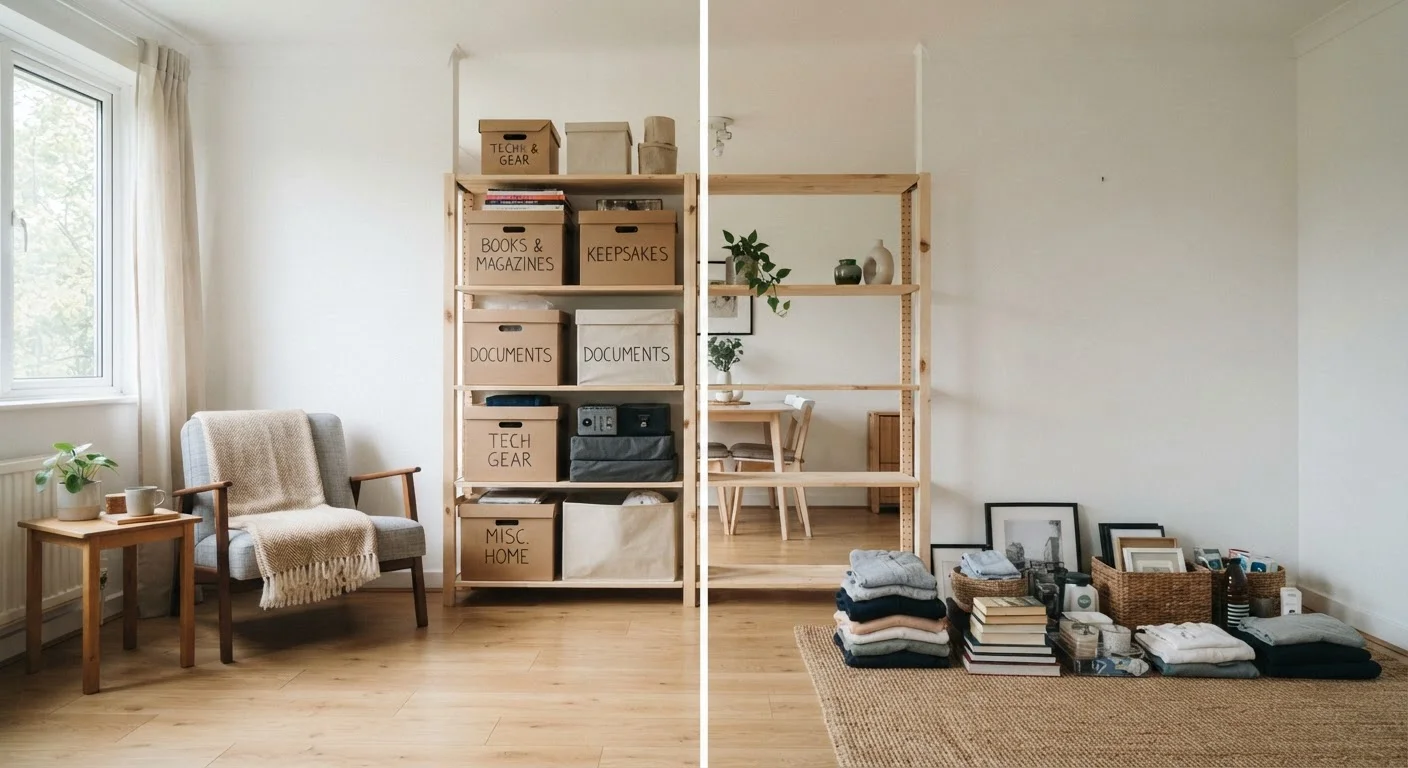
Photo credit: InsightsGrove.com | Discover Joy In Reading
In this article
Decluttering and organising sound the same but solve different problems. Learn which one you actually need — and in what order to do them.
Key Takeaways
- Decluttering reduces what you own; organising manages what remains.
- Organising before decluttering often wastes time and money on storage you don't need.
- Small spaces benefit most from decluttering first - less stuff means fewer storage products to buy.
- Decluttering is a decision process; organising is a design process.
- Most people buy storage containers before they've removed the excess - this rarely solves the problem.
Why People Confuse the Two
The words get used interchangeably in home content, but they describe fundamentally different activities. Decluttering is subtraction. You're making judgment calls about what stays in your life and what leaves it. Organising is arrangement. You're creating a system for the things that have already earned their place.
The confusion is understandable - both activities usually happen in the same physical space, often on the same weekend. But treating them as one blended task is exactly why many people end up with neatly arranged bins full of things they didn't actually need to keep.
This distinction matters more in smaller homes. When square footage is tight, every item you keep competes for the same limited space. Organising without first reducing volume is a bit like rearranging deck chairs - the underlying problem doesn't change. See also: storage myths that trip up small-space renters.
What Decluttering Actually Involves
Decluttering is a decision process. For each item, you're asking: does this belong in my life right now? That question has nothing to do with how the item is stored - it's about whether the item should exist in your space at all.
The hardest part of decluttering isn't the physical act of removing things. It's the mental work of letting go of items tied to sunk costs, guilt, or hypothetical future use. Acknowledging this gap - between what you have and what you actually use - is similar to the clarity required in personal finance when separating needs from wants.
Decluttering doesn't require buying anything. It generates output: donation bags, recycling, things to sell, and things to discard. When it's done well, it creates physical space - and that space is the foundation for any organising that follows.
What Organising Actually Involves
Once you know what you're keeping, organising is a design problem. You're deciding where things live, how accessible they need to be, and what systems will make them easy to find and put back. Good organisation isn't about aesthetics - it's about reducing the friction of daily life.
Test Your Organising System Early
Before buying any storage products, live with your decluttered space for a week. Watch where things naturally get put down, where you keep searching, and what causes daily friction. Let actual use patterns guide the system - not an idealised version of how you think you'll behave.
Effective organising considers frequency of use. Items used daily should be within arm's reach. Seasonal items can go in harder-to-access spots. Rarely used items might belong in a single dedicated box, not scattered across multiple drawers.
Storage products - bins, dividers, labels, shelves - only enter the picture here, and only after you know exactly what you're storing. If you're working with limited space, consider how multifunctional furniture can reduce the need for dedicated storage altogether. And before you rearrange anything large, a room-by-room audit can help you identify what changes will actually move the needle.
The Sequence That Works
The order is not interchangeable: declutter first, organise second. Reversing this creates a cycle where you keep buying storage for too many items, run out of room, buy more storage, and never address the root cause.
80%
Of clutter stems from disorganisation, not lack of space
A figure commonly cited in professional organising literature, reflecting that volume reduction often matters more than adding storage.
1 in 4
US households can't use their garage for cars
According to the US Department of Energy, roughly 25% of homeowners with two-car garages have too much stored there to fit any vehicles.
A practical approach: work through one zone at a time - a drawer, a shelf, a single closet - rather than the entire home at once. Pull everything out, make keep-or-go decisions before anything goes back in, then design the arrangement for what remains. This is slower in theory but far more durable in practice.
If you've already organised a space that still feels chaotic, that's a signal: the organising system isn't the problem. You likely have more items than the space can realistically hold, and decluttering is the next move.
“You can't organise clutter. The only real solution to clutter is getting rid of it.”
— Francine Jay, Author of 'The Joy of Less', a widely read guide to minimalist living
Frequently Asked Questions

Author
Home & Living Editorial Team
Home & Living Editorial Team is the collective byline for our editorial team and contributor network. Articles published under this byline or an editorial pen name are researched, written, and reviewed according to our editorial standards for clarity, consistency, and independence before publication.
View all articles →