
Murphy Beds vs. Sofa Beds: Which Actually Works for Everyday Living?
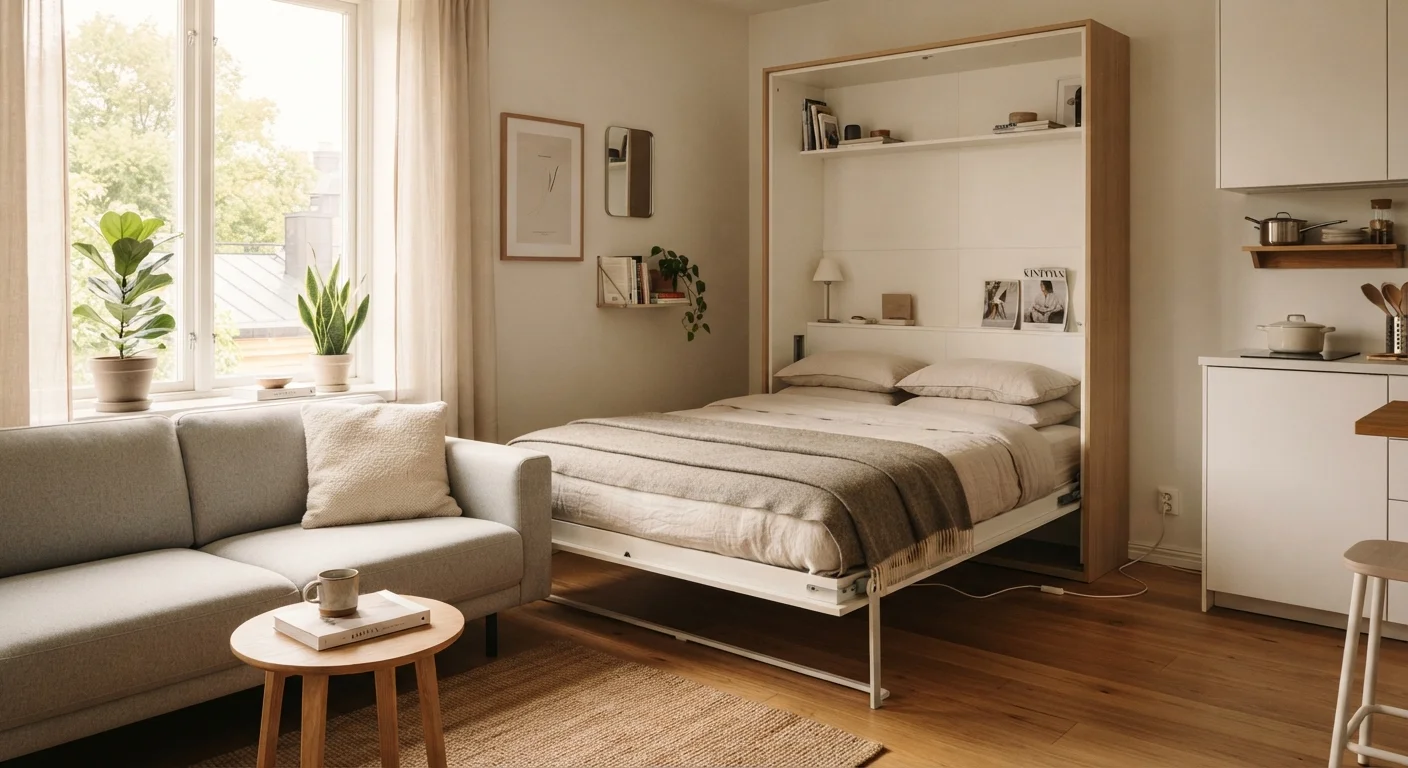
Photo credit: InsightsGrove.com | Discover Joy In Reading
In this article
If your bedroom and living room share one room, the bed you choose shapes everything. A clear-eyed look at comfort, cost, and daily usability.
Key Takeaways
- Murphy beds reclaim nearly all floor space when folded, but require professional installation and a higher upfront investment.
- Sofa beds are portable and renter-friendly, but most offer thinner mattresses that affect long-term sleep quality.
- Daily use is the critical variable - a sofa bed pulled out every night wears faster than one used occasionally.
- Murphy beds often pair with purpose-built cabinetry, letting vertical wall space do functional work.
- Installation costs and rental restrictions can make or break the murphy bed option for apartment renters.
- Neither solution is universally better - the right choice depends on how you actually use the space each day.
The Real Trade-Off: Floor Space vs. Flexibility
When a single room has to serve as bedroom, living room, and sometimes office, the furniture you choose sets every other constraint. Murphy beds and sofa beds both solve the same core problem - sleeping and living in the same footprint - but they do it through fundamentally different logic.
A murphy bed (also called a wall bed) folds vertically into a wall cabinet when not in use, freeing up to 40-60 square feet of floor space during the day. That's enough room for a desk, a yoga mat, or simply the ability to walk around without squeezing past furniture. The trade-off is permanence: installation typically requires wall anchoring, and in many apartments, that means landlord permission or a lease review. For a deeper look at what to audit before rearranging, see this room-by-room space audit.
A sofa bed keeps its footprint visible all the time - the sofa is always there, the bed is always inside it. The advantage is portability and zero installation. The disadvantage is that the sofa takes floor space whether or not you need the bed, and the mattress inside a sofa bed is usually thinner and softer than a standard mattress, often ranging from 4 to 6 inches in depth.
| Criterion | Murphy Bed | Sofa Bed |
|---|---|---|
| Floor space reclaimed | Near-total when folded | None - sofa always present |
| Installation required | Yes (wall or freestanding cabinet) | No |
| Renter-friendly | Often restricted by lease | Yes, fully portable |
| Mattress quality | Standard mattress compatible | Thinner, fold-limited design |
| Typical price range | $500-$3,000+ | $400-$2,000+ |
| Best for daily use | Yes | Occasional use preferred |
| Daytime appearance | Hidden - looks like cabinetry | Visible as a sofa |
Comfort, Mattress Quality, and Daily Wearability
For anyone sleeping in their converted space every night, mattress quality is non-negotiable. Murphy beds can accommodate standard mattresses up to about 12 inches thick - the same mattresses you'd find on a platform bed - though the mattress must be flexible enough to fold without cracking. Sofa bed mattresses are purpose-built for the folding mechanism, which limits their depth and, often, their support.
Long-term sofa bed use tends to cause complaints around lower-back discomfort, particularly with innerspring-based designs where the bar across the fold becomes noticeable. Higher-end sofa beds use memory foam inserts that reduce this effect. To understand what mattress materials hold up under repeated folding, this breakdown of mattress types is worth reading before committing.
Murphy beds win on sleep surface quality, but that advantage assumes you're choosing a quality mattress independently. The bed mechanism itself doesn't improve sleep - it just doesn't limit it the way a sofa bed's fold-in design does.
4-6 in
Typical sofa bed mattress depth
Most standard sofa bed mattresses are 4 to 6 inches thick, compared to 8-12 inches for a conventional sleep mattress.
~40 sq ft
Floor space a queen murphy bed reclaims
A standard queen-size murphy bed, when folded, frees roughly 40 square feet - a meaningful difference in studios under 400 square feet.
Cost, Installation, and the Renter Factor
Murphy beds carry a wider cost range depending on whether you go with a freestanding cabinet unit (which doesn't require wall anchoring) or a built-in system. Freestanding murphy bed frames can start around $500-$800 for the mechanism alone, with cabinetry and mattress adding significantly more. Built-in systems installed by a contractor typically run $2,000 and up, depending on complexity and local labor rates.
Sofa beds span a similarly wide range - from budget-entry models under $400 to well-constructed designs over $2,000 - but the cost is contained: what you see is what you get, no contractor needed. For renters, this is often the deciding factor. Murphy beds that require wall anchoring will, in most standard US leases, require landlord approval for structural modifications.
There's also a vertical thinking angle worth considering. Murphy beds pair naturally with overhead shelving and cabinetry, letting the wall above the bed become functional storage. This approach - treating walls as active space - is worth understanding before you plan. See how to use vertical space for a full breakdown of what's possible. Murphy beds fit into a broader category of space-multiplying furniture covered in this guide to multifunctional furniture.
Check Your Lease Before Committing
Many standard US apartment leases classify wall anchoring as a structural modification requiring written landlord consent. Some landlords approve freestanding murphy bed cabinets, since they don't penetrate walls, while others restrict anything bolted to the floor. Review your lease terms and ask your landlord in writing before purchasing any wall-mounted system. This protects your security deposit and avoids disputes at move-out.

Author
Home & Living Editorial Team
Home & Living Editorial Team is the collective byline for our editorial team and contributor network. Articles published under this byline or an editorial pen name are researched, written, and reviewed according to our editorial standards for clarity, consistency, and independence before publication.
View all articles →