
Clever Storage Spots in a Small Apartment That Often Go Unnoticed
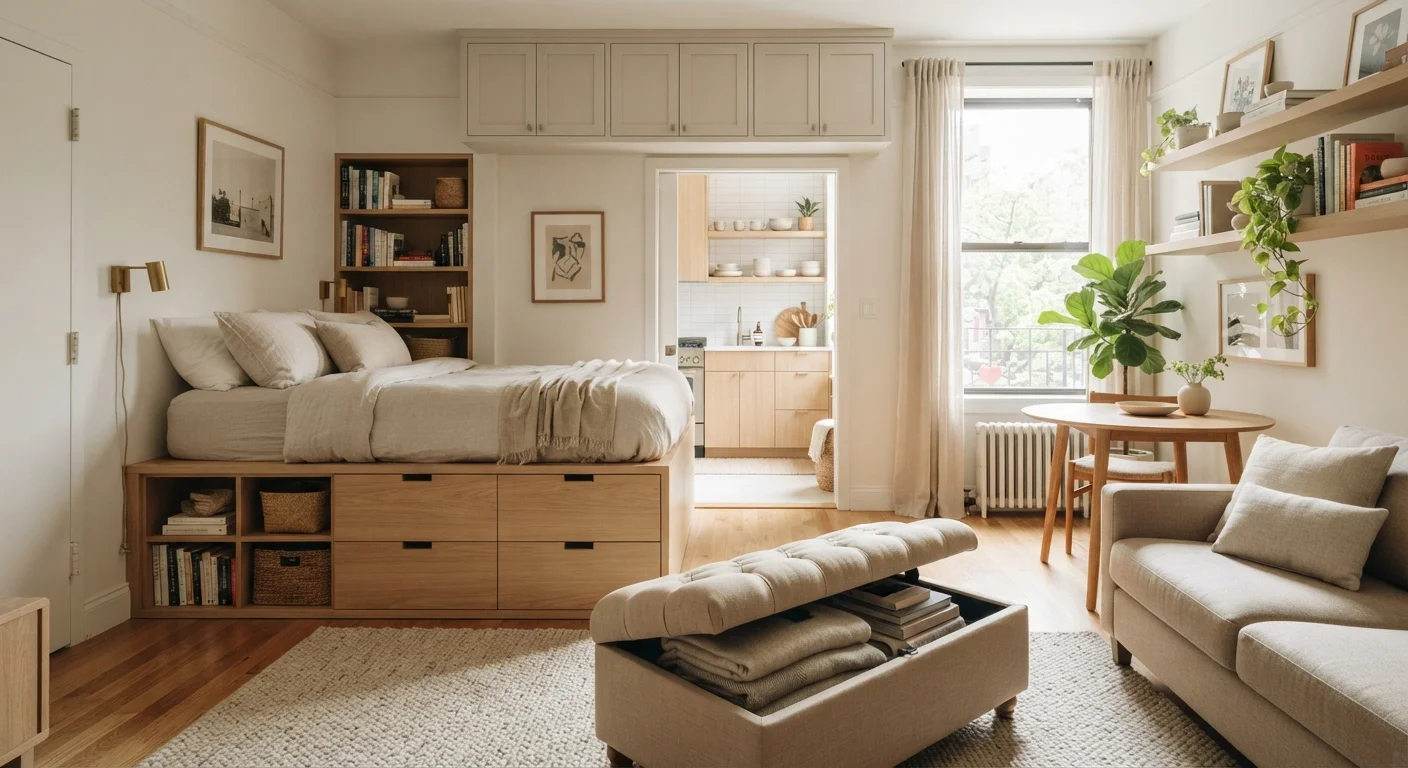
Photo credit: InsightsGrove.com | Discover Joy In Reading
Under stairs, above door frames, inside ottomans, beneath beds — a curated list of overlooked storage opportunities with notes on each.
Key Takeaways
- Many small apartments have unused storage potential in spaces renters never think to assess.
- Vertical zones - above doors, near ceilings, and on stair risers - are among the most overlooked.
- Dual-purpose furniture like ottomans and bed frames with drawers can eliminate the need for extra shelving.
- Most of these solutions require minimal cost and no permanent alterations, making them renter-friendly.
- A room-by-room audit before buying any storage product helps avoid wasted spending.
The Storage Is Already There - You Just Haven't Found It
When square footage is tight, most people's instinct is to buy more storage: bins, racks, organizers. But before spending anything, it's worth pausing to look at what the apartment is already offering. Walls, furniture voids, architectural quirks, and dead-corner real estate are routinely ignored - and they often hold more capacity than an extra shelf unit ever would.
If you haven't yet done a systematic walkthrough, the room-by-room audit checklist is a useful starting point before committing to any changes. And if you've already accumulated storage products that aren't pulling their weight, common storage myths worth unlearning may explain why.
Below are eight often-missed storage spots - each with a note on what works, what to watch for, and how to make use of it without drilling into anything you shouldn't.
The space above door frames
The strip of wall between the top of a door frame and the ceiling is typically 12 to 18 inches tall - enough for a narrow floating shelf running the full width of the doorway. This zone is ideal for items you don't need frequently: extra paper goods, board games, seasonal décor, or books. Because it sits above eye level, it doesn't create visual clutter. A single shelf bracket on each side keeps installation minimal, and most renters can patch two small holes when they move out.
Above-door shelves use wasted vertical space without disrupting the room's visual flow.
Stair risers (if applicable)
In apartments or maisonettes with internal stairs, the riser - the vertical face of each step - is frequently ignored. Open-front cubbies built into risers can hold books, shoes, or baskets. If you rent and can't modify the structure, standalone stair-step shelf units that sit against a wall mimic the look and provide the same tiered storage logic without any permanent changes. This works especially well in entryways where a traditional console table would eat too much floor space.
Stair risers offer a tiered storage structure that most renters never think to use.
Under the bed - all of it
Under-bed space is often mentioned but rarely maximized. The common mistake is using it as a dumping zone with no system. Flat rolling bins with lids, sorted by category - off-season clothing, extra linens, shoes - make retrieval practical. If your bed frame sits low, bed risers (typically 3 to 6 inches) can meaningfully increase clearance. Vacuum storage bags compress bulky items like comforters to a fraction of their original size, freeing up even more room. A broader guide to small-space living covers how to think about zoning for sleep and storage in the same room.
Sorted, lidded bins under the bed outperform any additional dresser for seasonal storage.
Inside ottomans and bench seats
A hollow ottoman doubles as a coffee table, extra seating, and a storage container - but only if you're deliberate about what goes inside. Bulky throw blankets, remote controls, charging cables, and game controllers are common candidates. The key is treating the interior like a drawer: use a small tray or divider insert so things don't become a tangled heap. Bench seats at the foot of a bed offer the same logic with more linear space, useful for shoes or folded gym gear.
An ottoman with interior dividers functions like a hidden drawer in the middle of the room.
The back of cabinet and closet doors
Over-door organizers mount without tools and convert the back of any door into a storage surface. In kitchens, they hold spice jars, foil, and cleaning supplies. In bathrooms, they work for toiletries and first-aid items. Inside closets, they handle shoes, accessories, or folded scarves. The limitation is weight - most over-door systems are designed for lighter items, so check load ratings before stacking heavy items. Door-mounted hooks are an even simpler option for bags and coats in tight entryways.
Every door in your apartment has usable surface area on its back that currently sits empty.
Unused corners with tension rods or freestanding units
Corners are geometrically awkward and routinely left empty. A freestanding corner shelf - no installation required - stacks vertically and takes up very little floor area. In bathrooms, tension rods fitted corner-to-corner near the ceiling create a hanging rod for plants, shower caddies, or light storage baskets. In living areas, corner ladder shelves provide display and storage in a footprint smaller than most side tables. These solutions are entirely reversible, which matters for renters.
Corner tension rods and ladder shelves reclaim awkward angles without permanent installation.
The gap beside the refrigerator or between appliances
In many kitchens, there's a 4- to 6-inch gap between the refrigerator and the nearest wall or cabinet. Slim pull-out pantry carts designed for this gap can hold canned goods, oils, and boxed items - the same footprint as wasted space, now functional. Similarly, the narrow void beside a washing machine in a bathroom-laundry combo can hold a tall, thin unit for detergent, cleaning supplies, or spare towels. Measure the gap carefully before purchasing anything; widths vary significantly between units.
A slim pull-out cart in a kitchen gap can hold as much as a full pantry shelf.
Ceiling-adjacent space in closets
Most standard closets have a shelf at eye level and a hanging rod - and then nothing above that shelf until the ceiling. That gap is typically 12 to 24 inches and is ideal for bulky, infrequently used items: luggage, holiday decorations, spare bedding. A second shelf installed above the existing one, supported by simple brackets, can double the closet's storage capacity without touching the floor plan. If you rent and prefer not to add shelves, a sturdy stackable bin placed on the existing shelf achieves a similar result, just with less structural efficiency.
The ceiling gap above closet shelves is often large enough to hold a full set of luggage.
Making It Work Long-Term
Finding the space is only half the job. The other half is keeping it functional. Rotate seasonal items in and out of less accessible spots - high shelves and under-bed zones are ideal for things you use quarterly, not daily. Label containers stored in dark or hard-to-reach areas so you're not pulling everything out to find one thing.
Audit Before You Buy Anything
Resist purchasing storage products until you've identified every unused space in your apartment. Buying organizers for spots you haven't yet located often results in the wrong size, the wrong format, and wasted money. A 20-minute walkthrough with a tape measure costs nothing and frequently reveals that the space you need already exists.
For renters thinking beyond storage, multifunctional furniture options and vertical space strategies are natural next steps. And if budget is a constraint on any purchases needed to activate these spots, everyday budgeting habits can help you prioritize what's actually worth spending on.

Author
Home & Living Editorial Team
Home & Living Editorial Team is the collective byline for our editorial team and contributor network. Articles published under this byline or an editorial pen name are researched, written, and reviewed according to our editorial standards for clarity, consistency, and independence before publication.
View all articles →