
Warning Lights Most Drivers Ignore Until It's Too Late
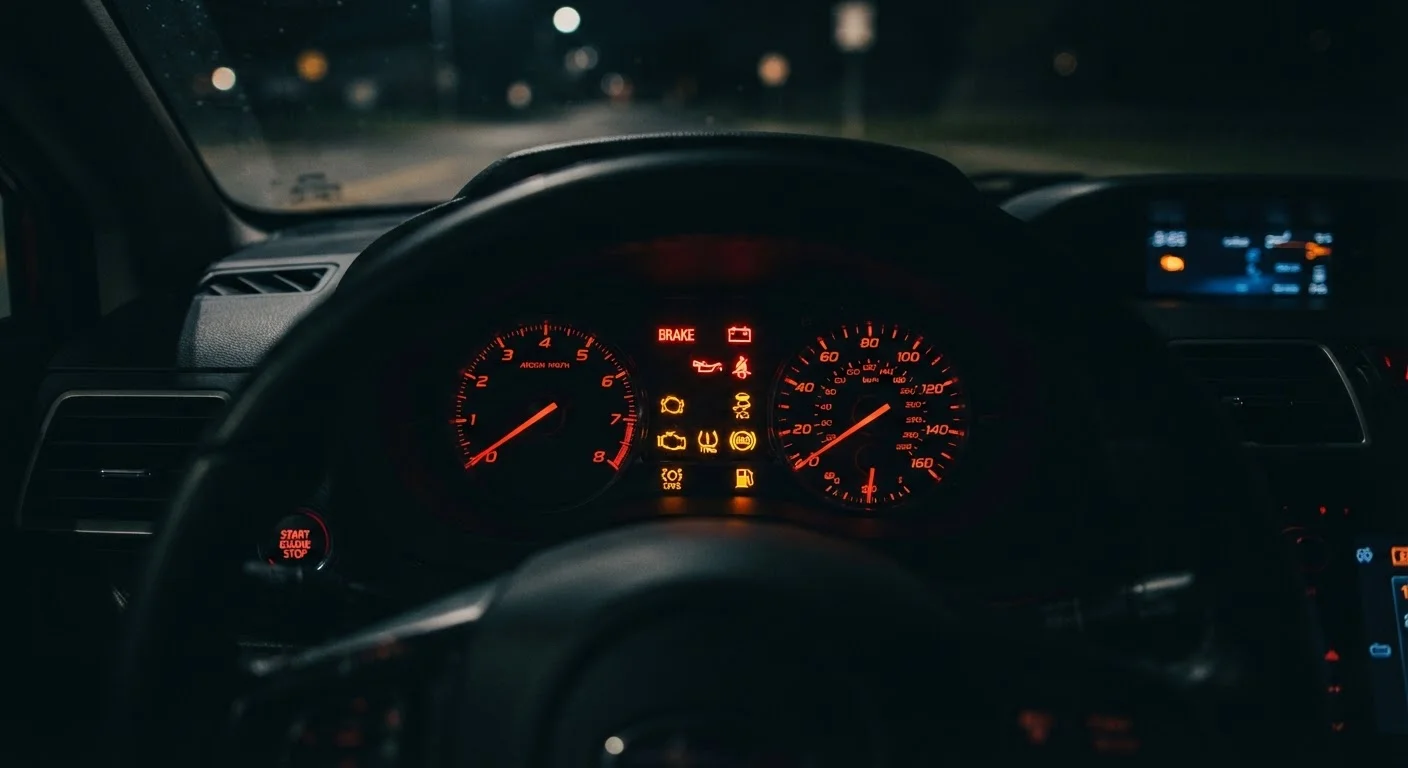
Photo credit: InsightsGrove.com | Discover Joy In Reading
From the check engine light to the tyre pressure warning, here's what common dashboard alerts actually signal and when ignoring them becomes expensive.
Key Takeaways
- Some warning lights signal immediate danger; others give you a short window to act before damage compounds.
- Ignoring common alerts like low oil pressure or overheating can turn a minor fix into a multi-thousand-dollar repair.
- Tyre pressure and battery warnings are among the most frequently dismissed lights - both carry real safety and cost consequences.
- A basic OBD-II scanner lets you read check engine codes yourself before visiting a mechanic.
- Acting within the first few days of a warning appearing is almost always cheaper than waiting.
Why Drivers Tune Out Their Own Dashboard
Dashboard warning lights are engineered to get your attention. Yet surveys consistently find that a significant share of drivers admit to continuing to drive for days - sometimes weeks - after a light appears, assuming it will resolve itself or isn't serious. That assumption is expensive.
The cost gap between catching a problem early and addressing it after it cascades is often dramatic. A low-coolant warning addressed promptly might cost you a $15 jug of coolant. Ignored for several hundred miles, the same issue can warp a cylinder head, a repair that can run into the thousands. The same principle applies across nearly every system in your car - and it mirrors how deferred maintenance compounds in other areas of life, as explored in our piece on the hidden cost of ignoring small repairs.
Below are the warning lights drivers most commonly dismiss, what each one actually signals, and what the stakes are if you wait too long.
Check Engine Light
The check engine light (officially the malfunction indicator lamp, or MIL) is the most frequently illuminated - and most frequently ignored - warning on American dashboards. Because it covers hundreds of possible fault codes, drivers often assume it signals something minor and defer action indefinitely.
In reality, codes range from a loose gas cap (genuinely minor) to a misfiring cylinder or failing catalytic converter (genuinely costly). A solid light generally means there's time to investigate within a day or two. A flashing check engine light typically indicates an active misfire that can rapidly damage the catalytic converter - a component that can cost $1,000-$2,500 to replace. A flashing light warrants pulling over safely and avoiding hard driving until the vehicle is assessed.
An OBD-II scanner plugs into the diagnostic port (usually under the dashboard on the driver's side) and reads the stored fault codes. Many auto parts retailers will read codes at no charge.
A flashing check engine light is not minor - it can signal an active misfire destroying your catalytic converter.
Low Oil Pressure Warning
This one is serious and deserves immediate attention. The low oil pressure light - often an oil can icon - signals that oil is not circulating at sufficient pressure to lubricate engine components. Driving even a short distance with insufficient oil pressure can cause metal-on-metal contact inside the engine, leading to irreversible damage.
If this light appears while driving, the appropriate response is to pull off safely as soon as possible, turn off the engine, and check the oil level. Low level is one cause; a failing oil pump or a significant leak is another. Do not confuse this with the oil life or oil change reminder light, which is a separate, non-urgent notification.
Driving with the low oil pressure light on risks catastrophic engine damage within minutes.
Tyre Pressure Monitoring System (TPMS) Light
The TPMS light - a cross-section of a tyre with an exclamation mark - is one of the most ignored warnings on the road. Many drivers interpret it as a minor inconvenience rather than a functional alert. Under-inflated tyres reduce fuel efficiency, wear unevenly, and significantly increase the risk of a blowout at highway speeds.
The connection to fuel costs is direct: according to the U.S. Department of Energy, tyre pressure that is 1 psi low across all four tyres can reduce fuel economy by roughly 0.2%. That compounds quickly across a tank and across months of driving. Our piece on driving habits that burn your fuel budget covers how tyre pressure fits into the broader picture of fuel waste.
Tyre pressure should be checked when tyres are cold, using the vehicle's recommended psi found on the door jamb sticker - not the maximum psi printed on the tyre sidewall.
Under-inflated tyres cut fuel economy and raise blowout risk - the TPMS light deserves same-day attention.
Engine Temperature Warning
The temperature gauge creeping into the red, or a dedicated overheating warning light, signals that engine coolant has exceeded its safe operating range. Continued driving risks warping the cylinder head or blowing the head gasket - repairs that commonly run from $1,500 to over $3,000 depending on the vehicle.
Common causes include a coolant leak, a failed thermostat, a broken water pump, or a blocked radiator. If the temperature gauge spikes while driving, turn off the air conditioning (which adds load to the engine), and if the gauge continues to rise, pull over safely, shut off the engine, and allow it to cool before checking coolant levels. Never open a hot radiator cap.
An overheating engine can warp the cylinder head - a repair easily costing more than $2,000.
Battery / Charging System Warning
The battery light - typically a battery icon - does not always mean the battery itself has failed. It signals that the vehicle's charging system isn't maintaining proper voltage, which could point to a failing alternator, a worn serpentine belt, or corroded battery terminals, in addition to a depleted battery.
When this light appears, the car is likely running on whatever charge remains in the battery. Electrical systems, including fuel injection and ignition, will begin to fail as voltage drops. Drivers typically have a limited window - sometimes as little as 15-30 minutes - before the vehicle stalls. Heading directly to a mechanic or auto parts store for a charging system test is the appropriate response, not continuing a long drive hoping for the best.
The battery light often signals a failing alternator - not just a weak battery - leaving you a short window before stalling.
Brake System Warning Light
There are two distinct brake-related lights to know. The first is the parking brake indicator - a circle with a "P" or exclamation mark - which simply means the parking brake is engaged. Release it and the light goes off. The second is the brake system warning light, which can signal low brake fluid, a hydraulic pressure imbalance between front and rear circuits, or a more serious failure in the braking system.
If the brake warning light illuminates while driving with the parking brake off, treat it as urgent. Test the brakes gently before reaching highway speeds. Spongy or unresponsive brakes combined with the warning light signal a potential hydraulic failure - a qualified mechanic should assess the vehicle before further driving.
A brake warning light with the parking brake released is a safety issue, not a maintenance reminder.
Building the Habit of Acting Early
The common thread across every warning light on this list is that early action is almost always the lower-cost path. The lights are not suggestions - they represent your car's onboard systems telling you something has moved outside normal operating range.
Keep Your Owner's Manual Accessible
Every warning light in your vehicle is documented in the owner's manual with a description of urgency level and recommended action. If the physical manual is missing, most manufacturers offer digital versions through their official websites. Spending five minutes with the manual when a light appears is always a better first step than guessing or dismissing it.
If you're unsure what a light means after consulting your owner's manual, a free code-read at many auto parts stores (or a personal OBD-II scanner, available for under $30) is a practical first step before committing to a repair shop visit. Understanding the code puts you in a better position to evaluate a mechanic's diagnosis - a skill our guide on why cheap shortcuts in car maintenance often cost more covers in depth.
For drivers looking to reduce overall ownership costs, warning light awareness pairs directly with proactive upkeep. Our overview of maintenance tasks that pay for themselves outlines which routine habits deliver the biggest long-term savings.
This article is for general informational purposes only. For any repair or safety concern, consult a qualified mechanic before driving further.

Author
Car Ownership Editorial Team
Car Ownership Editorial Team is the collective byline for our editorial team and contributor network. Articles published under this byline or an editorial pen name are researched, written, and reviewed according to our editorial standards for clarity, consistency, and independence before publication.
View all articles →