
Understanding Your Car's Air Filter: Cabin vs. Engine, and When Each Needs Replacing
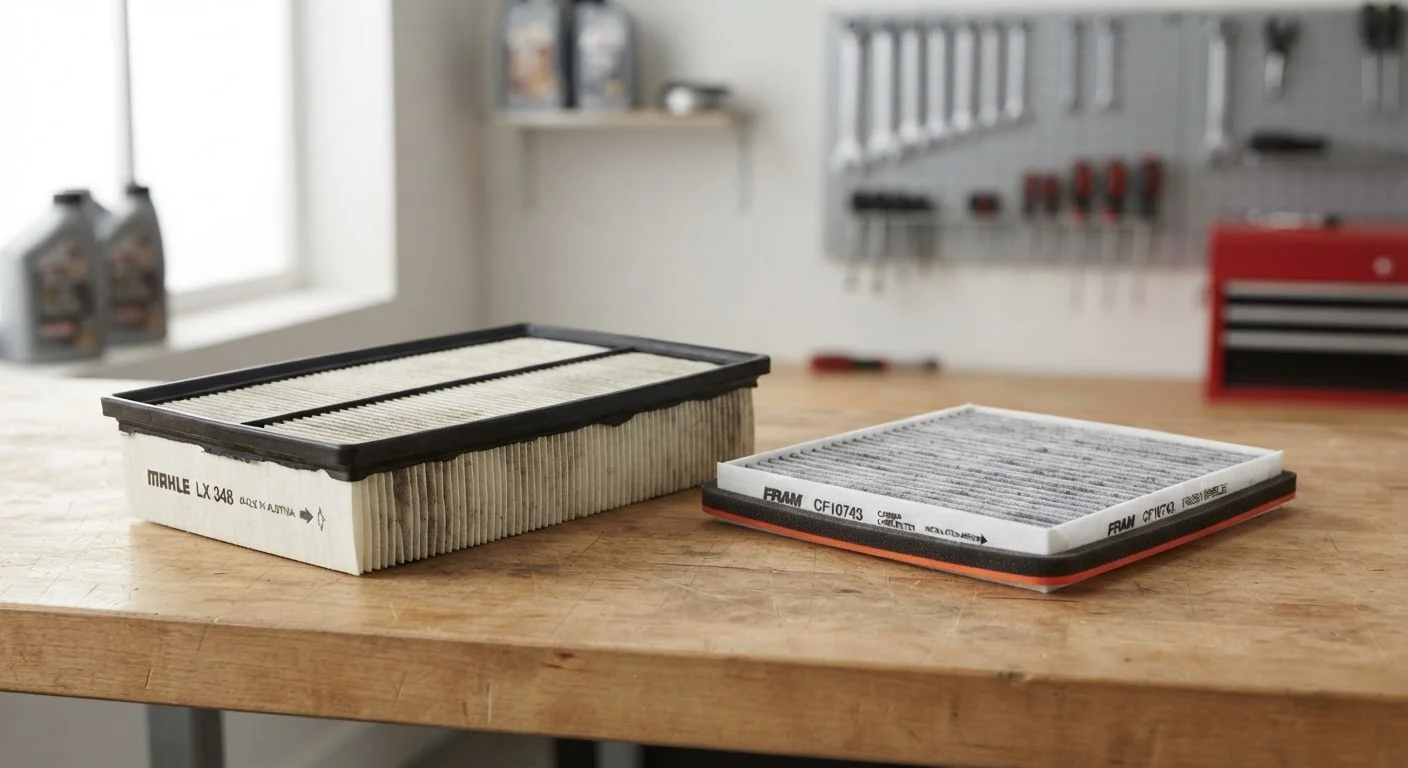
Photo credit: InsightsGrove.com | Discover Joy In Reading
In this article
Cabin and engine air filters serve very different purposes. Learn what each does, how to inspect them, and how often replacement is typically needed.
Key Takeaways
- Cabin and engine air filters are separate components with completely different jobs.
- Engine air filters typically need replacement every 15,000-30,000 miles, depending on driving conditions.
- Cabin air filters generally need changing every 12,000-15,000 miles or once per year.
- Dusty or high-traffic driving environments shorten both filters' effective lifespan.
- Both filters are often inexpensive and straightforward enough to inspect yourself.
- Neglecting either filter can lead to bigger, costlier problems over time.
What Each Filter Actually Does
Many drivers are surprised to learn their car contains not one but two air filters - and that mixing them up is an easy mistake with real consequences. Understanding the distinction is the first step toward smarter, cheaper maintenance.
The cabin air filter sits in the HVAC system - typically behind the glove box or under the dashboard - and cleans the air that flows through your vents. It captures pollen, dust, exhaust particulates, and other airborne debris before they reach the passenger compartment. A functioning cabin filter makes a measurable difference in interior air quality, particularly for anyone with seasonal allergies.
The engine air filter sits in the engine bay, usually inside a plastic housing connected to the intake. Its job is to prevent dirt, debris, and insects from entering the engine's combustion chambers. Engines need a precise mix of clean air and fuel to run efficiently - a compromised filter disrupts that ratio. Over time, a clogged engine filter can reduce power output, worsen fuel economy, and accelerate engine wear.
Neither filter is optional, and neither can substitute for the other. Think of them as parallel systems: one protecting the people inside, one protecting the machine underneath. For a broader look at how filters fit into your overall service schedule, see your car's maintenance schedule explained.
Side-by-Side Comparison
The table below breaks down the key differences between the two filters across the criteria that matter most to budget-conscious owners.
| Criterion | Cabin Air Filter | Engine Air Filter |
|---|---|---|
| Location | HVAC system (behind glove box or dash) | Engine bay airbox |
| Primary function | Filters air entering the cabin | Filters air entering the engine |
| Typical replacement interval | 12,000-15,000 miles or annually | 15,000-30,000 miles |
| Effect if neglected | Poor interior air quality, weak airflow, odors | Reduced fuel economy, loss of power, engine wear |
| DIY accessibility | Generally easy - no tools required | Generally easy - basic unclipping |
| Typical part cost (US) | $15-$50 | $15-$45 |
One important nuance: manufacturer recommendations are starting points, not hard rules. Driving in stop-and-go traffic, on unpaved roads, or in areas with high pollen counts will shorten both filters' effective lives. Inspect them visually at every oil change interval - it only takes a minute.
25%
Potential fuel economy drop from a clogged engine filter
The U.S. Department of Energy has noted that a severely restricted air filter can noticeably reduce engine efficiency in older carbureted vehicles; modern fuel-injected engines compensate differently but still experience performance loss.
12-15K miles
Typical cabin filter replacement interval
Most vehicle manufacturers recommend inspecting or replacing the cabin air filter every 12,000 to 15,000 miles, though this varies by make and model.
How to Inspect Each Filter Yourself
Inspecting both filters requires no special tools and takes under five minutes combined. Here's what to look for:
Cabin Air Filter
Most cabin filters are accessible by opening the glove box and releasing a clip or tab - your owner's manual will show the exact location. Pull the filter out and hold it up to a light source. Heavy grey or black buildup, visible debris, or a musty smell are clear indicators it's due for replacement. A lightly dusty filter with intact pleats can often wait until your next scheduled interval.
Engine Air Filter
Open the hood and locate the airbox - a plastic housing typically connected to a large hose leading toward the engine. Unclip or unscrew the housing to expose the filter. A new filter is white or off-white. If yours is grey, visibly clogged with dirt, or structurally damaged, it's time to replace it. Never blow compressed air through an engine filter in an attempt to extend its life - this can damage the filter media and allow fine particles through. If you're cross-referencing this task against a service schedule, reading your car service schedule without getting lost is a practical companion guide.
Check Your Owner's Manual First
Replacement intervals vary significantly between makes and models. Your owner's manual is the authoritative source for your specific vehicle's recommended service intervals - manufacturer guidelines take precedence over general rules of thumb. If you've purchased a used car without a manual, most manufacturers make digital versions available on their official websites.
Cost and Replacement Considerations
Both filters rank among the most affordable maintenance items on any car. Cabin filter replacements commonly fall in the $15-$50 range for the part itself, with engine air filters often similarly priced. Shop labor for either job is minimal - many service centers charge under $20 for installation - but both replacements are also among the most DIY-friendly tasks a new car owner can tackle.
The real cost risk isn't the filter itself - it's ignoring it. A severely restricted engine air filter has been associated with reduced fuel efficiency, and in some cases with difficulty starting or rough idling. Cabin filter neglect is less mechanically dangerous but can force your HVAC blower motor to work harder, potentially shortening its lifespan. For context on how filter replacement connects to broader service intervals, what a full car service actually covers gives a useful overview of what mechanics typically inspect at each level.
If you drive fewer miles than average, note that time-based deterioration still applies - both filters can degrade from humidity and environmental exposure even on low-mileage vehicles. Keeping a car in good shape when you drive very little covers this scenario in more detail.

Author
Car Ownership Editorial Team
Car Ownership Editorial Team is the collective byline for our editorial team and contributor network. Articles published under this byline or an editorial pen name are researched, written, and reviewed according to our editorial standards for clarity, consistency, and independence before publication.
View all articles →