
Zero-Based Budgeting vs. Envelope Budgeting: Which Fits Your Lifestyle?
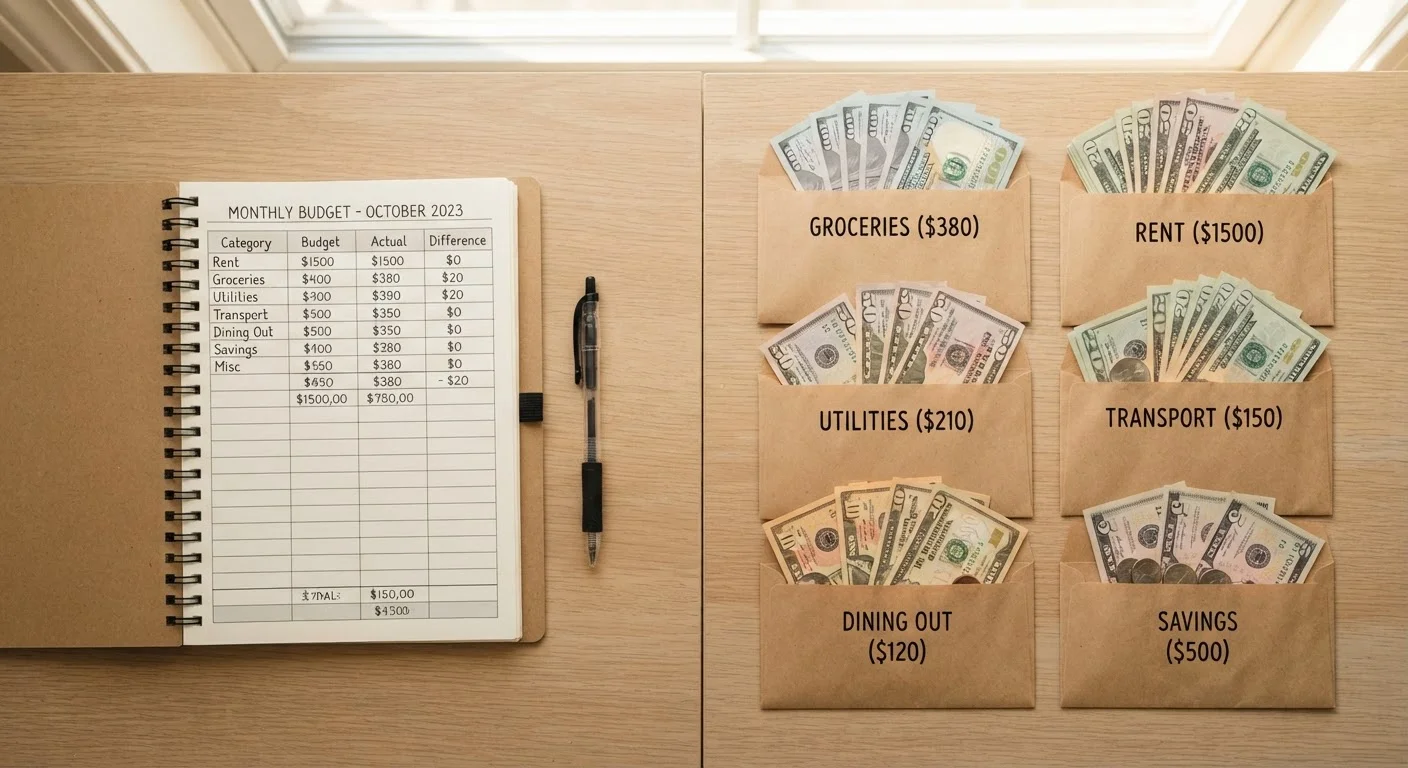
Photo credit: InsightsGrove.com | Discover Joy In Reading
In this article
Two popular budgeting methods, two very different approaches. See how zero-based and envelope budgeting compare for everyday money management.
Key Takeaways
- Zero-based budgeting assigns every dollar of income to a specific category until nothing is unallocated.
- Envelope budgeting physically or digitally caps spending per category using pre-loaded cash or funds.
- Zero-based budgeting works best for variable incomes or people who think in spreadsheets.
- Envelope budgeting is most effective for curbing impulse spending in high-temptation categories like dining and groceries.
- Both methods require active engagement — neither works on autopilot.
- You can combine elements of both systems to match your habits and income pattern.
How Each Method Actually Works
Both systems share one goal — stop money from disappearing without explanation — but they go about it differently.
Zero-based budgeting (ZBB) starts with your total monthly income and requires you to allocate every dollar to a category: rent, groceries, savings, debt repayment, subscriptions, and so on. When income minus all allocations equals zero, the budget is complete. No dollar is left unassigned. If your income is $2,800 this month, every dollar of that $2,800 has a job before you spend a cent. If your expenses shift, you re-zero the plan. This approach is detailed and deliberate — it's most popular among people who think in systems and want full visibility before the month starts. See how to build your first budget from a blank page if you've never mapped out income and expenses before.
Envelope budgeting pre-loads a fixed amount of money — historically physical cash, today often a digital equivalent — into named spending categories. Once an envelope is empty, spending in that category stops for the month. There's no borrowing from next month; the limit is the limit. The envelope method is visceral by design: running out of grocery cash mid-month feels immediate and undeniable in a way that a negative app balance often doesn't.
| Criterion | Zero-Based Budgeting | Envelope Budgeting |
|---|---|---|
| Core mechanism | Assign every dollar before spending | Pre-load cash caps per category |
| Flexibility mid-month | High — reallocate between categories | Low — envelope limit is the hard stop |
| Best for | Variable income, planners | Impulse spenders, tactile learners |
| Format | Spreadsheet, app, or paper | Physical cash or digital category funds |
| Monthly setup effort | Moderate (full category plan) | Moderate (cash sorting or limit setup) |
| Behavior targeted | Unexamined or untracked spending | Category-level overspending |
| Works with irregular expenses | Yes — rebuilt each month | Requires planning ahead for irregular costs |
The Real Trade-Offs: Flexibility, Effort, and Behavior
The biggest practical difference is how each method handles mid-month changes. Zero-based budgeting is flexible — if your car needs an unexpected repair, you can move dollars from another category and re-zero. That flexibility is a feature for planners and a weakness for impulsive spenders, since it's easy to rationalize constant reshuffling. Envelope budgeting is more rigid. Once an envelope is depleted, the decision is clearer: don't spend, or consciously pull from another envelope. That friction is the point.
Effort is roughly comparable. Zero-based budgeting typically requires a monthly setup session of 20–40 minutes plus regular check-ins. Envelope budgeting requires withdrawing and sorting cash (or setting up digital category limits) at the start of each month, then tracking what's left. Neither is passive. If you're curious how automated alternatives stack up, the upsides and downsides of automating your budget are worth understanding before you switch approaches.
~30%
Reduction in discretionary overspending with cash
A study published in the Journal of Consumer Research found that paying with physical cash, compared to cards, tends to reduce spending on discretionary items by roughly 20–30% due to the psychological 'pain of paying.'
1 in 3
US adults without a monthly budget
According to a 2023 survey by the National Foundation for Credit Counseling, approximately one-third of U.S. adults do not use any formal budgeting method to track income and expenses.
Behaviorally, the systems target different failure modes. ZBB addresses the problem of unexamined spending — money that drifts out of your account without intent. Envelope budgeting addresses the problem of overspending within categories you already know are a weakness. Many people find combining both useful: use ZBB for the overall plan, then apply envelope-style caps to two or three problem categories like food, entertainment, or clothing.
Which One Should You Choose?
The honest answer: the method you'll actually maintain is the right one. Both have strong track records when followed consistently, and neither guarantees outcomes based on method alone. That said, a few circumstances tend to favor one over the other.
Choose zero-based budgeting if your income varies month to month, if you're a detail-oriented person who finds comfort in comprehensive plans, or if your main problem is that you don't know where your money goes. The monthly re-zero discipline tends to close information gaps quickly. For a broader framework that goes beyond budget method selection, see the complete everyday budgeting framework.
Choose envelope budgeting if you chronically overspend in specific categories despite knowing you shouldn't, if card transactions feel abstract to you, or if you've tried digital tracking apps and found the lack of hard limits too easy to ignore. The cash budgeting vs. digital tracking comparison explores this tension in more depth if you're deciding between physical and app-based tools.
You don't need to pick perfectly on the first try. Start with one system for a full month, note where it broke down, and adjust. Both methods pair well with a broader look at your spending values — the spending less without downgrading your life framework is a useful complement for thinking about where cuts actually make sense.
Digital Envelope Tools Exist
If carrying physical cash isn't practical, digital envelope budgeting tools let you assign funds to labeled categories within one account, replicating the hard-cap mechanic without cash. These apps vary in cost and features — evaluate them based on whether they enforce genuine spending limits or only track after the fact, since that distinction determines whether they replicate the method's core benefit.
This article is for general informational purposes only and does not constitute personalized financial advice. Consider consulting a qualified financial professional for guidance specific to your situation.

Author
Smart Spending Editorial Team
Smart Spending Editorial Team is the collective byline for our editorial team and contributor network. Articles published under this byline or an editorial pen name are researched, written, and reviewed according to our editorial standards for clarity, consistency, and independence before publication.
View all articles →