
Cash Budgeting vs. Digital Tracking Apps: A Practical Comparison
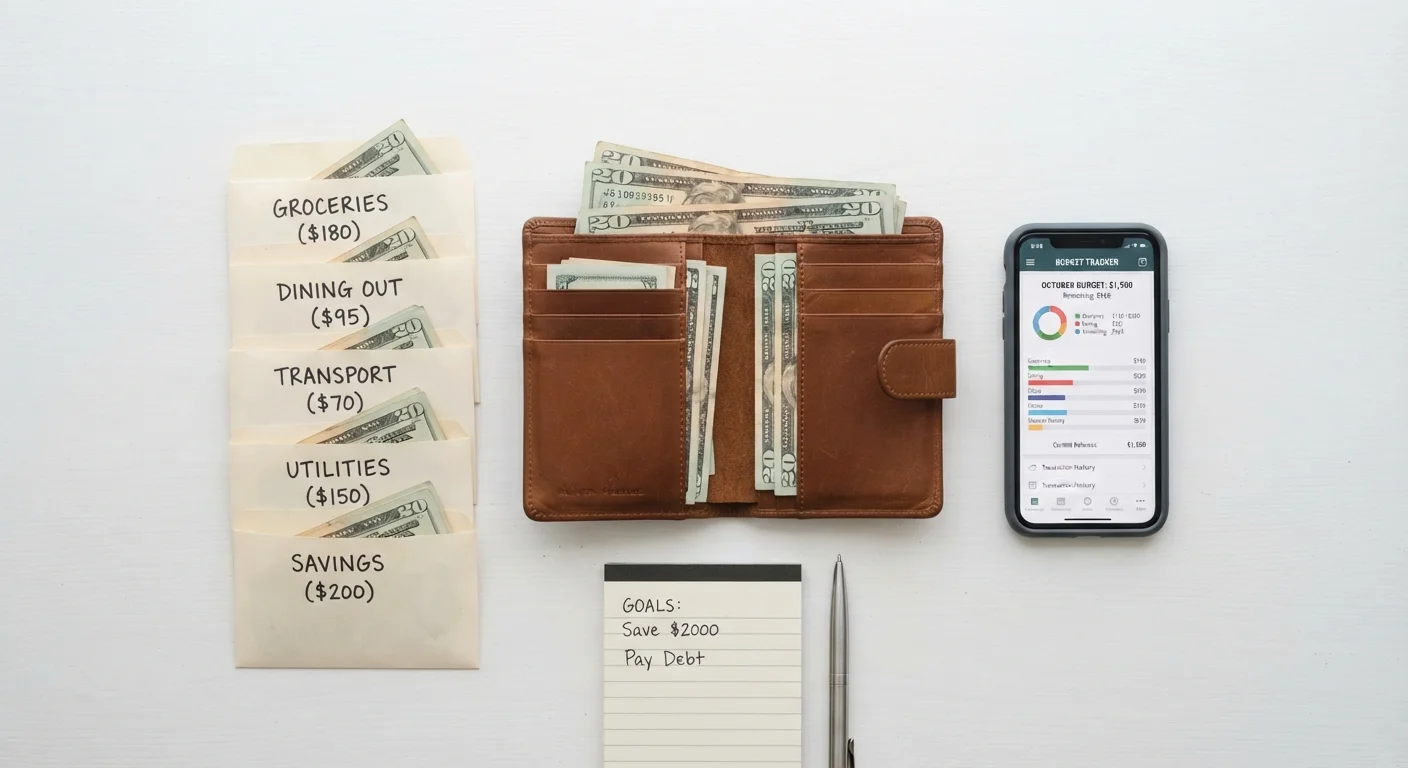
Photo credit: InsightsGrove.com | Discover Joy In Reading
In this article
Physical cash envelopes or a budgeting app on your phone — both have real trade-offs. Compare approaches to find what actually sticks.
Key Takeaways
- Cash budgeting forces physical spending limits but requires discipline to maintain consistently.
- Digital apps offer automation and real-time data but can create a false sense of control.
- Your income type, spending habits, and tech comfort level should drive the choice.
- Hybrid approaches — cash for problem categories, apps for tracking — often outperform either method alone.
How Each Approach Actually Works
Cash budgeting — most commonly implemented as the envelope method — means withdrawing physical money at the start of each budget period and dividing it into labeled envelopes by category: groceries, gas, eating out, entertainment. When an envelope is empty, spending in that category stops. No envelope math required beyond basic arithmetic. For a deeper look at how this fits alongside zero-based budgeting principles, see how zero-based and envelope budgeting compare.
Digital tracking apps work differently. They connect to your bank accounts and cards, automatically categorize transactions, and surface spending trends through dashboards and reports. You set category limits, and the app alerts you when you're approaching or exceeding them. The tracking is largely passive — it happens whether or not you're paying attention.
Both methods aim at the same outcome — spending less than you earn — but they use fundamentally different mechanisms to get there. Understanding those mechanisms is what determines which one is likely to work for you. If you're building a budget for the first time, this plain-language walkthrough covers setting up either approach from scratch.
| Cash Budgeting | Digital Tracking Apps | |
|---|---|---|
| Spending friction | High — physical limit enforced | Low — easy to override digitally |
| Setup effort | Low — withdraw, label, divide | Medium — account linking, category setup |
| Ongoing maintenance | Manual, weekly restocking | Largely automated with periodic review |
| Works for online spending | Poor — cash not accepted online | Excellent — tracks all card transactions |
| Spending history / analytics | None unless manually tracked | Automatic trend data and reports |
| Data security risk | None — no accounts linked | Moderate — third-party account access |
| Best for variable income | Difficult to adjust mid-period | Flexible, limits adjustable anytime |
Where Cash Budgeting Has the Edge
The psychological research on this is consistent: spending physical cash feels more real than swiping a card or tapping a phone. Studies in consumer behavior have repeatedly found that people spend less when using cash compared to cards for equivalent purchases. The "pain of paying" is higher, which translates into more deliberate spending decisions.
Cash budgeting also has zero tech dependency. No app subscription, no syncing errors, no security breach risk. For anyone uncomfortable linking financial accounts to third-party software, that matters. It also creates a hard stop — you literally cannot spend money you don't have in the envelope, which makes it effective for categories where impulse spending tends to happen.
Limit Cash to Your Weak Spots
You don't have to use cash for every spending category to get its benefits. Identify the one or two areas where you consistently overspend — dining out, convenience store runs, entertainment — and use physical cash only there. Keep cards and apps for everything else. This targeted approach reduces the inconvenience of going all-cash while preserving the behavioral brake where you actually need it.
The downside is friction at the point of use. Cash is increasingly inconvenient for online purchases, bill payments, subscriptions, and digital services — which make up a growing share of most budgets. It also offers no spending history or trend analysis unless you keep records manually.
Where Digital Apps Have the Edge
Apps generate data. That's their core advantage. After 30 days of use, most apps can show you exactly how much you spent on food delivery versus groceries, which subscriptions renewed, and whether your transportation costs are creeping up month over month. That visibility is genuinely hard to replicate with cash or even spreadsheets.
For people with variable income — freelancers, gig workers, those with irregular hours — apps provide the flexibility to adjust category limits quickly without physically redistributing cash. They also handle recurring bills and direct deposits automatically, which reduces the manual overhead. Learn more about the trade-offs that come with that automation in this breakdown of automating your budget.
The risk with apps is behavioral: knowing your budget limit and feeling it are different things. It's easy to see a category at 90% capacity and swipe anyway, telling yourself you'll "fix it next month." Apps track behavior; they don't automatically change it. Security is also a legitimate concern — linking bank credentials to third-party services carries data risk that cash budgeting doesn't.
Tracking Isn't the Same as Controlling
A common misconception is that installing a budgeting app and watching your spending constitutes a budget. Awareness is a prerequisite, not a result. If you find yourself consistently going over category limits without changing behavior, the app is functioning as a record-keeper, not a guardrail. That's when introducing cash for problem categories — or doing a structured monthly review — can make the difference.
Making the Hybrid Approach Work
Many people who successfully budget long-term use a combination: a tracking app for fixed expenses, bills, and overall financial visibility, with cash envelopes for the two or three categories where they historically overspend. This preserves the behavioral friction of cash where it's most needed while capturing the analytical benefits of digital tools everywhere else.
The key is using your end-of-month review to evaluate what's working. If your dining envelope runs out by the 20th every month, that's actionable information — either the limit is unrealistic, or it's working exactly as intended. Either way, the data tells you something. This approach also connects naturally to the broader framework covered in a complete everyday budgeting framework.
The budgeting method that produces results is the one you'll actually maintain. Start simple, review monthly, and adjust the system to your real spending patterns — not an idealized version of them.
This article is for general informational and educational purposes only and does not constitute personalized financial advice. Consider consulting a licensed financial professional for guidance specific to your situation.

Author
Smart Spending Editorial Team
Smart Spending Editorial Team is the collective byline for our editorial team and contributor network. Articles published under this byline or an editorial pen name are researched, written, and reviewed according to our editorial standards for clarity, consistency, and independence before publication.
View all articles →